What’s the Best Diet to Lose Weight?

What’s the Best Diet to Lose Weight?
The quest to lose weight is a journey many of us embark on at some point in our lives. With a seemingly endless stream of advice, books, social media influencers, and conflicting studies, it’s easy to feel lost before you even begin. One day, you’re told to cut out an entire food group; the next, you’re told to only eat a specific type of food at a certain time. This whirlwind of information often leaves us asking a simple, yet profoundly complex, question: What is the best diet to lose weight?
This article aims to cut through the noise. Rather than promoting a single, rigid diet plan, we’ll explore the universal principles that underpin successful and lasting weight loss. We’ll move beyond the hype and focus on what truly matters: a balanced, sustainable, and enjoyable approach to eating that is tailored to you as an individual. Our goal is to provide a clear, science-backed guide to help you build a nutritional strategy that works not just for a few weeks, but for life.
What Does “Best Diet” Even Mean?
The search for the “best” diet is often the first hurdle. We tend to think of “best” as a single, perfect solution that everyone should follow. However, in the world of nutrition, this concept doesn’t exist. A diet that works wonders for one person might be a complete failure for another. The reasons for this are numerous and deeply personal.
So, let’s redefine “best.” The best diet is not the most restrictive, the most popular, or the one that promises the fastest results. Instead, the best diet is:
- Sustainable: It’s a way of eating you can maintain long-term, without feeling deprived or constantly fighting cravings. If you can’t see yourself following it in a year, it’s not the right choice.
- Nutritionally Adequate: It provides your body with all the vitamins, minerals, and macronutrients it needs to function optimally, preventing deficiencies and supporting overall health.
- Enjoyable: It includes foods you genuinely like. A diet based on foods you dread will inevitably lead to frustration and giving up.
- Effective for Fat Loss: It creates the necessary conditions for your body to shed excess fat while preserving lean muscle mass.
The perfect diet must align with your personal preferences, cultural habits, budget, and lifestyle. What’s accessible and practical for someone living in a bustling city with a wide variety of fresh food markets may not be for someone in a rural area with limited options. Understanding that the best diet is a deeply personal choice is the first and most critical step toward lasting success.
Calories In vs. Calories Out: The Basics of Fat Loss
At the heart of every successful weight loss strategy lies a fundamental scientific principle: energy balance. While the marketing of many diets attempts to complicate this, the core truth remains simple. To lose weight, you must consume fewer calories than your body burns. This is known as a calorie deficit.
Think of your body as a machine that requires fuel (calories) to operate. Your body burns calories 24/7, even when you’re resting, to power essential functions like breathing, circulation, and cell repair. This is your basal metabolic rate (BMR). Any physical activity you do adds to the total number of calories you burn daily.
When you consume more calories than you burn, your body stores the excess energy, primarily as fat. When you consume fewer calories than you burn, your body taps into its stored energy reserves (fat) to make up the difference. This process results in fat loss.
Many people make the mistake of either over-restricting their calorie intake to an unhealthy degree or underestimating how many calories they’re actually consuming. Severely restricting calories can lead to muscle loss, nutritional deficiencies, and a slowed metabolism, making long-term weight loss even harder. On the other hand, a few handfuls of nuts or a couple of extra tablespoons of oil can add hundreds of calories to your daily total, easily erasing a deficit you thought you had created. Understanding and consistently managing this energy balance is the single most important factor in a weight loss journey.
Macronutrient Balance Without Going to Extremes
The three macronutrients—carbohydrates, proteins, and fats—are the building blocks of every diet. They provide the energy and nutrients your body needs to function. The key to weight loss isn’t eliminating any of these, but rather finding the right balance for your body and focusing on quality.
- Carbohydrates: Often demonized, carbohydrates are the body’s primary source of fuel. Rather than eliminating them, the focus should be on choosing the right kind. Opt for complex carbohydrates from whole, minimally processed sources like whole grains (quinoa, brown rice, oats), legumes (beans, lentils), fruits, and vegetables. These foods provide sustained energy, fiber, and essential nutrients. Avoid an overabundance of simple, refined carbohydrates found in sugary drinks, white bread, and pastries, which can lead to energy crashes and increased cravings.
- Protein: Protein is crucial for satiety, muscle repair, and metabolic health. It helps you feel full for longer, reducing the urge to snack. A diet with adequate protein can help preserve lean muscle mass during weight loss, which is important for maintaining a healthy metabolism. Diverse sources of protein are key, including legumes, soy products, nuts, seeds, and various whole grains.
- Fats: Dietary fats are essential for hormone production, nutrient absorption, and brain health. Healthy fats, such as those found in avocados, nuts, seeds, and olive oil, are vital for a well-rounded diet. The goal is to consume healthy fats in moderation, as they are calorie-dense.
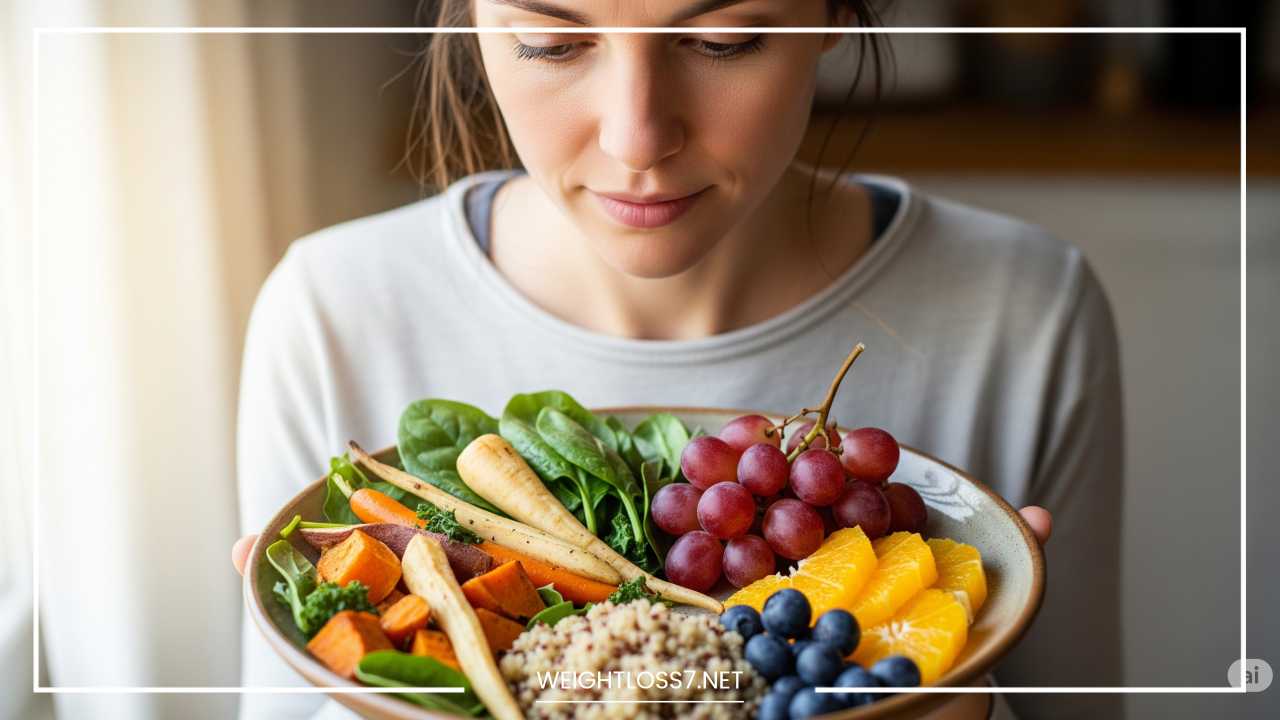
A balanced plate should include a mix of all three macronutrients. For example, a meal could consist of a portion of roasted vegetables (carbs, fiber), a serving of lentils (protein, carbs), and a drizzle of olive oil (healthy fat). By focusing on this balanced approach, you get the benefits of each macronutrient without falling into the trap of overly restrictive diets that can lead to nutrient deficiencies and rebound weight gain.
Portion Control and Mindful Eating
The quantity of food we eat is just as important as the quality. Even the most nutritious foods can contribute to weight gain if consumed in excess. Modern-day portion sizes, particularly in restaurants, have grown significantly over the past few decades, often leading us to eat more than our bodies need.
Portion control is the practice of managing the amount of food you consume. One of the simplest and most effective ways to do this is to use smaller plates, bowls, and glasses. Research has shown that this simple trick can subconsciously lead you to consume less food.
Mindful eating is a powerful practice that goes hand-in-hand with portion control. It involves paying attention to your food—its taste, texture, and smell—without distractions. By eating slowly and consciously, you give your brain time to register that your stomach is full. It takes about 20 minutes for the satiety signals to travel from your gut to your brain. Rushing through a meal can cause you to overshoot your body’s needs before those signals have a chance to kick in.
Practical tips for mindful eating and portion control include:
- Listen to your body: Pay attention to your hunger and fullness cues. Eat when you’re hungry, but stop when you’re satisfied, not stuffed.
- Chew thoroughly: Savor each bite and chew your food properly, which aids digestion and gives your brain time to catch up.
- Eliminate distractions: Put away your phone, turn off the TV, and focus solely on your meal.
These simple shifts can transform your relationship with food, moving it from a mindless act to a conscious choice that supports your health goals.
The Role of Fiber and Nutrient-Dense Foods
When it comes to feeling full and staying healthy, fiber is a superstar. Fiber is a type of carbohydrate that your body can’t digest. It passes through your digestive system, adding bulk to your food and helping you feel full for longer. This increased satiety is a massive advantage for anyone trying to manage their weight, as it naturally reduces overall calorie intake.
Beyond its role in satiety, fiber-rich foods are packed with essential vitamins, minerals, and antioxidants. These foods—which include fruits, vegetables, whole grains, beans, and seeds—are considered “nutrient-dense.” This means they provide a high amount of nutrients for a relatively low number of calories.
A diet rich in these foods supports a healthy metabolism, aids digestion, and helps regulate blood sugar levels. For example, the fiber in an apple slows the absorption of sugar, preventing the rapid spike and subsequent crash that can lead to cravings. The variety of colors in fruits and vegetables indicates a wide range of different nutrients, so aiming for a colorful plate is a great way to ensure you’re getting a broad spectrum of what your body needs. Incorporating these foods into every meal is a simple but profound strategy for successful weight management.
Meal Planning and Consistency
When it comes to losing weight, planning matters more than willpower. Relying on willpower alone often leads to a cycle of good intentions followed by impulse eating, especially when hunger strikes or a busy day leaves you with no time to cook. This is where meal planning becomes your most powerful tool.
By planning your meals and snacks in advance, you can ensure your eating aligns with your goals. It allows you to:
- Make healthier choices: When you plan, you are making decisions with a clear head, rather than when you’re ravenously hungry and surrounded by less-than-ideal options.
- Control portions and ingredients: Planning allows you to pre-portion meals and snacks, so you’re not guessing in the moment. It also gives you control over the ingredients, reducing hidden sugars, fats, and excessive salt.
- Save time and money: Having a plan for the week means fewer last-minute takeout orders and a more efficient grocery list, reducing food waste and saving you money.
A sample daily structure might look something like this:
- Breakfast: A bowl of oats with some berries and nuts.
- Lunch: A hearty salad with a variety of vegetables, legumes, and a light dressing.
- Dinner: A portion of roasted root vegetables, a serving of brown rice, and a legume-based stir-fry.
- Snacks (optional): A piece of fruit or a small handful of unsalted nuts.
Consistency is the result of effective planning. It’s the act of following through on your plan most of the time, even when things don’t go perfectly. Remember, progress is built on consistent, good-enough efforts, not on perfect, one-off attempts.
Avoiding Fad Diets and Misinformation
The dieting landscape is littered with quick-fix solutions that promise rapid results. These fad diets often involve severe calorie restriction, the complete elimination of a major food group, or the promotion of expensive supplements. While they may lead to initial weight loss, the results are rarely sustainable.
Extreme or restrictive diets can be dangerous. They can lead to nutritional deficiencies, disrupt your metabolism, and create an unhealthy relationship with food. The inevitable feeling of deprivation often leads to “falling off the wagon,” which is often followed by binge eating and regaining the lost weight, sometimes even more.
Red flags for fad diets often include:
- “Secret” or “miracle” foods: No single food can magically melt away fat.
- Rapid weight loss claims: Anything promising more than 1-2 pounds of sustainable weight loss per week is likely not healthy or long-lasting.
- Exclusion of entire food groups: Unless medically necessary, a diet that tells you to cut out all carbohydrates or all fats is not a balanced approach.
- Expensive supplements or products: The foundation of a healthy diet is real, whole foods, not pills or shakes.
Prioritizing sustainability and long-term change over quick fixes is the only way to achieve and maintain a healthy weight. A diet that is flexible and teaches you healthy habits is always superior to one that dictates what you can and cannot eat.
Lifestyle Factors That Support Weight Loss
While nutrition is the cornerstone of weight loss, it’s not the only piece of the puzzle. Several “non-food” elements of your lifestyle play a crucial role in regulating your metabolism, hunger, and overall well-being.
- Sleep Quality: When you’re sleep-deprived, your body’s hormone balance is thrown off. The hunger hormone ghrelin increases, while the satiety hormone leptin decreases. This can lead to increased cravings for high-calorie, high-sugar foods and a reduced ability to feel full. Aim for 7-9 hours of quality sleep per night.
- Stress Management: Chronic stress elevates cortisol levels, a hormone that can increase appetite and encourage the body to store fat, particularly around the midsection. Finding healthy ways to manage stress—such as meditation, yoga, spending time in nature, or hobbies—is crucial.
- Hydration: Sometimes, what we perceive as hunger is actually thirst. Drinking plenty of water throughout the day can help you feel full, boost your metabolism, and improve your energy levels. Aim for at least 8 glasses of water a day, and consider having a glass before each meal.
- Physical Activity: While you can’t out-exercise a bad diet, physical activity is a powerful partner in your weight loss journey. It burns calories, builds muscle (which boosts your metabolism), and improves mood and energy levels. It doesn’t have to be a grueling workout; even a daily walk, gardening, or dancing in your living room counts.
By addressing these lifestyle factors, you create an environment that supports your weight loss efforts from all angles, making the entire process feel less like a struggle and more like a holistic journey to better health.
How to Stay Motivated Without Obsessing Over the Scale
The scale can be a useful tool, but it’s not the only measure of success. Focusing solely on the number on the scale can be demoralizing, as weight can fluctuate daily due to hydration levels, sodium intake, and hormonal changes. True progress is about more than just pounds lost.
To stay motivated without obsessing, shift your focus to non-scale victories (NSVs):
- Increased Energy: Do you feel more energetic throughout the day? Are you no longer reaching for that afternoon caffeine fix?
- Better-Fitting Clothes: Do your favorite jeans feel looser? Are you wearing a smaller size?
- Improved Health Markers: Has your doctor noticed a positive change in your blood pressure, cholesterol levels, or blood sugar?
- New Habits: Are you consistently preparing healthy meals, getting more sleep, or exercising regularly? These are foundational wins that lead to lasting results.
- Enhanced Confidence: Do you feel more confident in your own skin?
By celebrating these smaller, consistent wins, you build momentum and reinforce the positive changes you’re making. The scale will eventually reflect these changes, but it’s the habits and the feeling of progress that truly keep you going.
Final Thoughts: Choosing What Works for You
Ultimately, the “best” diet to lose weight is not a specific plan or a set of rules handed down by an expert. It is a personalized approach built on a foundation of scientific principles and tailored to your unique life. The key takeaways are simple yet powerful:
- Consistency over perfection: It’s not about being perfect every day, but about consistently making good choices most of the time.
- Balance over restriction: A healthy diet includes a balanced mix of all macronutrients from whole, minimally processed sources.
- Personalization over trends: The most effective diet is one that you enjoy and can stick with for the long haul.
- Holistic health over a number on the scale: Real success comes from a combination of healthy eating, physical activity, good sleep, and stress management.
You are now equipped with the knowledge to make informed decisions for your health. The journey to a healthier weight is a marathon, not a sprint. By focusing on sustainable habits, listening to your body, and prioritizing your well-being, you can create a path that not only helps you lose weight but also leads to a more vibrant and energetic life. The power to choose what works for you is in your hands—and that’s the only “best diet” you’ll ever need.