What Diet Should I Do to Lose Weight


What Diet Should I Follow to Lose Weight? A Complete Guide
The quest for the perfect diet often feels like wandering through a labyrinth with no exit. One week, the world is convinced that carbohydrates are the enemy; the next, we are told that fat is the real villain. From celebrity-endorsed trends to scientific-sounding fads, the sheer volume of conflicting information is enough to make anyone give up before they even start. Many people struggle to choose the “right” diet not because they lack willpower, but because they are overwhelmed by a “one-size-fits-all” approach that rarely accounts for individual reality.
The truth is that weight loss has become a multi-billion-dollar industry fueled by the promise of quick results and “magic” solutions. However, these trends often overlook the most important factor in any health journey: the person behind the plate. The purpose of this article is to strip away the noise and help you understand exactly what diet you should follow to achieve your personal weight loss goals. We will move away from the idea of “miracle” foods and instead focus on the science of how your body works, the psychology of why we eat, and the practical steps you can take to build a lifestyle that is healthy, enjoyable, and—most importantly—sustainable for the long term.
Understanding Weight Loss Basics
Before choosing a specific eating plan, it is essential to understand the fundamental biological principles that govern weight change. At its core, weight loss is driven by the relationship between energy intake and energy expenditure. This is often referred to as the calorie balance, or “calories in versus calories out.”
Every movement you make, every breath you take, and even the resting functions of your internal organs require energy. This energy is measured in calories. When you consume more energy through food than your body uses for daily functions and physical activity, the excess is stored for later use. Conversely, when you consume slightly less energy than your body requires, it begins to tap into those stored energy reserves.
However, while the math of calories is the foundation, it is not the entire house. No single diet works for everyone because every human body is a unique biological system. Your metabolism—the rate at which your body burns energy—can be influenced by genetics, age, muscle mass, and hormonal health. Because of these differences, two people eating the exact same meal may process that energy slightly differently.
The most vital takeaway for any beginner is that consistency is far more important than perfection. You do not need a perfect day of eating to lose weight; you need a consistent pattern of healthy choices. Small, manageable changes that you can maintain for months are infinitely more effective than a “perfect” restrictive diet that you abandon after two weeks.
Why Most Diets Fail
If weight loss were as simple as “eat less and move more,” the majority of people who attempt a diet would reach their goal and stay there. In reality, most diets fail within the first year. Understanding why this happens is the first step toward ensuring your own success.
The primary culprit is unrealistic restriction. Many popular diets demand that you eliminate entire food groups or survive on extremely low calorie counts. This triggers a biological and psychological “starvation” response. Your body, sensing a sudden lack of fuel, slows down your metabolism to preserve energy, while your brain increases hunger signals, making you obsess over the very foods you are trying to avoid.
Another major factor is the reliance on short-term motivation rather than long-term habit formation. Motivation is like a battery; it starts strong but eventually runs out. If a diet relies solely on “white-knuckling” through cravings, it will fail the moment life gets stressful. Most people view a diet as a temporary period of suffering to reach a goal, but once they reach that goal (or get tired of the suffering), they return to the old habits that caused the weight gain in the first place.
Furthermore, many plans lack personalization. They don’t account for a person’s work schedule, their love for social dining, or their emotional relationship with food. If a plan requires you to cook three elaborate meals a day but you work sixty hours a week, that plan is destined for failure. Finally, ignoring the emotional aspect of eating—using food as a coping mechanism for stress, boredom, or sadness—means that no matter how “healthy” the food is, the underlying behavior remains unaddressed.
Key Principles of an Effective Weight Loss Diet
Regardless of the name of the diet, any successful weight loss plan must be built on a few core pillars. These principles ensure that your body remains healthy and your mind remains sane while you work toward your goals.
Balanced Nutrition
A truly effective diet does not demonize any single nutrient. Instead, it focuses on balance. Your body requires three primary macronutrients to function: carbohydrates, proteins, and fats.
-
Carbohydrates are the body’s primary source of energy. They fuel your brain and your muscles. The key is to choose complex versions that provide steady energy rather than quick spikes.
-
Proteins are essential for the repair and growth of tissues. They are also incredibly satiating, meaning they help you feel full for longer periods, which naturally reduces the urge to overeat.
-
Fats are vital for hormone production and brain health. They also help your body absorb certain vitamins.
By including a balance of these three in every meal, you provide your body with the tools it needs to maintain muscle mass and keep your metabolism humming.
Portion Control
Even the healthiest foods contain calories. While it is much harder to overeat nutrient-dense foods than it is to overeat processed snacks, it is still possible. Portion control is not about eating tiny amounts of food; it is about being mindful of how much energy your body actually needs at a given time.
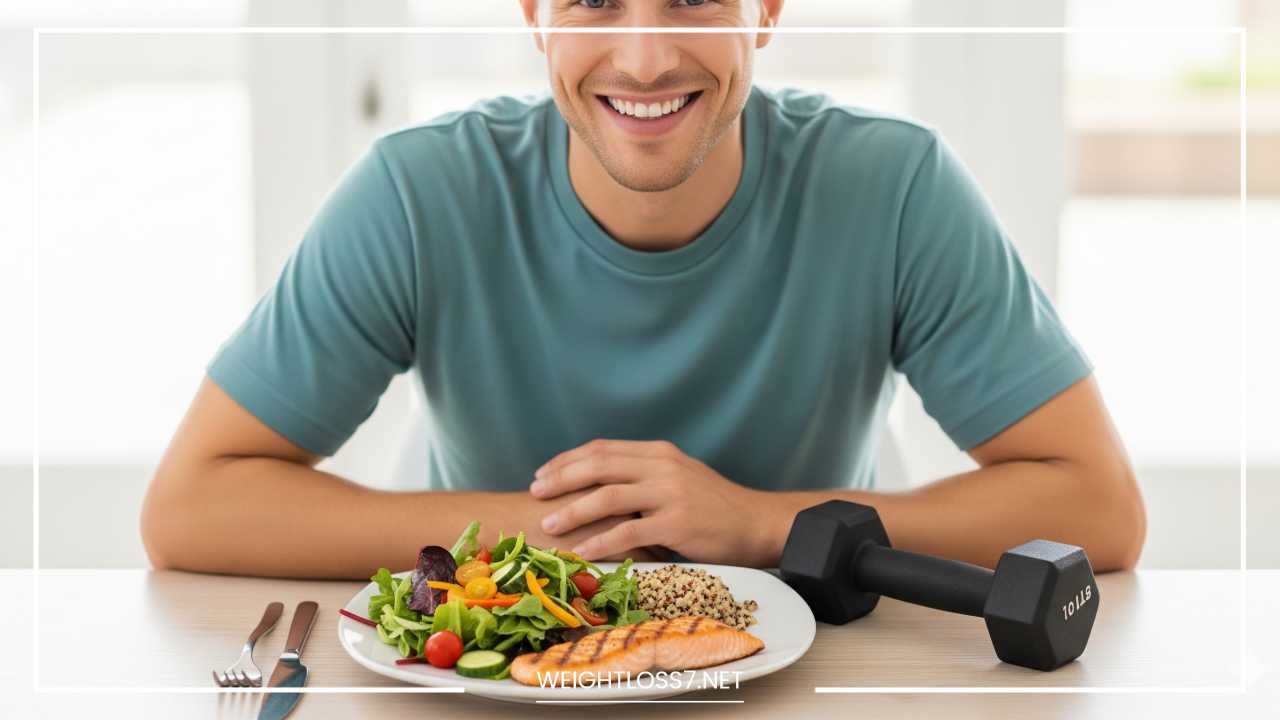
A simple way to manage portions is to use visual cues. For example, filling half your plate with colorful vegetables ensures you get plenty of volume and nutrients for very few calories. This allows you to feel physically full while maintaining the energy deficit required for weight loss. Learning to read labels and understanding what a “serving size” looks like can prevent the common trap of “health halo” eating, where one consumes too much of a food simply because it is labeled as healthy.
Meal Timing and Consistency
While the specific time you eat is often less important than the total amount you eat, consistency plays a huge role in hunger management. Erratic eating patterns—such as skipping breakfast, having a tiny lunch, and then “grazing” through the entire evening—often lead to overconsumption.
When you go for very long periods without eating, your blood sugar can drop, leading to intense cravings for quick-energy, high-sugar foods. Establishing a regular rhythm of meals helps regulate your appetite hormones, making it easier to make rational food choices rather than impulsive ones driven by extreme hunger.
Hydration
The importance of water cannot be overstated. Often, our brains confuse the signals for thirst and hunger. Many people reach for a snack when their body is actually crying out for hydration. Drinking water consistently throughout the day supports your metabolism, aids in digestion, and can help you feel more satisfied between meals. Replacing high-calorie beverages with water is often one of the simplest and most effective changes a person can make to reduce their total energy intake without feeling deprived.
How to Choose the Right Diet for Yourself
Choosing a diet is a deeply personal decision. It should be treated like buying a pair of shoes: if it doesn’t fit your life, you won’t be able to walk very far in it.
Consider Your Lifestyle
Look realistically at your daily life. Do you have time to prep meals on Sundays? Do you eat most of your meals at a desk or on the go? If you have a high-stress job or a busy family life, a diet that requires hours of specialized cooking is not the right fit. Your plan should integrate into your life, not become a second job.
Personal Preferences
Life is too short to eat food you hate. If a diet tells you to eat kale every morning but you find the taste unbearable, you will eventually quit. Successful weight loss involves finding healthy versions of the flavors you already love. If you enjoy savory, warm meals, focus your plan there. If you prefer light, cold meals, lean into that. Forcing yourself to eat “diet food” is a recipe for resentment.
Health Conditions
It is always wise to consider any underlying health issues. Conditions like diabetes, high blood pressure, or digestive sensitivities require a more tailored approach. Before making drastic changes, consulting with a healthcare professional ensures that your weight loss plan supports your overall medical well-being rather than compromising it.
Budget and Accessibility
A diet isn’t effective if you can’t afford the ingredients or can’t find them at your local grocery store. You do not need expensive “superfoods” or rare supplements to lose weight. Staple foods like grains, legumes, seasonal vegetables, and healthy oils are often very affordable and highly effective for weight loss.
The Sustainability Test
This is the most important question to ask yourself: “Can I imagine following this plan six months from now? What about a year from now?” If the answer is no, then it is not the right diet for you. Any plan that feels like a “sentence” you have to serve is a plan that will eventually end in a return to old habits.
Healthy Eating Habits That Support Weight Loss
Weight loss is not just about what you eat, but how you eat. Developing healthy habits can significantly reduce the amount of effort required to maintain a healthy weight.
One of the most powerful habits is eating slowly and mindfully. It takes approximately twenty minutes for your stomach to signal to your brain that it is full. If you rush through a meal in five minutes, you are likely to eat more than you need before your brain even realizes you’ve had enough. By slowing down, chewing thoroughly, and actually tasting your food, you allow your body’s natural satiety signals to work.
Furthermore, avoiding distractions while eating is crucial. When we eat while watching television or scrolling through our phones, we become “mindless eaters.” We lose track of how much we have consumed and fail to register the feeling of fullness. Making a habit of sitting at a table without screens can transform your relationship with food.
Learning to distinguish between physical hunger and emotional hunger is another game-changer. Physical hunger comes on gradually and can be satisfied by many different types of food. Emotional hunger often comes on suddenly and targets a specific “comfort” food. By pausing and asking yourself which one you are feeling, you gain the power to make a conscious choice rather than acting on impulse.
Role of Physical Activity
While diet is the primary driver of weight loss, physical activity is the primary driver of weight maintenance and overall health. It is much easier to create an energy deficit through what you eat than through how much you exercise, but movement offers benefits that food cannot provide.
You do not need to spend hours in the gym or run marathons to see results. Simple, consistent movement is incredibly effective. Walking is one of the most underrated forms of exercise; it is low-impact, requires no special equipment, and can be done almost anywhere. Stretching and light resistance training help maintain muscle mass, which is important because muscle tissue burns more energy at rest than fat tissue.
The goal should be to find a form of movement that you actually enjoy. Whether it is gardening, dancing in your living room, or taking a brisk walk in the park, the best exercise is the one you will actually do. Emphasize consistency over intensity. Ten minutes of movement every day is better than a two-hour workout once every two weeks.
Common Myths About Weight Loss Diets
To succeed, you must clear the mental clutter of common misconceptions that often lead people astray.
Myth: Skipping meals helps lose weight faster.
In reality, skipping meals often backfires. It leads to extreme hunger, which usually results in overeating or making poor food choices later in the day. It can also cause your energy levels to dip, making you less active.
Myth: You must completely avoid certain food groups.
Unless you have a medical allergy or intolerance, no food group needs to be entirely off-limits. Categorizing foods as “good” or “evil” creates a cycle of guilt. It is better to think in terms of “always” foods (vegetables, whole grains) and “sometimes” foods (treats, processed snacks).
Myth: Fast results are better.
The faster you lose weight, the more likely you are to lose muscle and water weight rather than fat. Rapid weight loss is also much harder to maintain. A slow, steady loss of half a pound to two pounds a week is the “gold standard” for long-term success.
Myth: Healthy food can be eaten in unlimited amounts.
While it is harder to gain weight eating broccoli than eating cookies, calories still matter. Over-consuming “healthy” oils, nuts, or large portions of grains can still stall progress if the total energy intake exceeds what your body needs.
Sample Balanced Daily Eating Structure
Instead of a rigid menu, think of your daily eating as a structure that provides stability while allowing for flexibility.
Breakfast: Light but Energizing
A good breakfast should wake up your digestive system without making you feel heavy. Focus on a combination of complex carbohydrates for brain fuel and a bit of protein or healthy fat to keep you satisfied until lunch. This could be something warm and hearty or something quick and fresh, depending on your morning schedule.
Lunch: Balanced and Filling
Lunch is often the meal that determines your energy levels for the afternoon. A balanced lunch should include a large portion of fiber-rich vegetables, a solid source of energy (like grains or tubers), and a satiating element. This prevents the “afternoon slump” and stops you from reaching for sugary snacks at 3:00 PM.
Dinner: Lighter and Easy to Digest
As your activity levels typically wind down in the evening, your dinner can be slightly lighter. It should still be satisfying, focusing on volume through vegetables and a moderate portion of protein and healthy fats. Eating a balanced dinner helps prevent late-night cravings.
Snacks: Controlled and Intentional
Snacks should not be a response to boredom. Instead, use them as a bridge between meals if you feel genuinely hungry. An intentional snack is a small portion of food that provides a mix of nutrients to carry you over to your next full meal.
Mental and Emotional Aspects of Weight Loss
The most overlooked part of any diet is the mind. Weight loss is a psychological journey as much as a physical one. Patience is your greatest ally. We live in a world of instant gratification, but the body does not transform overnight. There will be weeks when the scale does not move, even if you are doing everything right. This is normal.
Dealing with setbacks is another critical skill. Most people have an “all or nothing” mentality—they eat one “unplanned” food and decide the whole day or week is ruined, leading to a binge. If you get a flat tire, you don’t slash the other three tires; you change the one and keep driving. The same logic applies to your diet. One meal does not define your progress; your overall pattern does.
Avoiding guilt around food is essential for a positive relationship with eating. Food is more than just fuel; it is culture, celebration, and pleasure. Learning to enjoy a treat without feeling like you’ve “failed” allows you to return to your healthy habits without the heavy burden of shame.
Final Thoughts
The answer to the question “What diet should I do?” is simpler than the industry wants you to believe. The best diet for you is the one that is balanced, personalized, and sustainable. It is the one that allows you to feel energized, nourished, and happy.
Weight loss is not about a period of deprivation; it is about a transition to a more mindful way of living. By focusing on the basics of calorie balance, prioritizing whole and minimally processed foods, and building habits that fit your unique lifestyle, you move away from “dieting” and toward “living.”
Start with small, gradual changes. Perhaps this week you focus on drinking more water, and next week you focus on adding more vegetables to your lunch. These small wins build the confidence and momentum necessary for a lifelong transformation. Remember, the goal is not just to lose weight, but to gain a healthier, more vibrant version of yourself. Stay grounded, be patient with yourself, and focus on the long-term journey. You have the power to define what a healthy life looks like for you.
Frequently Asked Questions
How can I lose weight fast without feeling hungry all the time?
The secret to losing weight without constant hunger lies in satiety. Focus on increasing your intake of fiber and volume-heavy foods like leafy greens and cruciferous vegetables. Fiber slows down digestion, while the sheer physical volume of these foods stretches the stomach, signaling to your brain that you are full. Additionally, ensuring every meal contains a source of healthy fats and protein helps stabilize blood sugar, preventing the “crashes” that lead to intense hunger pangs.
What is the most sustainable diet for long-term weight loss?
The most sustainable diet is not a branded plan, but rather a flexible eating pattern that follows the 80/20 rule: 80% of your intake comes from nutrient-dense, whole foods, and 20% allows for personal preferences and social dining. Diets that eliminate entire food groups usually fail within six months. Sustainability comes from a plan that fits your budget, matches your cooking skills, and doesn’t require you to eat foods you dislike.
How do I calculate my daily calorie needs for weight loss?
To find your “sweet spot” for weight loss, you first need to determine your Total Daily Energy Expenditure (TDEE). This is the number of calories you burn in a day based on your age, weight, height, and activity level. For steady weight loss, a modest deficit of 300 to 500 calories below your TDEE is generally recommended. This allows for fat loss while preserving muscle mass and keeping your energy levels high enough for daily tasks.
Is it possible to lose weight without doing intense exercise?
Yes, weight loss is primarily driven by your nutritional intake. However, physical activity is a powerful tool for improving metabolic health and maintaining weight once it is lost. If intense workouts aren’t for you, focus on Non-Exercise Activity Thermogenesis (NEAT). This includes simple movements like walking more steps, taking the stairs, or even standing while working. These small movements can add up to a significant amount of energy expenditure over time.
Why have I stopped losing weight despite sticking to my diet?
Weight loss plateaus are a natural part of the process. As you lose weight, your body requires fewer calories to function, meaning your initial deficit may now be your new “maintenance” level. Additionally, your body may be holding onto water due to stress or changes in salt intake. Before dropping calories further, ensure you are getting enough sleep and managing stress, as high cortisol levels can stall progress even when your diet is on point.
Do I need to stop eating carbohydrates to lose belly fat?
No, you do not need to cut out carbohydrates. While reducing refined sugars and processed flours is beneficial, complex carbohydrates like whole grains, legumes, and root vegetables provide essential energy and fiber. Weight loss occurs from a total energy deficit, not from the elimination of carbs. Focus on the quality and portion size of your carbohydrates rather than avoiding them entirely.
What are the best habits for maintaining weight after a diet?
Successful weight maintenance is built on habit automation. This includes consistent meal planning, regular self-monitoring (like checking how your clothes fit), and staying hydrated. Most importantly, people who keep the weight off tend to maintain a consistent level of daily movement and don’t view their “diet” as something that has an end date, but rather as a permanent shift in how they view food and health.