How to Lose Fat with Diet

How to Lose Fat with Diet: Proven Tips for Effective Weight Loss
Achieving a leaner, healthier physique is a goal shared by millions, yet the path to getting there is often obscured by a fog of fad diets, “miracle” supplements, and contradictory advice. While exercise is a vital component of a holistic lifestyle, the fundamental truth remains: you cannot out-train a poor diet. Fat loss is primarily a nutritional challenge. Understanding how to fuel your body while encouraging it to tap into its energy reserves is the cornerstone of any successful transformation. This comprehensive guide explores the science, the psychology, and the practical application of dietary habits that lead to sustainable fat loss for everyone, regardless of their starting point.
The Distinction Between Fat Loss and Weight Loss
Before diving into the “how,” we must understand the “what.” People often use “weight loss” and “fat loss” interchangeably, but they are biologically distinct.
Weight loss refers to a lower number on the scale. This total number includes water weight, muscle tissue, glycogen stores, and bone density, in addition to body fat. If you lose weight too rapidly through extreme restriction, a significant portion of that loss may come from precious muscle tissue, which actually slows down your metabolism in the long run.
Fat loss, however, is the specific reduction of adipose tissue. The goal of a healthy diet is to preserve—or even build—lean muscle mass while reducing excess body fat. This results in a “toned” appearance, better metabolic health, and improved physical performance.
Why Diet is the Master Key
Physical activity burns calories, but the modern environment makes it incredibly easy to consume 1,000 calories in a single sitting while requiring hours of intense cardio to burn the same amount. Therefore, fat loss is won in the kitchen. By focusing on sustainability over speed, you ensure that once the fat is gone, your body has the hormonal and metabolic environment to keep it off forever.
Understanding How Fat Loss Works
At its core, fat loss is governed by the laws of thermodynamics. Your body requires a specific amount of energy—measured in calories—to maintain its current weight, perform basic functions like breathing (Basal Metabolic Rate), and power your daily movements.
The Calorie Balance Equation
Fat loss occurs when you maintain a calorie deficit. This means you provide your body with less energy via food than it expends through movement and metabolic processes. When a deficit is present, the body is forced to look elsewhere for fuel. It turns to its primary energy storage system: body fat.
The Biological Process
When the body senses an energy shortage, enzymes trigger the breakdown of triglycerides stored in fat cells into glycerol and fatty acids. These are then transported through the bloodstream to be used as fuel by your muscles and organs.
It is important to remember that consistency beats perfection. One “bad” meal won’t make you gain fat, just as one “clean” meal won’t make you lose it. The body responds to the average of your choices over days, weeks, and months.
Create a Sustainable Calorie Deficit
The most common mistake in dieting is creating a deficit that is too aggressive. While starving yourself might lead to rapid initial weight loss, it is rarely pure fat loss and almost never sustainable.
Estimating Your Daily Needs
To find your starting point, you need to determine your Total Daily Energy Expenditure (TDEE). This is the sum of:
-
BMR (Basal Metabolic Rate): Energy burned at rest.
-
TEF (Thermic Effect of Food): Energy used to digest nutrients.
-
NEAT (Non-Exercise Activity Thermogenesis): Energy from fidgeting, walking, and standing.
-
EAT (Exercise Activity Thermogenesis): Energy from intentional workouts.
A safe and effective deficit is typically 10% to 20% below your TDEE. For most people, this equates to a reduction of 300–500 calories per day.
Why Gradual is Better
A gradual deficit protects your metabolic rate. When you cut calories too sharply, your body enters a protective state, slowing down non-essential functions to conserve energy. Slow fat loss (roughly 0.5 to 1% of your body weight per week) allows you to maintain muscle mass, keep your hormones (like thyroid and testosterone) balanced, and prevent the ravenous hunger that leads to “yo-yo” dieting.
Focus on Nutrient-Dense Foods
If calories are the “quantity” of your diet, nutrient density is the “quality.” Nutrient-dense foods provide a high amount of vitamins, minerals, and phytonutrients relative to their calorie content.
The Power of Whole Foods
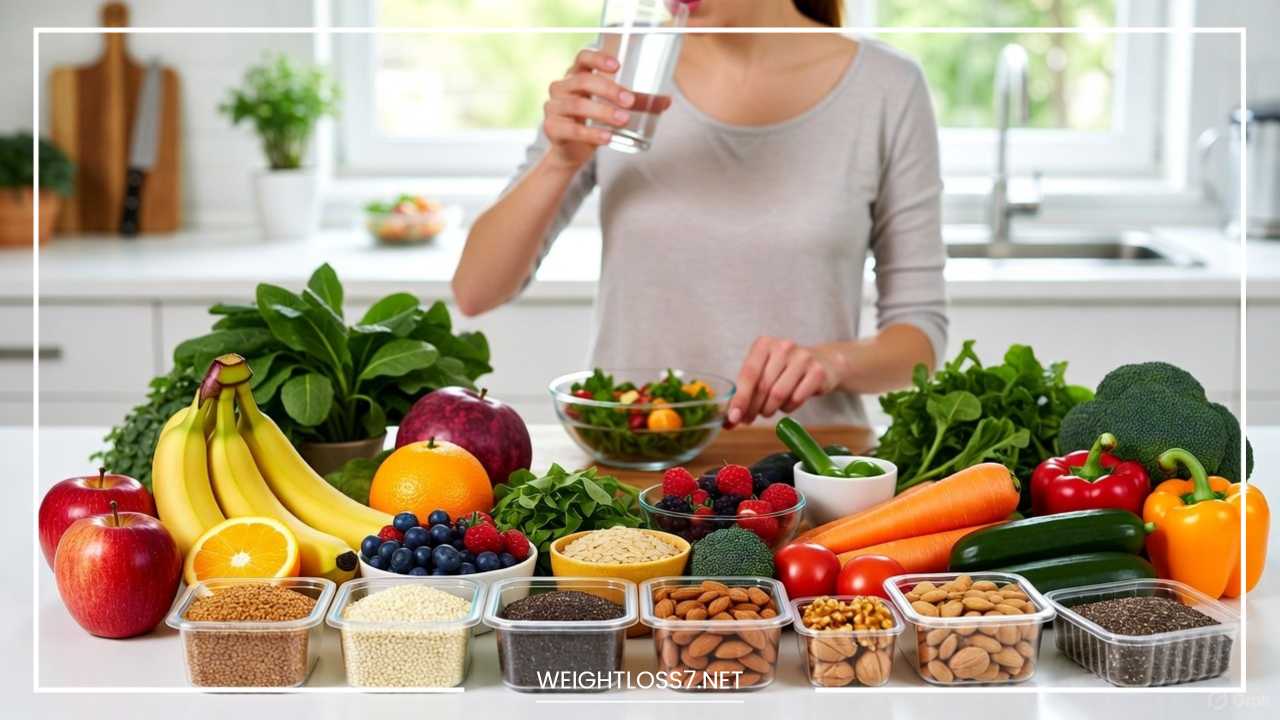
When you prioritize whole grains, legumes, dairy, fruits, vegetables, nuts, and seeds, you are giving your body the tools it needs to function optimally.
-
Satiety: These foods are often high in volume and fiber, physically stretching the stomach and sending fullness signals to the brain.
-
Metabolic Support: Micronutrients like B-vitamins, magnesium, and iron are essential for the chemical reactions that convert food into energy.
-
Energy Stability: Unlike sugary snacks that cause “crashes,” nutrient-dense foods provide a steady stream of glucose, preventing the irritability and lethargy often associated with dieting.
By filling your plate with various colors and textures, you ensure a broad spectrum of nutrients without overconsuming empty calories.
Portion Control and Mindful Eating
You can eat the healthiest foods in the world and still fail to lose fat if you eat too much of them. Portion control is not about eating tiny amounts; it’s about eating the right amount for your current activity levels.
Overeating vs. Satisfaction
In a world of “super-sized” meals, many have lost the ability to distinguish between being “no longer hungry” and being “physically stuffed.”
Mindful Eating Techniques
-
The 20-Minute Rule: It takes approximately 20 minutes for the hormone cholecystokinin (CCK) and others to signal the brain that you are full. Eating slowly allows these signals to arrive before you’ve overeaten.
-
Eliminate Distractions: Research shows that eating while watching TV or scrolling on a phone leads to significantly higher calorie intake because the brain isn’t processing the sensory experience of the meal.
-
The “Hunger Scale”: Before eating, ask yourself if you are at a 1 (starving) or a 5 (neutral). Aim to start eating at a 3 and stop at a 7 (satisfied but light).
Balance Macronutrients
Macronutrients—Carbohydrates, Proteins, and Fats—all play specific roles in the body. A balanced approach ensures you don’t feel deprived, moody, or lethargic.
The Role of Each Macro
-
Protein: This is the most important macro for fat loss. It has the highest Thermic Effect of Food (meaning you burn more calories just digesting it) and is essential for preserving muscle. Sources like Greek yogurt, beans, lentils, and cottage cheese should be staples.
-
Carbohydrates: These are not the enemy. They fuel your brain and your workouts. Opt for “complex” carbs like oats and sweet potatoes, which provide sustained energy.
-
Fats: Crucial for hormone production and the absorption of vitamins A, D, E, and K. Avocados, nuts, and olive oil provide the essential fatty acids your body cannot make on its own.
The Simple Plate Method
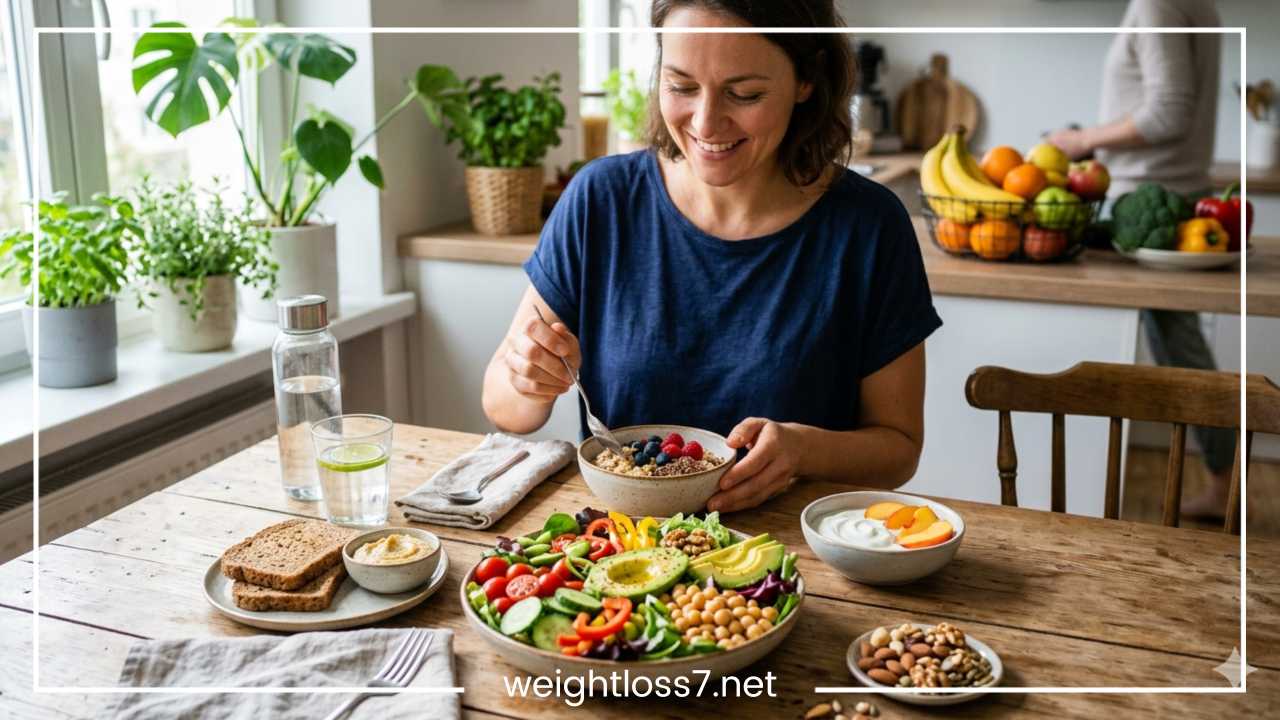
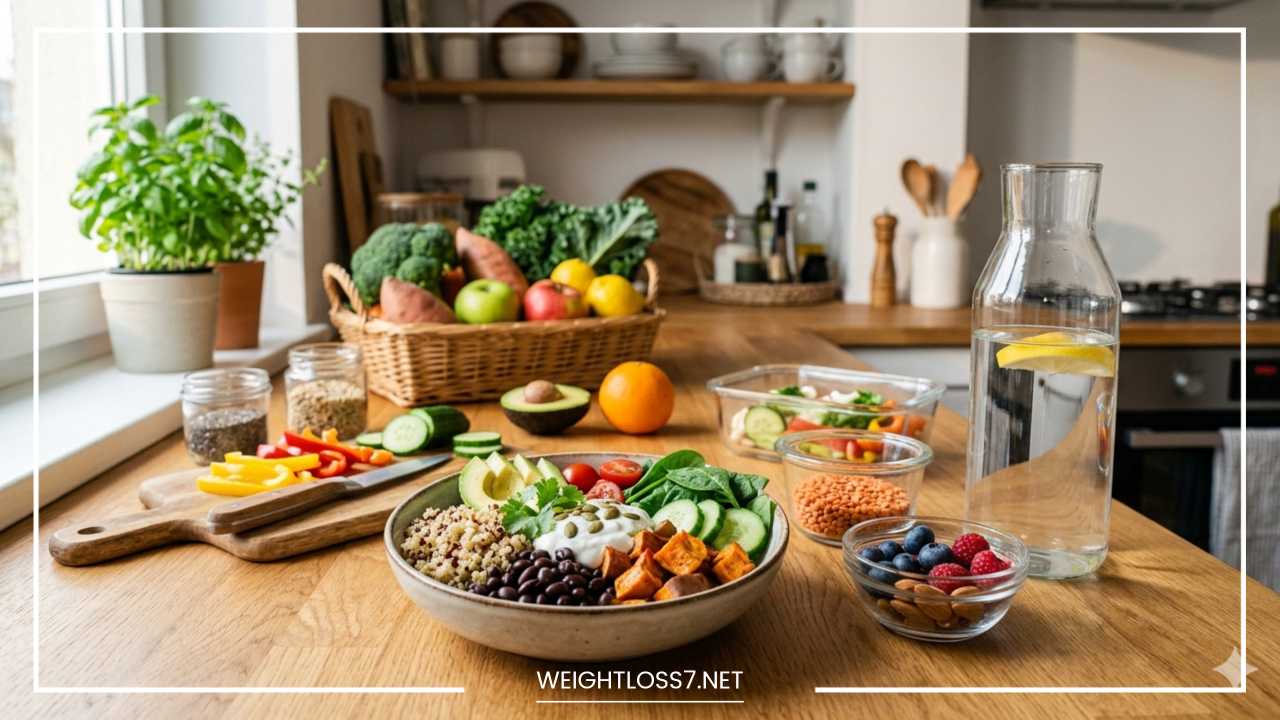
To balance a meal without counting every gram: Fill half your plate with non-starchy vegetables, one-quarter with a protein source, and one-quarter with complex carbohydrates, adding a thumb-sized portion of healthy fats.
Reduce Processed and High-Sugar Foods
Ultra-processed foods are engineered to be “hyper-palatable.” They often contain a “bliss point” combination of salt, sugar, and unhealthy fats that overrides the body’s natural satiety mechanisms.
The Insulin Response
When you consume high amounts of added sugar, your blood glucose spikes. In response, the pancreas releases insulin to usher that sugar into cells. However, chronically high insulin levels can inhibit lipolysis—the process of breaking down fat for energy.
Hidden Calories
Many processed “health foods” (like certain granola bars or flavored yogurts) are packed with hidden sugars. Transitioning to whole-food alternatives reduces these “hidden” calories and stabilizes your appetite.
Stay Hydrated
Water is the medium in which almost all metabolic reactions occur. Even mild dehydration can significantly impact your fat-loss efforts.
The Hunger Illusion
The hypothalamus regulates both hunger and thirst. It is incredibly common for the brain to interpret a “thirst signal” as a “hunger signal.” Before reaching for a snack, drink a large glass of water; you may find the craving disappears entirely.
Metabolism and Water
Studies suggest that drinking cold water can slightly increase resting energy expenditure (the “thermogenic effect” of water) as the body works to warm the liquid to core temperature. Furthermore, water is essential for the kidneys to filter waste; when the kidneys are sluggish due to dehydration, the liver must step in to help, which can divert the liver from its primary role in fat metabolism.
Meal Timing and Consistency
There is a long-standing myth that eating after a certain hour (like 8:00 PM) causes the body to store all those calories as fat. This is scientifically inaccurate. Total daily intake matters much more than the clock.
Finding Your Rhythm
However, consistency is key. Eating at regular intervals helps stabilize blood sugar and prevents the “starvation” response that leads to late-night binging.
-
Avoid the “Skip and Binge” Cycle: Many people skip breakfast and lunch only to consume 2,000 calories in a frantic evening state.
-
Routine Benefits: A consistent eating schedule trains your hunger hormones (Ghrelin) to rise at specific times, making it easier to manage appetite.
Manage Cravings and Emotional Eating
Cravings are often more about psychology than biology. Stress, boredom, and sadness are common triggers for reaching for calorie-dense comfort foods.
Strategies to Overcome Urges
-
The “HALT” Method: Before eating, ask if you are Hungry, Angry, Lonely, or Tired. If it’s anything other than hungry, food won’t solve the problem.
-
Delay and Distract: Cravings usually peak and subside within 15 minutes. Go for a walk, call a friend, or engage in a hobby to let the urge pass.
-
Volume Eating: If you just want the sensation of eating, reach for high-volume, low-calorie foods like air-popped popcorn or sliced cucumbers.
Importance of Fiber for Fat Loss
Fiber is a non-digestible carbohydrate found in plant foods. It is one of the most underrated tools in a weight-loss arsenal.
Two Types of Success
-
Soluble Fiber: Found in oats and beans, it forms a gel that slows digestion and improves insulin sensitivity.
-
Insoluble Fiber: Found in whole grains and vegetables, it adds bulk to your stool and helps move food through the digestive tract.
By slowing down the rate at which food leaves the stomach, fiber keeps you feeling “full” for hours after a meal, naturally reducing your desire for snacks.
Sleep and Its Impact on Diet
Sleep is just as important as nutrition when it comes to fat loss. A sleep-deprived body is metabolically “stingy.”
The Hormonal Shift
When you don’t sleep enough:
-
Ghrelin (the hunger hormone) increases.
-
Leptin (the fullness hormone) decreases.
-
Cortisol (the stress hormone) rises, which encourages the body to store fat in the abdominal region.
Aim for 7–9 hours of quality sleep. This ensures your willpower is intact and your hormones are working for you rather than against you.
Common Diet Mistakes to Avoid
-
Skipping Meals: This usually backfires by causing extreme hunger later.
-
Liquid Calories: Sodas, sweetened lattes, and even excessive fruit juices can add hundreds of calories without providing any satiety.
-
The “All or Nothing” Mentality: Viewing a diet as a tightrope you can “fall off” leads to giving up after one mistake. Think of it like a car with a flat tire—you don’t slash the other three tires; you fix the one and keep driving.
-
Over-relying on “Low Fat” Labels: Often, when fat is removed from a product, manufacturers add sugar to maintain flavor.
Sample Day of Balanced Eating
Here is how a balanced, nutrient-dense day might look without relying on meat or eggs:
-
Breakfast: A bowl of Greek yogurt or a soy-based yogurt alternative, topped with chia seeds, pumpkin seeds, and half a cup of berries.
-
Lunch: A Mediterranean-style bowl with quinoa, chickpeas, roasted red peppers, olives, cucumbers, and a dollop of hummus.
-
Snack: Sliced apple with two tablespoons of almond butter or a small serving of cottage cheese with pineapple.
-
Dinner: A hearty black bean and sweet potato chili, served with a side of steamed broccoli and topped with a slice of avocado.
-
Evening: A cup of herbal tea and a small piece of dark chocolate.
Long-Term Habits for Sustainable Fat Loss
Sustainable fat loss is about building a lifestyle you actually enjoy.
-
Flexibility: The 80/20 rule (80% whole foods, 20% treats) prevents feelings of deprivation.
-
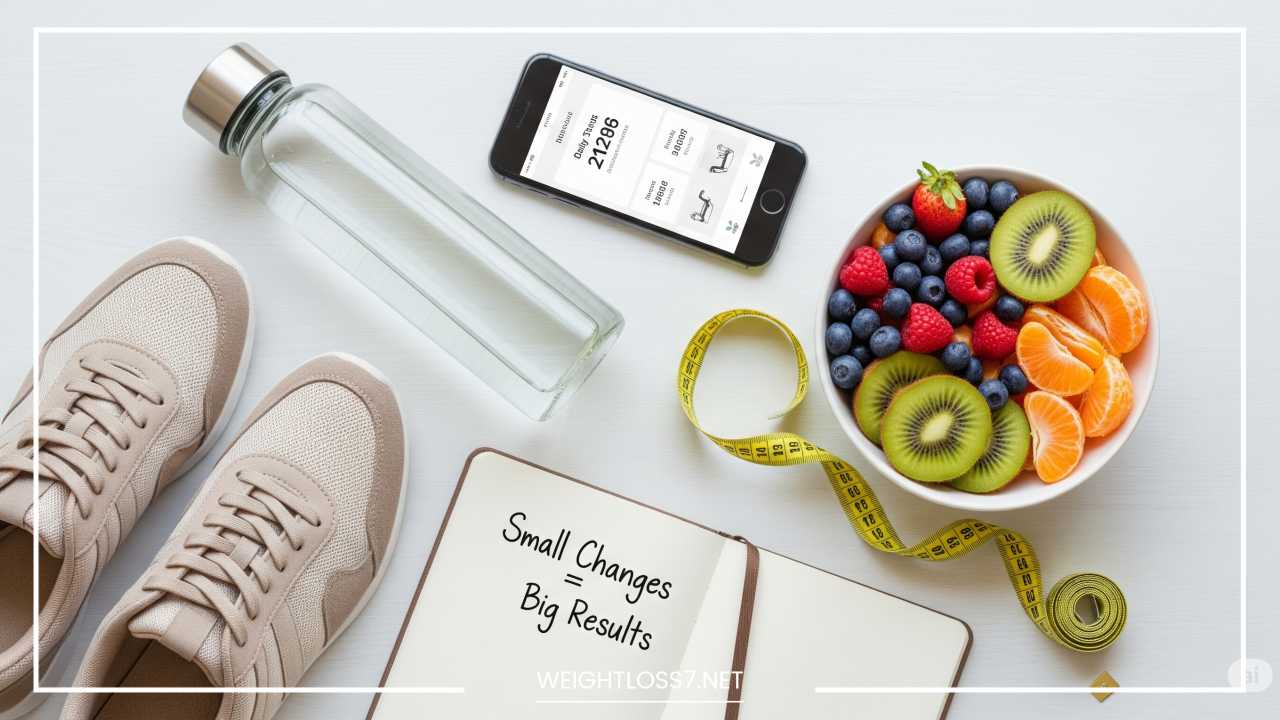
Tracking Progress: Use tools like photos, waist measurements, and strength gains in the gym. The scale is a useful tool, but it doesn’t tell the whole story.
-
Environment Design: Keep healthy foods visible and easy to grab, while keeping highly processed snacks out of the house or in hard-to-reach places.
Final Thoughts
Fat loss is not a sprint; it is a marathon of consistency. By understanding the science of calorie deficits, prioritizing nutrient density, and managing your lifestyle factors like sleep and stress, you can achieve a body composition that makes you feel vibrant and healthy.
The most effective “diet” is the one you can see yourself following a year from now. Start with small, manageable changes today, and allow the power of habit to carry you toward your goals.