What is Easiest Way to Lose Weight


The Easiest Way to Lose Weight: A Simple Beginner’s Guide
Why Most Weight Loss Plans Fail
The modern approach to weight management is broken. Walk down the aisle of any bookstore, scroll through social media, or search online, and you will be bombarded with complex programs, restrictive rules, and extreme demands. You are told to eliminate entire groups of foods, spend hours preparing elaborate meals, or commit to grueling exercise regimens that leave you exhausted and sore.
For the vast majority of people, these methods fail. They do not fail because of a lack of willpower or a lack of desire. They fail because they are fundamentally unsustainable.
When a routine requires an overhaul of your entire life overnight, it creates psychological and physical friction. You might manage to stick to a rigid regimen for a week, two weeks, or even a month. But eventually, life happens. A busy day at work, a family emergency, or simply the exhaustion of daily life interrupts your routine, and the entire structure collapses.
When this happens, the common reaction is self-blame. People assume they lack discipline, when in reality, they were trying to follow a flawed system.
The secret to successful weight management is not intensity; it is simplicity. True, lasting weight loss does not require you to turn your life upside down. It requires a series of small, manageable adjustments to your daily routine that accumulate over time.
By focusing on behavior changes that fit seamlessly into your existing lifestyle, you remove the friction that leads to burnout. Weight loss does not have to be an all-or-nothing struggle. It can be a gentle, progressive shift toward a healthier way of living.
In this guide, you will learn how to strip away the noise and focus on the core habits that truly drive weight loss. We will explore how to eat better without feeling hungry, how to move more without spending hours at the gym, and how to optimize your environment, sleep, and stress levels to support your body naturally.
This guide is designed for everyone. It does not require special products, rare ingredients, or extreme commitments. It is a practical, step-by-step roadmap for real people living busy lives.
The Simplest Way to Start Losing Weight
The foundational error of most beginner fitness programs is the pursuit of perfection. Individuals often decide to start a journey by changing their diet, starting a heavy workout routine, drinking a gallon of water, and waking up two hours earlier all on the same Monday morning. This approach shocks the system and quickly leads to overwhelm.
The easiest way to lose weight is to prioritize consistency over perfection. Think of your habits as compounding interest. A small change, such as walking for fifteen minutes after dinner or swapping a midday soda for sparkling water, might seem insignificant on any given day. However, when multiplied across three hundred and sixty-five days, these tiny choices yield massive physical transformations.
When you focus on consistency, you give your brain and body time to adapt to new behaviors. A habit takes time to become automatic. By introducing only one or two small changes at a time, you ensure that the mental energy required to maintain them remains low. Once a habit becomes second nature, you can layer another small change on top of it.
Furthermore, gradual weight loss is far superior to rapid weight loss for long-term success. When the body loses weight too quickly through extreme restriction, it often loses muscle mass alongside fat, which can slow down your resting metabolism.
A slower metabolism means your body burns fewer calories throughout the day, making it even harder to maintain your progress. Gradual loss, typically around one to two pounds per week, preserves lean tissue and allows your metabolism to adjust naturally, ensuring that the weight you lose stays off for good.
Understand the Basics of Weight Loss
To navigate your weight loss journey successfully, you must understand the underlying mechanism of how the body manages energy. At its core, weight loss is governed by the relationship between the energy you consume and the energy your body expends. This is commonly referred to as energy balance, or calories in versus calories out.
Every food and beverage you consume contains energy, measured in calories. Your body requires a specific number of calories each day just to perform basic biological functions, such as breathing, circulating blood, and cellular repair. This baseline is known as your resting metabolic rate.
On top of this baseline, you burn additional calories through daily movement, such as walking, working, cleaning, and deliberate exercise.
| Component of Energy Expenditure | Description |
| Resting Metabolic Rate | The energy required to keep your body functioning at rest. |
| Thermic Effect of Food | The energy used to digest, absorb, and process nutrients. |
| Daily Non-Exercise Movement | Energy expended during routine activities like walking, standing, and cleaning. |
| Deliberate Exercise | Energy burned during intentional workouts like cycling or strength training. |
To lose weight, you must create an energy deficit. This means your total daily energy expenditure must be slightly higher than your total daily caloric intake. When this deficit occurs, your body is forced to draw upon its stored energy reserves, primarily body fat, to meet its operational needs.
While this concept sounds simple, the application is where many people get tripped up. Creating an energy deficit does not mean starving yourself. In fact, a drastic reduction in food intake can trigger defensive biological mechanisms, making you feel excessively fatigued and intensely hungry, which inevitably leads to overeating later.
Instead, the goal is to create a modest, manageable deficit through a combination of subtle dietary adjustments and increased daily activity. Portion sizes and daily habits matter far more than meticulous, stressful mathematical tracking. By understanding that weight loss is simply a gentle shift in your body’s energy balance, you can remove the anxiety and focus on practical lifestyle choices.
Eat Smarter Without Feeling Deprived
One of the greatest myths of weight loss is that you must eat less food to see results. In reality, the key to sustainable weight loss is eating smarter, not necessarily eating less volume. This concept relies on energy density: the number of calories contained in a given volume or weight of food.
Foods that are high in water and fiber tend to have a low energy density. This means you can eat a large volume of them, filling your stomach and satisfying your physical hunger, while consuming relatively few calories. Conversely, highly processed foods are often high in fats and refined sugars, giving them a high energy density. A small handful of chips or a tiny pastry can contain as many calories as a massive, nutrient-dense meal, yet it will leave you feeling empty and craving more within an hour.
To put this into practice, aim to fill half of your plate with vegetables at lunch and dinner. Vegetables provide structural bulk, essential vitamins, and dietary fiber. Fiber is incredibly valuable for weight loss because it slows down the rate of digestion, preventing rapid spikes and crashes in blood sugar levels. This steady release of energy keeps your appetite stable and prevents the sudden, intense urges to snack on sweet or salty foods.
Alongside vegetables, ensure that every meal includes a satisfying source of protein and wholesome carbohydrates. Wholesome choices like whole grains, beans, lentils, tofu, and dairy or dairy alternatives provide the necessary building blocks and sustained energy your body needs to thrive. Protein is particularly effective at promoting satiety because it triggers the release of fullness hormones in your digestive system, signaling to your brain that you are well-nourished.
Highly processed foods break down rapidly in the digestive tract, causing rapid spikes in blood sugar followed by steep crashes, which triggers frequent hunger. On the other hand, whole foods enriched with natural fiber slow down the digestive process, leading to stable energy delivery and lasting fullness.
A critical habit for success is avoiding the common trap of skipping meals. Many beginners skip breakfast or lunch in a misguided attempt to save calories. However, this strategy almost always backfires.
By the time the next meal arrives, the body is in a state of extreme hunger, which impairs your decision-making and leads to rapid eating and overconsumption. Eating balanced, regular meals keeps your metabolism steady and your decision-making sharp.
Easy Portion Control Tips
Counting every single calorie that passes your lips can quickly become a tedious, stressful chore that sucks the joy out of eating. While tracking can be a useful educational tool for a short period, it is rarely a sustainable long-term strategy for daily life. Fortunately, you can manage your portion sizes effectively using simple, visual cues and behavioral habits.
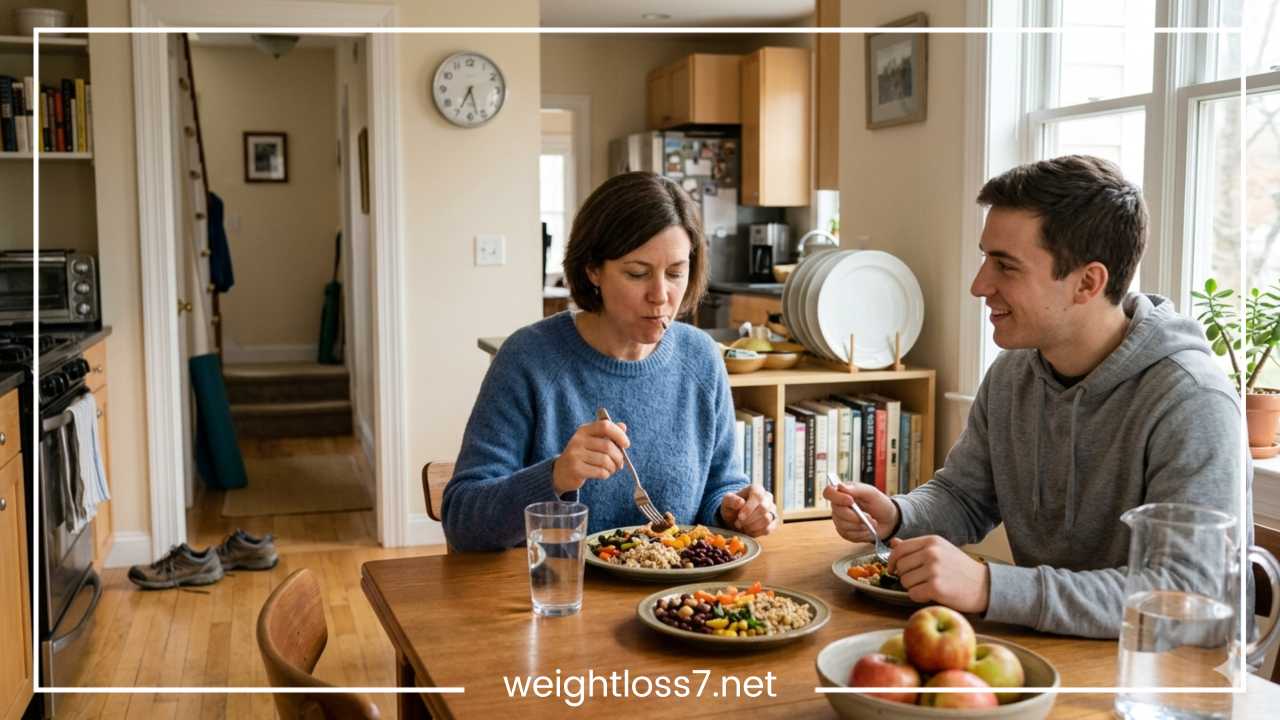
First, try switching to smaller dinner plates and bowls. This sounds like a psychological trick, and it is, but it works remarkably well. When you place a modest portion of food on a large plate, your brain perceives a scarcity of food, which can leave you feeling psychologically unsatisfied.
When you place that exact same amount of food on a smaller plate, the plate looks full, signaling abundance to your brain. This simple environmental modification reduces the amount of food you serve yourself without making you feel deprived.
Second, re-establish a connection with your body’s natural hunger and fullness signals. In our fast-paced society, many of us have lost touch with these internal cues. We eat because it is a certain time of day, because food is present, or because we are distracted by a screen. To counter this, practice mindful eating by removing distractions during meals. Turn off the television, put down your phone, and sit at a table.
-
Assess your hunger: Before you take your first bite, ask yourself how hungry you truly are on a scale from one to ten.
-
Eat slowly: Chew your food thoroughly and savor the flavors. It takes approximately twenty minutes for your stomach to communicate to your brain that it is full. If you rush through your meal in five minutes, you will likely overeat before your brain ever receives the signal.
-
Pause mid-meal: Stop halfway through your plate and check in with your body again. You do not have to clean your plate just because the food is there. Stop eating when you feel comfortably satisfied, not stuffed.
Finally, be mindful of mindless snacking. Eating directly out of a large box or bag makes it impossible to judge how much you have consumed. Always pour a specific portion of snacks into a small bowl, and put the container away before you begin eating. This simple barrier creates a pause point, forcing you to make a conscious decision if you want to reach for seconds.
Why Water Matters for Weight Loss
When people focus on losing weight, they place almost all their attention on solid food, completely overlooking the liquid calories that enter their diet. Beverages can be a significant hidden source of extra energy. Sodas, sweetened coffees, energy drinks, fruit juices, and sweet teas are often loaded with refined sugars that add hundreds of daily calories without providing any structural fullness or nutritional value.
When you consume liquid calories, your body does not register them the same way it registers solid food. The liquid passes through your stomach rapidly, leaving you just as hungry as you were before, despite having consumed a substantial amount of energy. By replacing these sweetened beverages with plain water, sparkling water, or unsweetened herbal teas, you can instantly eliminate a massive amount of excess calories from your weekly total without changing a single bite of food.
Beyond cutting out liquid calories, increasing your daily intake of pure water actively supports the physiological process of weight loss. The human body is composed largely of water, and every single chemical reaction, including the breakdown of stored fat for energy, requires hydration to function efficiently. Even mild dehydration can slow down your metabolic rate and reduce your physical energy levels, making you less inclined to move throughout the day.
When the body experiences mild dehydration, energy levels begin to drop, leading to reduced daily movement and a lower overall calorie burn. Conversely, maintaining optimum hydration helps sustain energy levels, increasing your spontaneous daily activity and allowing for efficient fat metabolism.
Furthermore, the brain frequently misinterprets mild dehydration as hunger. The sensations for thirst and hunger are controlled by the same region of the brain, the hypothalamus. When your body is running low on fluids, it may send a signal that you interpret as a craving for a snack, when what your body actually needs is a glass of water.
A highly effective habit for beginners is to drink a full glass of water roughly fifteen to twenty minutes before each meal. This hydrates your system and fills your stomach slightly, helping you approach your meal with a calm, regulated appetite.
Simple Ways to Move More Every Day
While adjusting your dietary habits is the primary driver of weight loss, increasing your physical activity provides a powerful boost to your progress. However, this does not mean you need to sign up for intense fitness classes or force yourself through painful workouts. The easiest, most sustainable way to move more is to integrate activity naturally into your normal daily routine.
Think of physical activity in two separate categories: deliberate exercise and non-exercise movement. Deliberate exercise includes things like gym sessions or running, while non-exercise movement encompasses all the steps you take while walking around your house, grocery shopping, cleaning, or standing at your desk.
Surprisingly, non-exercise movement often accounts for a much larger portion of the calories you burn each day than a brief workout does. Therefore, increasing your daily lifestyle movement is an incredibly effective strategy for fat loss.
The absolute best starting point for a beginner is walking. Walking is free, requires no special equipment, puts minimal stress on your joints, and can be done almost anywhere. It does not require a massive block of time; you can accumulate walking throughout your day.
-
Take a ten-minute walk in the morning before you start your day.
-
Use half of your lunch break to stroll around your office building or neighborhood.
-
Walk for fifteen minutes in the evening to unwind from work.
These short walks add up quickly. If you complete three ten-minute walks a day, you have successfully added thirty minutes of active movement to your routine without ever feeling like you had to carve out a massive chunk of your schedule.
In addition to walking, look for small opportunities to choose the active path throughout your day. Take the stairs instead of the elevator. Park your car at the far end of the parking lot when you run errands. If you have a sedentary desk job, set a timer to stand up and stretch for two minutes every hour, or pace around the room while you are speaking on the phone.
To complement this lifestyle movement, beginners can greatly benefit from incorporating simple strength training into their weekly routine, using basic bodyweight exercises like squats against a chair, wall push-ups, or glute bridges. Strength movements help preserve and build lean muscle tissue.
Muscle is metabolically active tissue, meaning it burns more energy at rest than fat tissue does. By engaging your muscles a few times a week, you protect your metabolism and ensure your body becomes firmer and stronger as you lose weight.
The Role of Sleep and Stress
Weight loss is often treated as a simple matter of food and exercise, but your internal hormonal environment plays an equally vital role. Two of the most powerful influences on this environment are your sleep quality and your stress levels. When either of these areas is neglected, your body’s biochemistry shifts into a state that makes weight loss incredibly difficult.
When you are chronically sleep-deprived, your body experiences a shift in two primary hormones that regulate appetite: ghrelin and leptin. Ghrelin is the hormone that signals hunger to your brain, while leptin is the hormone that signals fullness and satisfaction.
When you get insufficient sleep, your ghrelin levels spike, and your leptin levels plummet. This creates a physiological perfect storm: you wake up feeling intensely hungry, and no matter what you eat throughout the day, your brain struggles to register that you are full.
Inadequate sleep causes elevated ghrelin and depressed leptin, which directly triggers unintended overeating. On the other hand, optimized sleep keeps these hormones balanced, leading to natural appetite regulation and much easier calorie control.
To make matters worse, a tired brain experiences reduced activity in the prefrontal cortex, the area responsible for self-control and long-term planning, while experiencing heightened activity in the emotional centers of the brain. This means that when you are exhausted, you are biologically wired to crave quick energy sources—specifically foods high in refined sugars and fats— and you have less psychological defense to resist them. Aim for seven to eight hours of quality sleep per night by creating a calming evening routine and keeping your bedroom dark and cool.
Stress operates through a similar hormonal mechanism, primarily driven by the hormone cortisol. When you experience chronic stress, whether from a demanding job, financial worries, or relationship tension, your cortisol levels remain elevated.
High cortisol signals to your body that it is under threat, encouraging it to conserve energy and store fat, particularly around the abdomen, as a protective survival mechanism. Furthermore, stress often leads to emotional eating, where food is used as a temporary comfort to soothe negative feelings.
To combat this, you must develop simple stress-management techniques that do not revolve around food. When you feel a wave of stress or anxiety hitting you, instead of reaching for a snack, try a few healthy alternatives:
-
Deep breathing: Take five slow, deep breaths, inhaling through your nose and exhaling through your mouth to calm your nervous system.
-
Step outside: Spend five minutes in fresh air or nature to clear your mind.
-
Journaling: Write down your thoughts to release mental tension.
-
Call a friend: Connect with someone who supports you to reduce emotional overwhelm.
By proactively managing your sleep and stress, you create a calm, balanced internal environment that allows your weight loss efforts to succeed naturally.
Common Weight Loss Mistakes to Avoid
The path to weight loss is lined with common traps that can easily derail your progress if you do not know how to spot them. By recognizing these mistakes ahead of time, you can protect yourself from unnecessary frustration and keep moving forward smoothly.
The first major mistake is attempting to change too much too quickly. It is easy to understand the temptation; when you decide to improve your health, you want results immediately. However, changing your entire diet, starting a daily workout routine, and slashing your food intake all at once is a recipe for physical exhaustion and mental burnout.
Your willpower is a finite resource. If you spend all your mental energy fighting yourself on five different fronts, you will eventually run out of steam. Focus on mastering one simple habit before adding another.
Another widespread mistake is relying entirely on motivation to carry you through your journey. Motivation is an emotion, and like all emotions, it is fleeting. It feels great when you have it, but it will inevitably vanish when you are tired, busy, or stressed.
If you only eat well or move when you “feel” motivated, your progress will be highly erratic. Instead of relying on motivation, rely on systemized habits. Design your environment to make the healthy choice the easiest choice.
-
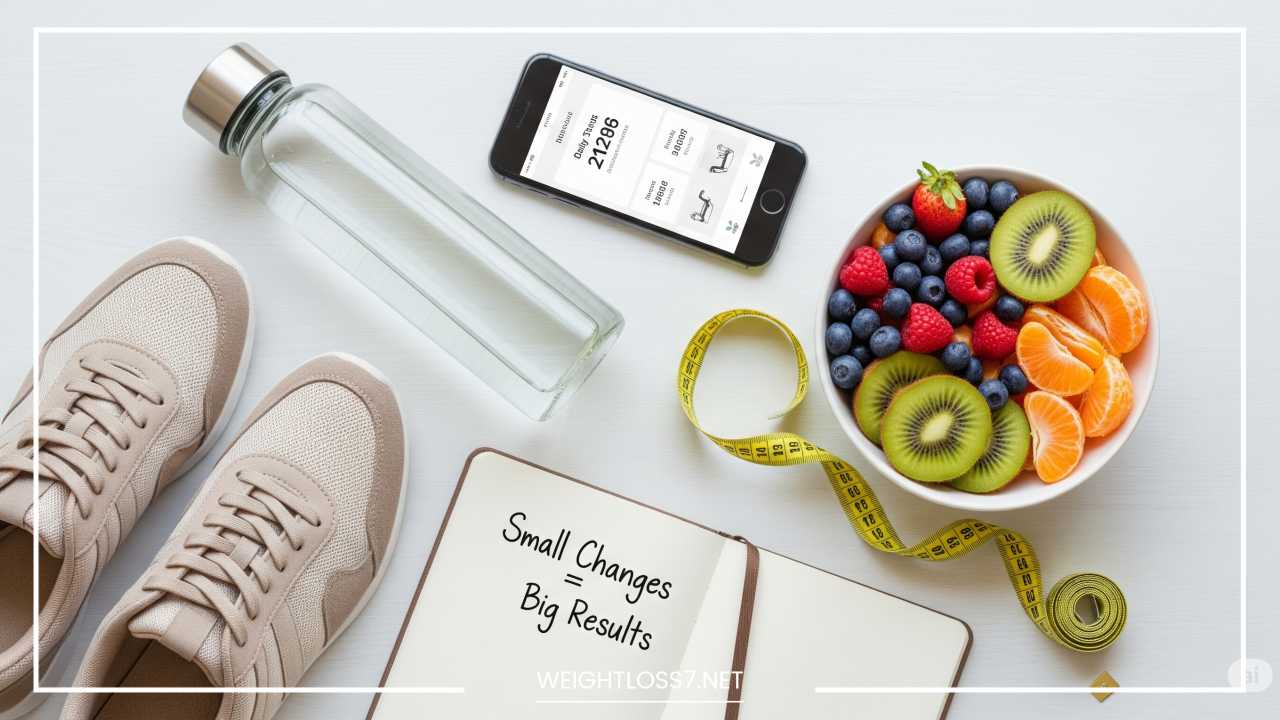
Keep a fresh water bottle on your desk so you don’t have to think about getting a drink.
-
Set your walking shoes by the front door as a visual reminder.
-
Wash and prep vegetables right after grocery shopping so they are ready to grab.
| Mistake | Consequence | Better Solution |
| Changing everything at once | Mental burnout and rapid quitting. | Introduce one small habit at a time. |
| Relying on daily motivation | Erratic progress and inconsistent habits. | Build systems and anchor habits in routines. |
| Fixating on scale weight | Emotional distress over natural fluctuations. | Track multiple metrics like energy and clothing fit. |
| Adopting an all-or-nothing mindset | Abandoning a plan after a single mistake. | Practice the “never miss twice” rule. |
Finally, avoid the trap of an all-or-nothing mindset. This occurs when you view your day as either perfectly successful or a total failure. If you happen to eat a piece of cake at an office party, an all-or-nothing mindset tells you that your entire day is ruined, which often leads to throwing your hands up and overeating for the rest of the evening.
Remember that a single indulgent meal cannot ruin weeks of healthy choices, just as a single salad cannot instantly make you healthy. Weight loss is determined by the average of your behaviors over weeks and months. If you make a less-than-ideal food choice, simply accept it without guilt and immediately return to your normal, healthy pattern at the very next meal.
A Beginner-Friendly Weight Loss Plan
To help you put these concepts into immediate, practical action, let us design a simple, step-by-step plan that you can begin implementing today. Remember, the goal is not to execute every single step perfectly from day one. Instead, treat this as a progressive checklist where you build confidence and momentum over time.
Phase 1: Establish the Baseline (Weeks 1 and 2)
During the first two weeks, focus entirely on two simple adjustments. First, commit to drinking a full glass of water before your lunch and dinner meals, and ensure you have replaced at least one sugary beverage a day with water.
Second, add a single fifteen-minute walk to your daily routine, preferably right after your largest meal of the day. Do not worry about changing what you eat just yet; focus entirely on locking in these two simple behaviors until they feel automatic.
Phase 2: Adjust the Plate (Weeks 3 and 4)
Once your hydration and walking habits are established, shift your attention to your meals. Begin practicing the half-plate rule: at lunch and dinner, intentionally fill half of your plate with vegetables before adding anything else.
Simultaneously, practice slow eating. Set a timer on your phone for fifteen minutes and challenge yourself to make your meal last that entire time, chewing carefully and pausing between bites.
Phase 3: Optimize the Environment (Weeks 5 and 6)
With your eating and movement patterns improving, focus on your recovery and lifestyle systems. Establish a strict digital curfew by turning off all screens thirty minutes before bed to improve your sleep quality.
Begin tracking your daily habits using a simple calendar or journal, placing a checkmark for each day you complete your walks and eat your vegetables. Seeing your progress visually builds incredible psychological momentum.
To visualize how these habits come together in a normal daily routine, you can organize your day into simple morning, midday, and evening checkpoints. In the morning, kickstart your metabolism by drinking a glass of water right after waking up, eating a balanced breakfast such as oatmeal with fruit and nuts, and engaging in a quick ten-minute morning walk or stretch.
When midday arrives, ensure you drink a full glass of water fifteen minutes before lunch, fill half of your smaller plate with rich vegetables alongside a quality source of protein like baked tofu or beans, and enjoy your meal away from your digital screens.
Finally, wrap up your evening by consuming another glass of water before a balanced dinner, taking a refreshing fifteen-minute neighborhood walk after eating, and turning off all your electronic devices thirty minutes before bed to protect your deep sleep cycles.
As you progress through this plan, be sure to celebrate your small wins. Did you choose water over soda today? That is a victory. Did you go for a walk even though it was drizzling outside? That is a victory. By recognizing and rewarding your consistency, you train your brain to enjoy the process, transforming what used to feel like a chore into an empowering, life-affirming journey.
The Easiest Way Is the Way You Can Stick To
When you strip away all the marketing hype, complex theories, and expensive trends, you are left with a simple truth: the absolute easiest, most effective way to lose weight is the method you can stick to consistently for the rest of your life.
The best diet plan in the world is completely worthless if you abandon it after a month because you are miserable. Conversely, a simple, modest plan built on basic habits will deliver spectacular results if you can maintain it comfortably year after year.
Weight loss is not a race with a defined finish line. It is a permanent lifestyle shift. The habits you build to lose the weight must be the exact same habits you use to maintain your new weight. Therefore, those habits must be compassionate, flexible, and sustainable. They must allow room for celebration, busy work weeks, and days where you simply need to rest.
Be patient with yourself. Your current weight and physical habits took years to develop, and it is entirely unrealistic to expect your body to transform completely in a matter of days. Treat yourself with kindness, focus entirely on making the next healthy choice, and trust in the power of small, compounding actions. You have all the tools you need to succeed. Take one steady step forward today, drink a glass of water, step outside for a brief walk, and let consistency do the rest.
Frequently Asked Questions About Weight Loss
What is the easiest way to lose weight without exercising?
The most effective way to drop pounds without a formal workout routine is to focus entirely on your dietary habits and daily non-exercise movement. Since weight loss fundamentally requires an energy deficit, you can create this by shifting your diet toward low-energy-dense foods.
Filling half of your plate with high-fiber vegetables, prioritizing satisfying proteins like tofu or legumes, and eliminating hidden liquid calories from sweet drinks will naturally reduce your energy intake. Combine this with spontaneous daily movement, like taking the stairs or standing while answering phone calls, to successfully burn energy without ever stepping into a gym.
How can a beginner start losing weight at home?
Starting your fitness journey from home is highly achievable because it allows you to build sustainable routines in a comfortable, controlled environment. Begin by making simple environmental changes in your kitchen, such as using smaller plates for portion control and keeping prepped vegetables readily accessible.
For physical activity, you do not need expensive gym equipment; you can stream free beginner bodyweight routines online or commit to walking briskly around your neighborhood for fifteen minutes after dinner. Focus on consistency by mastering one or two small habits at home before trying to overhaul your entire lifestyle.
How can I lose weight naturally without feeling hungry all the time?
The secret to losing weight without experiencing constant hunger is a concept known as volume eating. Instead of severely restricting the total amount of food you consume, you choose foods that have a low energy density but a high structural volume. Foods packed with water and dietary fiber, such as leafy greens, broccoli, and whole grains, fill your stomach physically and stretch its walls.
This physical stretching triggers hormonal signals that tell your brain you are full. Additionally, including a clean source of protein with every meal stabilizes your blood sugar levels, preventing sudden energy crashes and intense cravings.
Why am I not losing weight when I eat healthy and exercise?
It is incredibly frustrating when your hard work does not seem to reflect on the scale, but this issue usually stems from a few hidden factors. First, even highly nutritious foods like nuts, avocados, and whole grains are energy-dense, meaning consuming them in large portions can inadvertently close your energy deficit.
Second, chronic stress and poor sleep elevate a hormone called cortisol, which encourages the body to retain fluids and store fat. Finally, daily weight fluctuations are entirely normal due to water retention and digestion; focus on how your clothes fit and your overall energy levels rather than relying solely on the daily scale number.
How much weight can you safely lose in a month?
Medical and nutritional experts generally agree that a safe, sustainable rate of weight loss is roughly one to two pounds per week, which translates to four to eight pounds over the course of a month. While extreme crash diets might promise double-digit drops in a few short weeks, that rapid loss is almost entirely made up of stored water weight and precious muscle tissue.
Losing muscle actively slows down your resting metabolism, making it incredibly difficult to keep the weight off long-term. Gradual weight loss ensures you are burning body fat while preserving lean muscle and protecting your overall metabolic health.