How to Lose Weight Without Working Out and Dieting


How to Lose Weight Without Working Out and Dieting: The Definitive Guide to Sustainable Weight Management
The modern narrative surrounding weight loss is frequently framed as a grueling battle of attrition—a constant conflict between human willpower and biological urges. We are conditioned to believe that unless we are engaged in high-intensity interval training or adhering to a restrictive, often joyless eating regimen, we are not truly “trying.” This “no pain, no gain” philosophy, while popular in media, is often the very thing that prevents long-term success. For the vast majority of people, these high-friction methods are not sustainable amidst the realities of a busy career, family obligations, and the psychological need for a balanced life.
However, the science of human biology offers a more compassionate and effective alternative. Weight management is not merely a mechanical calculation of “calories in versus calories out” performed by a machine. Instead, it is a sophisticated biological process governed by hormones, environmental cues, circadian rhythms, and metabolic efficiency. By shifting the focus from external force to internal optimization, it is entirely possible to achieve a healthy weight naturally. This comprehensive guide explores the multifaceted, science-backed strategies that allow for weight management without the need for traditional “dieting” labels or formal “working out” routines.
The Biological Foundation: Understanding Metabolism and Hormones
To manage weight without the application of external force, one must first demystify the internal mechanisms at play. Metabolism is often misunderstood as a static speed—something you are either “born with” or not. In reality, metabolism is a dynamic and highly adaptive series of chemical reactions that convert the nutrients you consume into the energy required to sustain life.
The Role of Insulin and Energy Storage
The primary gatekeeper of body weight is the hormone insulin. Produced by the pancreas, insulin is the body’s main storage hormone. Its job is to move glucose (sugar) from the bloodstream into the cells for energy or storage. When insulin levels are chronically elevated—a state often caused by frequent grazing, high stress, or a lack of restorative sleep—the body remains in a persistent “storage mode.” In this hormonal environment, it is physiologically difficult for the body to access stored fat for fuel, regardless of activity levels.
By focusing on habits that naturally lower and stabilize insulin—such as longer gaps between eating and prioritizing hydration—you signal to your body that it is safe to transition into “burning mode.” This shift is the fundamental difference between fighting your biology and working with it.
Metabolic Adaptation and Non-Exercise Activity
While intentional exercise burns calories, it represents a relatively small percentage of your total daily energy expenditure. The majority of the energy your body uses goes toward your Basal Metabolic Rate (BMR)—the energy required for basic functions like breathing and cellular repair—and Non-Exercise Activity Thermogenesis (NEAT). NEAT includes all the movement you do that isn’t formal exercise: walking to the car, typing, fidgeting, and even maintaining your posture. By subtly increasing NEAT, you can significantly boost your metabolic output without ever setting foot in a gym.
The Art of Mindful Eating: Reclaiming Your Natural Cues
Mindful eating is not a diet; it is a return to the intuitive relationship with food that many of us lost in childhood. In a world of “ultra-processed” environments and constant digital distraction, we have become disconnected from the very signals our bodies use to regulate weight: hunger and satiety.
The 20-Minute Satiety Lag
The human body uses a complex signaling system involving hormones like ghrelin (which signals hunger) and leptin (which signals fullness). However, there is a significant biological lag—often up to twenty minutes—between the stomach being physically full and the brain receiving the chemical signal to stop eating. In our fast-paced society, many of us can finish an entire meal in ten minutes, meaning we have consumed far more energy than we required before the “full” signal even had a chance to arrive.
-
The Solution: Slow down. Chew thoroughly. Put your utensils down between bites. These simple mechanical changes allow your hormones to catch up with your intake, leading to a natural reduction in portion sizes without the feeling of deprivation.
Identifying the Root of the Craving
Not all hunger is physical. Often, we reach for food to satisfy emotional or psychological needs—a phenomenon known as emotional eating.
-
Physical Hunger: Comes on gradually, can be satisfied by many different types of food, and results in a feeling of satisfaction.
-
Emotional Hunger: Comes on suddenly, creates a “craving” for a specific comfort food (often high in sugar or refined carbohydrates), and frequently leads to feelings of guilt.
By pausing to ask, “Am I physically hungry, or am I stressed/bored?” you can address the actual need—perhaps a five-minute walk or a glass of water—rather than masking the emotion with calories.
Hydration: The Invisible Metabolic Catalyst
Water is the most underrated tool in the weight management toolkit. Every single metabolic process, including the breakdown of fat (lipolysis), requires water. Without adequate hydration, your metabolism slows down to conserve resources.
Distinguishing Thirst from Hunger
The brain’s hunger and thirst centers are located very close to one another in the hypothalamus. Consequently, the signals can easily get crossed. Many people experience “hunger” that is actually a cry for hydration. If you feel a sudden urge to snack, drinking a large glass of water and waiting ten minutes will often cause the “hunger” to vanish entirely.
Pre-Loading for Satiety
Research has consistently shown that drinking 500ml of water approximately thirty minutes before a meal can significantly reduce the amount of food consumed during that meal. This “pre-loading” creates physical volume in the stomach, which stretches the stomach walls and sends early satiety signals to the brain. Furthermore, replacing high-calorie beverages like soda or sweetened coffee with water, herbal teas, or infused water can eliminate hundreds of calories a week with zero psychological effort.
Sleep Hygiene: The Foundation of Weight Control
If you are not sleeping, you are likely working against your weight loss goals. Sleep is not “downtime” for the body; it is a period of intense metabolic and hormonal regulation.
The Cortisol-Ghrelin Connection
When you are chronically sleep-deprived (getting less than seven hours of quality rest), your body enters a state of physiological stress. This causes a spike in cortisol, a hormone that signals the body to protect its energy stores by holding onto fat, particularly in the abdominal region.
Simultaneously, sleep deprivation causes ghrelin levels to rise and leptin levels to fall. This “hormonal storm” makes you crave high-energy, sugary foods the next day because your brain is desperately searching for a quick hit of glucose to compensate for the lack of rest. Improving sleep is often the “missing link” for those who feel they are doing everything else right but still aren’t seeing results.
Creating a Sleep-Positive Environment
To optimize your metabolism through sleep, focus on hygiene:
-
Consistency: Go to bed and wake up at the same time every day to regulate your circadian rhythm.
-
Light Control: Minimize blue light exposure from screens an hour before bed, as it suppresses melatonin, the hormone that tells your body it’s time to sleep.
-
Temperature: A slightly cool room (around 18°C) is ideal for the deep, restorative sleep phases that support metabolic health.
Stress Management and the Nervous System
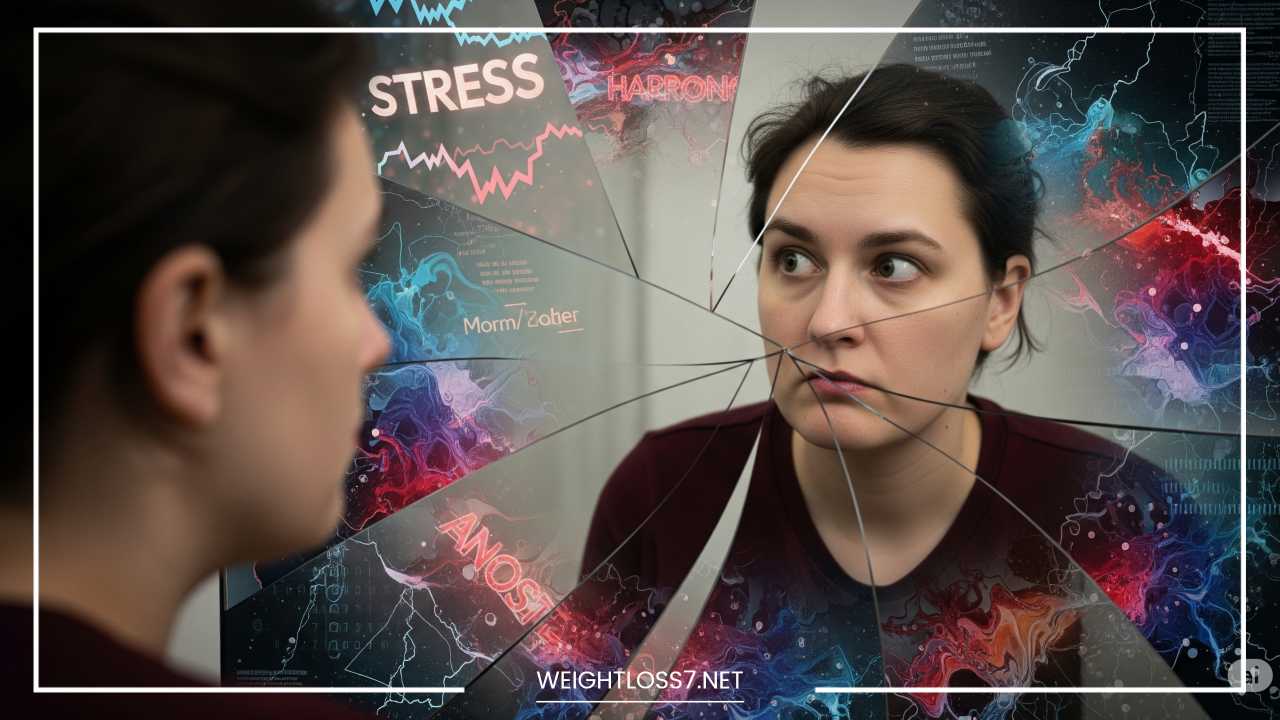
Stress is a significant, yet often ignored, driver of weight gain. In the modern world, we rarely face physical threats, yet our bodies respond to work deadlines and traffic jams with the same “fight or flight” response our ancestors used to escape predators.
The Sympathetic vs. Parasympathetic State
When you are stressed, your sympathetic nervous system is dominant. In this state, digestion is essentially “turned off” to divert energy to the muscles and heart. If you eat while stressed, your body does not process the nutrients efficiently.
Conversely, weight management and healthy digestion happen in the “parasympathetic” state—also known as “rest and digest.” Finding small ways to downregulate your nervous system throughout the day is crucial. This can be as simple as:
-
Box Breathing: Inhaling for four seconds, holding for four, exhaling for four, and holding for four.
-
Time in Nature: Even ten minutes of exposure to green space has been shown to lower cortisol levels.
-
Digital Detox: Setting boundaries with notifications to prevent the constant “ping” of stress throughout the day.
Lifestyle Tweaks: Maximizing Movement Without “Exercise”
While formal workouts are beneficial, they are not the only way to keep the body active. For many, the idea of “going to the gym” creates a mental barrier that leads to total inactivity. By focusing on “lifestyle movement,” you can burn more energy over the course of a week than you would in three intense gym sessions.
The Power of NEAT (Non-Exercise Activity Thermogenesis)
As mentioned earlier, NEAT is the energy we use for everything that isn’t sports or sleeping. You can maximize this naturally:
-
Active Commuting: If you use public transport, get off one stop early. If you drive, park at the far end of the lot.
-
Vertical Movement: Always take the stairs for three floors or fewer. Vertical movement engages the large muscle groups in the legs, which are metabolic powerhouses.
-
Household Productivity: Gardening, cleaning, and organizing are all high-NEAT activities. A heavy session of house cleaning can burn as much energy as a light jog, with the added benefit of a clean home.
Standing and Stretching
Prolonged sitting causes the metabolism to go into a “standby” mode. Using a standing desk, or simply making it a habit to stand up and stretch every time you receive a phone call, keeps the postural muscles active and ensures that your metabolic rate stays elevated throughout the working day.
Environmental Design: Engineering Your Success
Willpower is a finite resource that is easily exhausted by the end of a long day. If you have to rely on willpower to make healthy choices, you will eventually fail. The key is to design your environment so that the “healthy” choice is the default choice.
The Visibility Rule
Humans are highly visual creatures. We tend to eat what we see. By placing a bowl of fresh fruit or a jar of raw nuts on the counter while keeping crackers and sweets tucked away in a high, opaque cupboard, you use “choice architecture” to guide your behavior. If you have to climb a stepstool to find a snack, you are far less likely to eat it out of boredom.
Portion Perception
The size of our dinnerware has a psychological impact on how much we eat. Using slightly smaller plates and bowls creates the visual illusion of a larger portion. This satisfies “visual hunger,” allowing you to feel content with a portion size that matches your actual biological needs rather than the size of the plate.
Mindset: Moving from “Restriction” to “Addition”
Most weight loss attempts fail because they are built on a foundation of “no.” No sugar, no snacks, no fun. This scarcity mindset eventually leads to a “rebound” where you overconsume the very things you were avoiding.
Habit Stacking for Long-Term Change
Rather than trying to overhaul your entire life in twenty-four hours, use the principle of habit stacking. Identify a habit you already do every day and “stack” a small, healthy behavior onto it.
-
Example: “After I start the coffee maker, I will drink 250ml of water.”
-
Example: “When I finish my work day, I will do five minutes of light stretching before turning on the TV.”
These micro-changes require very little willpower but, when practiced consistently, they become permanent parts of your lifestyle.
Focusing on “Non-Scale Victories” (NSVs)
Weight is a lagging indicator—it takes time for the scale to reflect the changes happening inside your body. If the scale is your only metric, you may get discouraged. Instead, celebrate NSVs:
-
Having more energy in the afternoon.
-
Sleeping through the night without waking up.
-
Noticing that your clothes fit more comfortably.
-
Feeling less “puffy” or bloated.
These are signs that your metabolic health is improving, and the weight changes will inevitably follow.
Technology as a Tool for Mindfulness
In a world full of digital distractions, we can repurpose our devices to act as mindfulness anchors rather than sources of stress.
-
Hydration Reminders: Simple apps can ping you to drink water, ensuring you don’t go hours in a state of “false hunger.”
-
Step Trackers: These don’t have to be used for “competition.” Instead, use them to monitor your NEAT. If you see you’ve been sitting for four hours straight, let it be a gentle prompt to walk around for five minutes.
-
Journaling: Keeping a digital log of your mood and energy levels can help you identify patterns. You might notice that every Tuesday (a high-stress day) you experience intense cravings. Armed with this knowledge, you can plan a stress-relieving activity for Tuesday evening to preempt the craving.
Debunking the Myths of Traditional Dieting
To move forward, we must unlearn the “diet culture” myths that have led to so much frustration.
Myth: “You have to be hungry to lose weight.”
Constant hunger is actually a sign that your hormones are out of balance or that you are not eating enough nutrient-dense foods. When your body gets the nutrients and hydration it needs, and when your insulin is stable, hunger should be a gentle signal, not a ravenous emergency.
Myth: “Skipping meals saves calories.”
Skipping meals often backfires by causing a massive spike in hunger and a drop in blood sugar later in the day. This leads to impulsive choices and overeating in the evening. Consistent, mindful intake is far more effective for metabolic stability.
Myth: “All fats are bad for weight loss.”
Healthy fats—such as those found in avocados, nuts, and seeds—are essential for hormone production and satiety. They slow down the absorption of energy, keeping you full for much longer than a fat-free, high-carb snack would.
The Role of Fiber and Whole Foods
While this guide avoids strict diet labels, the physical properties of food cannot be ignored. Fiber is a crucial component of losing weight without “dieting.” Fiber adds bulk to your food without adding calories, and it slows down the rate at which sugar enters your bloodstream.
By prioritizing whole foods—foods that are as close to their natural state as possible—you naturally consume more fiber. Whole grains, legumes, fruits, and vegetables are the “slow-burning” fuel your body needs to maintain steady energy levels throughout the day. When your energy is steady, you are far less likely to experience the “crashes” that lead to mindless snacking.
Final Thoughts: Empowerment Through Consistency
Losing weight without working out and dieting is not about a “quick fix” or a temporary challenge. It is about a fundamental shift in how you relate to your body. It is the realization that your body is not an enemy to be conquered, but a sophisticated partner to be understood and supported.
By focusing on the “Four Pillars”—Sleep, Hydration, Stress Management, and Mindful Movement—you create a lifestyle where weight management is a natural byproduct of health, rather than a stressful goal. This approach is evergreen because it doesn’t rely on the latest trend or a high-intensity program that you will eventually quit. Instead, it relies on small, manageable habits that respect your biology and your time.
Sustainable change is found in the quiet moments: the glass of water before a meal, the decision to walk to a colleague’s desk instead of sending an email, the choice to put the phone away and truly taste your dinner. These are the bricks that build a foundation of lifelong health. Empowerment comes from knowing that you have the tools to manage your weight on your own terms, with kindness and consistency.