How to Lose Weight Quickly Free

How to Lose Weight Quickly and for Free: The Ultimate Guide to Sustainable Results
Losing weight is often portrayed as an expensive endeavor. Between high-priced gym memberships, boutique fitness classes, “superfood” supplements, and pre-packaged meal plans, it’s easy to believe that shedding pounds requires a significant financial investment. However, the truth is far simpler: the biological mechanisms of weight loss don’t require a credit card.
In this comprehensive guide, we will explore how to lose weight quickly and effectively using nothing but your own determination and the resources already available to you. We will focus on practical, science-backed strategies that prioritize whole foods, movement, and lifestyle shifts—all without spending a dime.
What Does “Lose Weight Quickly” Really Mean?
When we talk about losing weight “quickly,” it’s important to distinguish between healthy acceleration and dangerous extremes. Fast weight loss that lasts is about optimizing your body’s natural processes. It isn’t about starving yourself; it’s about removing the obstacles that prevent your metabolism from functioning at its peak.
Clarifying Realistic Expectations
Many people fall into the trap of “crash dieting,” hoping to lose massive amounts of weight in a matter of days. While extreme calorie restriction can show a lower number on the scale, it often results in the loss of muscle mass and essential fluids rather than actual body fat.
A realistic, “quick” result in the first week of a new regimen is typically a drop of 3 to 5 pounds. Much of this initial shift is “water weight” as your body processes stored glycogen. After the first fortnight, a safe and sustainable rate is generally 1 to 2 pounds per week. While this might sound slow compared to “fad diet” claims, it ensures that you are losing fat rather than muscle, which is the key to keeping the weight off long-term.
The Logic of Calorie Balance
At its core, weight loss is governed by the relationship between the energy you consume and the energy you expend. To lose weight, you must create a calorie deficit. You don’t need a fancy app or a paid consultant to do this; you simply need to adjust your daily habits to favor movement and nutrient-dense, lower-calorie foods.
Why “Free” Works Better
Paid programs often create a dependency. When you stop buying the shakes or the pre-made meals, the weight returns. By utilizing “free” methods—cooking from scratch, walking, and using bodyweight exercises—you are building permanent skills. These are habits you can maintain for the rest of your life without any financial burden.
The Science of Weight Loss (Simple & Clear)
Understanding the “why” behind weight loss makes the “how” much easier to stick to. You don’t need a degree in biology to master your body, but you do need to understand a few fundamental principles.
How Metabolism Works
Your metabolism isn’t a fixed speed; it’s the sum of all the energy your body uses to keep you alive. This includes your Basal Metabolic Rate (BMR)—the calories burned while resting—and the energy used during physical activity. You can influence your metabolic rate for free by increasing your muscle activity and staying hydrated. Even small movements throughout the day contribute to your Total Daily Energy Expenditure (TDEE).
The Role of Insulin and Blood Sugar
When we consume high amounts of processed sugars, our bodies release insulin to manage the blood sugar spike. High insulin levels signal the body to store fat rather than burn it. By choosing whole grains and fiber-rich vegetables, you keep your blood sugar stable, allowing your body to access its fat stores for energy more easily.
Water Weight vs. Fat Loss
When you reduce your intake of processed sugars and excess salt, your body releases the extra water it was holding onto to process those substances. This is why the scale drops fast in the beginning. True fat loss—the actual breakdown of adipose tissue—takes a bit more time and consistency, but the initial “whoosh” of water weight is a great motivational boost.
Start With Your Daily Habits (Biggest Impact)
Success is not found in a single “miracle” workout; it is found in your daily routine. You don’t need a total life overhaul; you need better habits.
1. Eat Mindfully
In our fast-paced world, we often eat while distracted—watching TV, scrolling through phones, or working. This leads to overeating because the brain doesn’t receive the “fullness” signal in time.
-
The 20-Minute Rule: It takes about 20 minutes for your brain to register that your stomach is full. Slow down. Chew each bite thoroughly.
-
The Sensory Experience: Pay attention to the texture, smell, and taste of your food. When you actually enjoy your food, you feel more satisfied with smaller portions.
-
Hunger vs. Boredom: Before reaching for a snack, ask yourself, “Am I actually hungry, or am I just bored, stressed, or thirsty?” If a glass of water doesn’t satisfy the craving, it might be true hunger.
2. Control Portion Sizes
You can eat the healthiest food in the world, but if you eat too much of it, you won’t lose weight. Portion control is the most effective free tool in your arsenal.
-
The Plate Method: Fill half your plate with colorful vegetables, one-quarter with whole grains, and one-quarter with a protein source like lentils or beans.
-
Smaller Plates: It’s a classic psychological trick for a reason. Using a smaller salad plate instead of a large dinner plate makes a portion look more substantial, tricking your brain into feeling satisfied with less.
-
Avoid Second Servings: Put the leftovers away before you sit down to eat. This removes the temptation to go back for more just because it’s sitting on the counter.
3. Build Balanced Meals
A balanced meal should keep you full for hours. Focus on:
-
Whole Grains: Oats, brown rice, barley, and whole-wheat bread provide steady energy.
-
Legumes: Lentils, chickpeas, and beans are incredible for satiety due to their high fiber and protein content.
-
Vegetables: These are “high-volume” foods. You can eat a large amount of leafy greens or broccoli for very few calories.
-
Dairy: Greek yogurt or cottage cheese (if they fit your dietary preferences) provide excellent satiety and essential nutrients.
Cut Hidden Calories Without Spending Money
The easiest way to create a deficit is to eliminate “empty” calories—foods and drinks that provide energy but no nutritional value. This requires zero shopping and zero spending.
-
Liquid Calories: Sodas, sweetened coffees, and packaged fruit juices are major weight-loss blockers. Switching these to plain water, herbal tea, or black coffee can save you 300–500 calories a day.
-
The Snacking Trap: Many people eat three meals but “graze” all day. These small bites add up. Try to stick to structured meal times and avoid “mindless” snacking at your desk.
-
Late-Night Eating: Your body is less efficient at processing energy right before sleep. Try to finish your last meal at least 3 hours before bed to give your digestive system a break.
-
Cooking Methods: You don’t need to buy “diet food.” Just change how you cook. Instead of deep-frying, try boiling, steaming, or dry-roasting. Reducing the amount of oil used in a pan—even by just a tablespoon—can save 120 calories per meal.
Increase Daily Movement (No Gym Required)
Physical activity is the second half of the weight-loss equation. You don’t need a treadmill or a membership to burn calories; you just need gravity and space.
1. Walking as a Fat-Loss Tool
Walking is perhaps the most underrated exercise for weight loss. It’s low-impact, requires no equipment, and can be done anywhere.
-
Post-Meal Walks: A 10-minute walk after lunch and dinner helps aid digestion and manages blood sugar levels.
-
Step Goals: Use a free app on your phone to track steps. Aim for a “stretch goal” above your current average. If you usually walk 3,000 steps, aim for 5,000, then 8,000.
-
The Power of Pace: Interspersing your walk with 1-minute bursts of fast walking can increase your calorie burn significantly.
2. Bodyweight Exercises at Home
You are your own gym. Resistance training helps maintain muscle mass, which keeps your metabolism high even when you are resting.
-
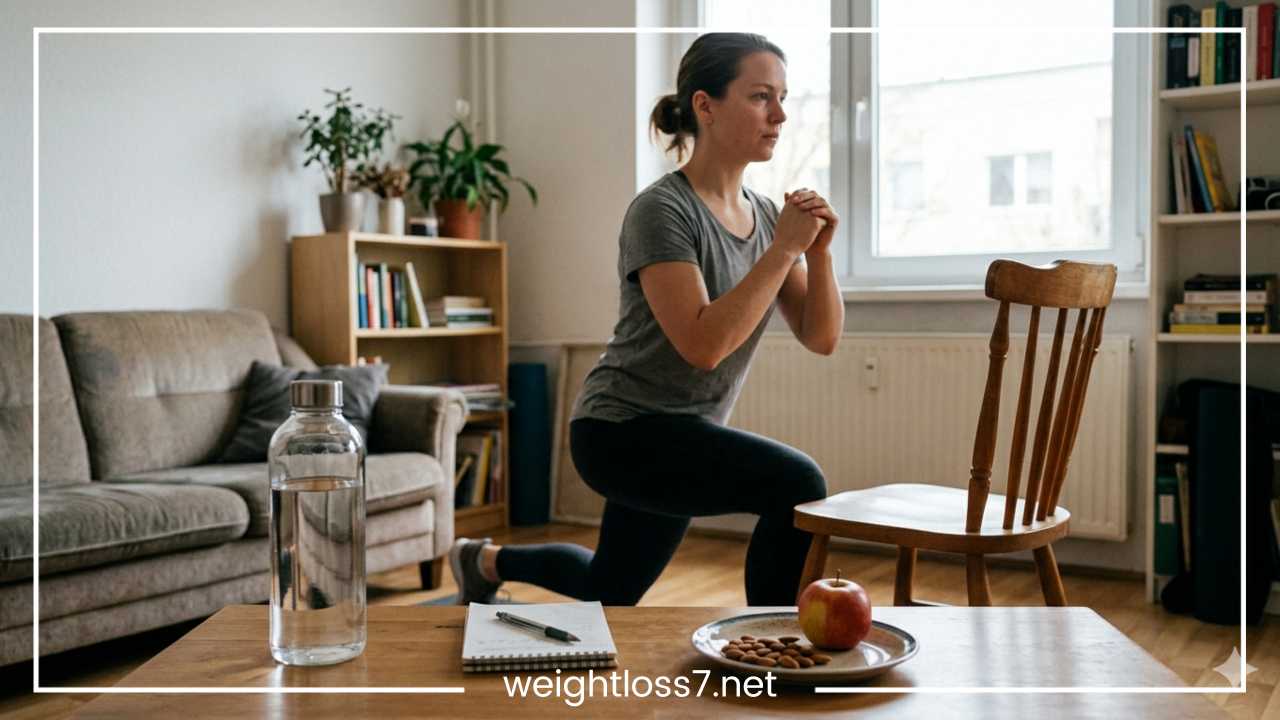
The “Big Four”: Squats, push-ups (on your knees or against a wall if needed), planks, and lunges.
-
The 15-Minute Circuit: Do each exercise for 45 seconds, rest for 15, and repeat the cycle three times. This burns calories during the workout and creates an “afterburn” effect where your metabolism stays elevated.
3. “NEAT” Movement (Non-Exercise Activity Thermogenesis)
NEAT refers to the energy expended for everything we do that is not sleeping, eating, or formal exercise.
-
Take the Stairs: Never use an elevator if you’re only going up two or three floors.
-
Household Chores: Scrubbing floors, vacuuming, and gardening are intensive calorie burners.
-
Stand Up: If you have a desk job, try to stand while taking phone calls. Standing burns more calories than sitting.
Hydration: The Underrated Fat-Loss Trick
Water is essential for every metabolic process in the body, including lipolysis (the breakdown of fat). Often, what we perceive as hunger is actually mild dehydration.
-
Pre-Meal Hydration: Drinking a large glass of water 15 minutes before a meal can help you feel full faster, leading to a natural reduction in calorie intake without feeling deprived.
-
The Energy Boost: Fatigue is a common symptom of dehydration. If you feel too tired to exercise, try drinking 16 ounces of water. You’ll likely find your energy returns.
-
Replacing Drinks: Use water as your primary beverage. If you find it boring, add a slice of lemon, cucumber, or a few mint leaves (usually items already in your kitchen).
Sleep and Weight Loss
You can’t out-diet or out-exercise a lack of sleep. Sleep is the time when your body repairs tissue and balances hormones. When you are sleep-deprived, two key hormones go out of balance: Ghrelin (which tells you you’re hungry) increases, and Leptin (which tells you you’re full) decreases.
-
The Cravings Connection: Sleep deprivation makes you crave high-sugar, high-fat foods because your brain is looking for a quick energy fix.
-
Better Sleep Hygiene for Free:
-
Turn off screens (blue light) one hour before bed.
-
Keep your room as dark and cool as possible.
-
Stick to a consistent sleep schedule, even on weekends.
-
Avoid caffeine in the afternoon.
-
Manage Stress to Avoid Weight Gain
When you’re stressed, your body produces cortisol. High levels of cortisol are linked to increased abdominal fat and a higher drive to eat “comfort foods.” Stress management is a critical, yet often ignored, component of weight loss.
Simple Free Stress-Reduction Methods:
-
Deep Breathing: Just five minutes of intentional, slow breathing (box breathing or 4-7-8 breathing) can lower your heart rate and cortisol levels almost instantly.
-
Walking Outdoors: Fresh air and natural light are proven to lower stress markers.
-
Journaling: Writing down your thoughts helps you process emotions without turning to food for comfort.
-
Free Meditation: There are thousands of free guided meditations available on video platforms that can help calm the nervous system.
Smart Eating Strategies for Faster Results
To speed up the process without sacrificing health, focus on nutrient density and fiber.
1. Eat More High-Fiber Foods
Fiber is the “secret weapon” of weight loss. It adds bulk to your meals without adding calories, slowing down digestion and keeping you full longer.
-
Sources: Legumes (beans, lentils), whole grains (oats, quinoa), and cruciferous vegetables (broccoli, cauliflower).
-
The Satiety Factor: Fiber triggers the release of satiety hormones in the gut, telling your brain you’ve had enough to eat.
2. Don’t Skip Meals (Why it Backfires)
It’s tempting to skip breakfast to “save” calories, but for many, this leads to extreme hunger by mid-afternoon. This often results in binge eating or poor food choices at night. Instead, eat regular, balanced meals to keep your blood sugar stable throughout the day.
3. Timing Matters
-
The “Closed Kitchen” Policy: Decide on a time (e.g., 8:00 PM) after which the kitchen is “closed.” This prevents late-night mindless snacking while watching television.
-
Regularity: Try to eat your meals at the same time each day. This helps regulate your body’s internal clock and hunger signals.
Common Mistakes That Slow Down Weight Loss
Avoid these pitfalls to keep your progress moving forward:
-
Crash Dieting: If a plan is too restrictive, it is unsustainable. Aim for a plan you can follow 80% of the time.
-
Overestimating Exercise Calories: Many people think a 20-minute walk allows them to eat an extra dessert. In reality, it takes a lot of movement to burn off high-calorie treats. Focus on nutrition first.
-
Relying on “Health” Claims: Just because a box says “low fat” or “gluten-free” doesn’t mean it’s low in calories. Always check the ingredients for hidden sugars.
-
Inconsistency: Weight loss isn’t about being perfect for three days; it’s about being consistent for thirty.
Sample Free Daily Routine
Here is how a high-impact, zero-cost day might look:
| Time | Activity | Goal |
| 07:00 AM | Wake up & 16oz Water | Hydration & Metabolism kickstart |
| 07:15 AM | 10 Min Bodyweight Circuit | Wake up muscles |
| 08:00 AM | Breakfast: Oats with fruit | Fiber & sustained energy |
| 10:30 AM | Stand up / Stretch / Water | Break sedentary time |
| 01:00 PM | Lunch: Lentil soup & large salad | High volume, low calorie |
| 01:30 PM | 10 Minute Brisk Walk | Blood sugar management |
| 04:00 PM | Snack: An apple or yogurt | Prevent evening binge |
| 07:00 PM | Dinner: Stir-fry vegetables & rice | Light evening meal |
| 08:00 PM | “Kitchen is Closed” | Prevent late-night eating |
| 09:30 PM | Deep Breathing / Reading | Stress reduction |
| 10:30 PM | Lights Out | 8 hours of hormonal recovery |
How Fast Can You Actually Lose Weight?
It is vital to be honest about the timeline.
-
Month 1: You might lose 6 to 10 pounds. This is an encouraging start, but remember a portion of this is water weight.
-
Month 2 and Beyond: A steady rate of 1 to 2 pounds per week is the “gold standard” for fat loss.
-
The Plateau: Eventually, your weight loss may stall. This is normal! It means your body has adapted to your new weight. To break a plateau, try increasing the intensity of your walks or being more mindful of hidden oils in your cooking.
Staying Motivated Without Spending Money
Motivation is a feeling; discipline is a habit. Since you aren’t paying for a trainer to motivate you, you must find internal drivers.
-
Track Non-Scale Victories (NSVs): Is your belt looser? Do you have more energy in the afternoon? Can you climb the stairs without getting winded? These are more important than the number on the scale.
-
The “Why”: Write down your primary reason for losing weight. Keep it in your wallet or on your fridge.
-
Community: Join a free walking group or an online community. Having people to share your progress with increases your chances of success.
-
Set Small Goals: Instead of focusing on 50 pounds, focus on the next 2 pounds. Celebrate every small win with a non-food reward, like a long bath or an hour reading your favorite book.
Final Thoughts
Losing weight quickly and for free isn’t about finding a “secret” hack; it’s about returning to the basics. By focusing on whole, fiber-rich foods, increasing your daily movement, staying hydrated, and prioritizing sleep, you are working with your body instead of against it.
The most expensive gym in the world cannot provide the results that a dedicated person can achieve in their own living room and kitchen. Weight loss is a journey of a thousand small choices. Choose to move more, choose to eat mindfully, and choose to be patient with yourself. You have everything you need to succeed right now. Consistency beats perfection—every single time.
Frequently Asked Questions (FAQ)
How can I lose weight quickly without going to the gym?
You can lose weight effectively at home by focusing on NEAT (Non-Exercise Activity Thermogenesis) and bodyweight resistance. Activities like brisk walking, taking the stairs, and performing household chores burn significant calories. Combined with a consistent calorie deficit achieved through portion control and eliminating sugary drinks, you can see rapid results without a gym membership.
What are the best free weight loss apps for beginners?
There are many high-quality tools available at no cost. For tracking movement, most smartphones have built-in pedometers (like Apple Health or Google Fit). For nutritional awareness, free versions of calorie trackers allow you to log meals and understand portion sizes. Additionally, video-sharing platforms offer thousands of free “no-equipment” workout routines tailored for every fitness level.
Is it possible to lose belly fat without spending money on supplements?
Yes. “Spot reduction” (losing fat from just one area) is a myth, but you can reduce overall body fat—including belly fat—by managing insulin levels and cortisol. This is achieved for free by eating high-fiber foods (like lentils and oats), reducing added sugars, getting eight hours of sleep, and practicing stress-reduction techniques like deep breathing. No “fat-burning” pill is as effective as a consistent calorie deficit and a good sleep schedule.
What should I eat to feel full while on a budget-friendly diet?
The most cost-effective way to stay satiated is to prioritize fiber and volume. Foods like beans, chickpeas, lentils, and whole oats are incredibly inexpensive and take a long time to digest, keeping you full for hours. Additionally, “bulking out” your meals with high-volume vegetables like cabbage, carrots, and leafy greens allows you to eat a large portion for very few calories.
How much water should I drink daily to help with weight loss?
While the “eight glasses a day” rule is a good baseline, your needs depend on your activity level. A helpful weight loss strategy is to drink 16 ounces (about two cups) of water 15–20 minutes before every meal. This practice has been shown to naturally reduce the amount of food consumed during the meal, aiding in a faster calorie deficit.
How can I stay motivated to lose weight when I’m doing it alone?
Staying motivated without a paid coach requires setting S.M.A.R.T. (Specific, Measurable, Achievable, Relevant, Time-bound) goals. Instead of a vague goal like “lose weight,” set a goal to “walk 30 minutes every day for a week.” Track your progress using a journal or a free app. Focusing on “non-scale victories,” such as improved energy levels or better-fitting clothes, provides the positive reinforcement needed to stay consistent.
Does drinking black coffee or tea help with fat burning?
Plain black coffee and unsweetened green or black tea contain antioxidants and caffeine, which can slightly boost your metabolic rate and act as a natural appetite suppressant. Since these beverages contain almost zero calories, they are excellent free alternatives to sugary energy drinks or expensive pre-workout supplements.