Can You Lose Weight?


Can You Lose Weight? Effective Tips & Strategies for Healthy Weight Loss
The quest for weight loss is perhaps one of the most shared human experiences of the modern era. In a world defined by convenience, sedentary work environments, and an abundance of processed options, maintaining a healthy weight has transitioned from a natural byproduct of daily life to a conscious, often difficult, undertaking. However, the narrative surrounding weight loss is frequently cluttered with overnight success stories, restrictive fads, and contradictory advice that leaves many feeling overwhelmed before they even begin.
The truth is that weight loss is not a mysterious art reserved for those with elite willpower; it is a science-based process that thrives on consistency, patience, and sustainability. Achieving a healthier version of yourself is less about a sprint toward a specific number on a scale and more about a marathon of gradual lifestyle adjustments. Whether you are looking to lose five pounds or fifty, the principles of biology and behavior remain the same.
This guide is designed for everyone. It moves past the specific dietary labels that often divide us and focuses on the universal pillars of health: nutrition, movement, mindset, and recovery. By understanding the why behind weight gain and the how behind fat loss, you can move away from the cycle of yo-yo dieting and toward a permanent, healthy lifestyle.
Understanding Weight Loss: The Science of Change
To lose weight effectively, one must first understand what the body is doing when it gains or loses mass. At its most fundamental level, weight management is governed by the law of thermodynamics: energy balance. This is commonly referred to as calories in versus calories out.
The Energy Balance Equation
Every function your body performs—from the beating of your heart to the lifting of a heavy box—requires energy, measured in calories. We ingest this energy through food and drink. When we consume more energy than the body requires for its daily functions, the excess is stored, primarily as adipose tissue (fat), for future use. Conversely, when we consume fewer calories than the body needs, it is forced to tap into those stored energy reserves to make up the deficit, resulting in weight loss.
However, it is a mistake to view the body as a simple calculator. While the math of calories is the foundation, the body’s hormonal environment dictates how those calories are partitioned. For instance, high insulin levels—often triggered by excessive sugar—can make it harder for the body to access stored fat for fuel, even in a deficit.
The Role of Metabolism
Metabolism is often misunderstood as a fixed speed—either fast or slow. In reality, your Total Daily Energy Expenditure (TDEE) is comprised of several dynamic factors:
-
Basal Metabolic Rate (BMR): The energy required to keep your organs functioning while at rest. This accounts for about 60–75% of your total burn.
-
Thermic Effect of Food (TEF): The energy used to digest and process nutrients.
-
Thermic Effect of Activity (TEA): The calories burned during intentional exercise.
-
Non-Exercise Activity Thermogenesis (NEAT): The energy spent on daily movements like walking to the car, fidgeting, or cleaning.
Factors Beyond the Fork
While the calorie balance is the primary driver, several variables influence how easily that balance is achieved. Genetics can play a role in where your body prefers to store fat and how hungry you feel. Age often brings a natural decline in muscle mass, which can lower BMR if strength training is ignored. Hormones, particularly insulin, cortisol, and leptin, act as the signaling system for hunger and fat storage.
Finally, stress and sleep are often the silent saboteurs. High stress increases cortisol, which can encourage abdominal fat storage, while a lack of sleep disrupts the hormones that tell you when you are full (leptin) and when you are hungry (ghrelin).
Debunking the Myths
One of the greatest hurdles to weight loss is the belief in magic solutions. There are no specific foods that burn fat on contact. Lemon water, celery juice, and spicy peppers may have minor health benefits, but they cannot override a caloric surplus. Furthermore, fast weight loss is rarely fat loss. When people lose ten pounds in a single week, they are largely losing water weight and stored glycogen. Sustainable fat loss typically occurs at a rate of 0.5 to 2 pounds per week. This slow pace is actually a sign of success, as it suggests the body is maintaining muscle mass while shedding adipose tissue.
Healthy Eating Strategies
Nutrition is the cornerstone of weight management. You cannot out-exercise a poor diet, simply because it is much easier to consume 500 calories than it is to burn them. However, healthy eating does not mean deprivation. It means choosing high-quality fuel that satisfies your hunger while meeting your energy goals.
Balanced Nutrition Principles
A successful weight loss plan prioritizes nutrient density. This means choosing foods that pack a lot of vitamins, minerals, and fiber relative to their calorie count.
-
Fiber-Rich Carbohydrates: Whole grains (like oats, quinoa, and brown rice), legumes (beans, lentils, peas), fruits, and vegetables are essential. Fiber slows digestion, preventing blood sugar spikes and keeping you feeling full for much longer.
-
Proteins: Protein is vital for preserving muscle mass during weight loss. It also has the highest thermic effect (TEF), meaning your body burns more calories processing protein than it does fats or carbs. Focus on diverse sources like beans, lentils, chickpeas, tofu, tempeh, nuts, and seeds.
-
Healthy Fats: Fats are necessary for hormone production and brain health. Focus on sources like avocados, walnuts, chia seeds, flaxseeds, and olive oil in moderate portions.
The Art of Portion Control
In an era of supersized meals, our perception of a normal portion is often skewed. You don’t always need a scale to manage portions if you use visual cues:
-
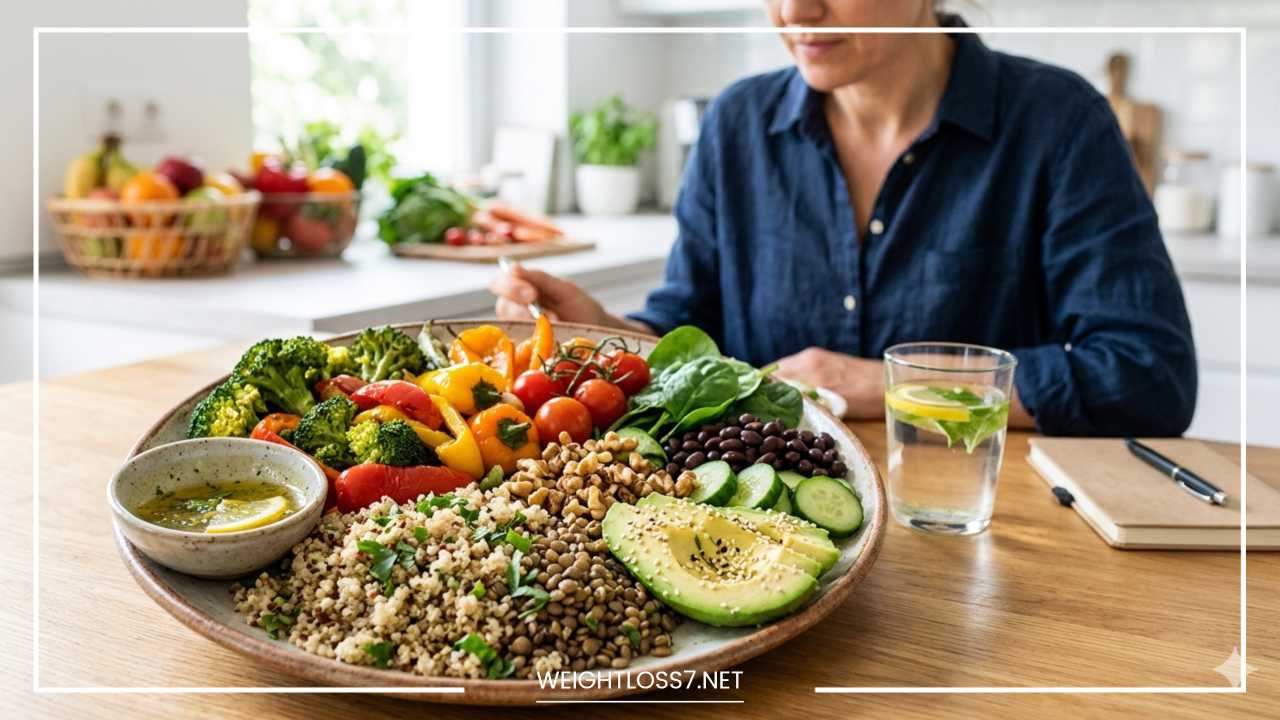
The Plate Method: Fill half your plate with non-starchy vegetables (broccoli, spinach, peppers), one-quarter with a protein source (lentils or tofu), and one-quarter with whole grains or starchy vegetables (sweet potatoes).
-
Hand Measurements: A palm-sized portion of protein, a fist-sized portion of vegetables, and a thumb-sized portion of fats is a good general guide for a balanced meal.
-
The Power of Smaller Plates: Using a smaller plate can trick the brain into feeling satisfied with less food, as the plate appears full.
Mindful Snacking and Hydration
Snacking can be a bridge between meals or a trap for extra calories. The key to smart snacking is the combination of fiber and protein. Instead of reaching for a bag of chips—which provides empty calories and a quick hunger return—opt for something like an apple with a tablespoon of almond butter or a small bowl of edamame. These combinations stabilize blood sugar and provide lasting energy.
Hydration is equally critical. Sometimes, the brain confuses thirst signals with hunger signals, leading us to eat when we are actually just dehydrated. Drinking a glass of water before a meal can increase satiety. Furthermore, staying hydrated is necessary for the metabolic process of lipolysis (breaking down fats). Avoid drinking your calories through sodas, sweetened coffees, and energy drinks, which add significant sugar without providing any feeling of fullness.
Physical Activity and Exercise
While nutrition drives the loss of mass, exercise dictates the quality of that loss and the health of the body that remains. Physical activity is not just a way to earn food; it is a way to build a more resilient, efficient metabolic engine.
The Benefits of Movement
Regular exercise does more than just burn calories during the workout. It improves cardiovascular health, boosts mood through the release of endorphins, and increases insulin sensitivity, which helps your body process carbohydrates more effectively. Most importantly, it helps preserve lean muscle mass. When you lose weight without exercising, a significant portion of that weight comes from muscle, which actually lowers your metabolism over time, making weight regain more likely.
Types of Exercise for Weight Loss
For a well-rounded approach, incorporate these three main categories:
-
Cardiovascular Exercise: Activities like walking, jogging, swimming, or cycling are excellent for heart health and burning a significant amount of calories in a single session. Walking is often underrated; it is low-impact, accessible, and can be sustained daily without excessive fatigue. Aim for at least 150 minutes of moderate-intensity cardio per week.
-
Strength Training: This is the secret weapon of long-term weight maintenance. By using resistance—whether through bodyweight exercises (push-ups, squats), resistance bands, or weights—you build muscle. Muscle is more metabolically active than fat, meaning the more muscle you have, the more calories you burn even while sleeping.
-
Flexibility and Balance: Yoga and stretching may not burn as many calories as a run, but they prevent injury and reduce stress. A body that moves well is a body that can stay active longer.
Finding Enjoyment and Consistency
The best exercise is the one you will actually do. Many people fail because they attempt a high-intensity program that they hate, leading to burnout within weeks. If you enjoy dancing, dance. If you enjoy hiking, go to the trails. The goal is to make movement a non-negotiable part of your day, rather than a chore to be checked off.
The Impact of NEAT
Beyond the gym, focus on Non-Exercise Activity Thermogenesis (NEAT). Small changes throughout the day add up significantly over a week.
-
Take the stairs instead of the elevator.
-
Use a standing desk or take a five-minute walking break every hour.
-
Park further away from the store entrance.
-
Do household chores or garden actively.
These micro-movements can account for hundreds of extra calories burned per day, often more than a structured 30-minute gym session.
Behavior and Lifestyle Changes
Weight loss is as much a psychological challenge as it is a physical one. To make changes stick, you must address the habits and environments that led to weight gain in the first place.
Mindful Eating Habits
Many of us eat mindlessly—in front of the TV, while scrolling through our phones, or while driving. This disconnects us from our body’s internal hunger and fullness cues. Practice eating without distractions. Notice the texture, flavor, and aroma of your food. Ask yourself halfway through the meal, “Am I still hungry, or am I just eating because it’s there?” Learning to stop at satisfied rather than stuffed is a vital skill.
Sleep and Recovery
If you are eating well and exercising but still not losing weight, look at your sleep schedule. Sleep deprivation increases ghrelin (the hunger hormone) and decreases leptin (the fullness hormone). It also reduces your willpower, making you more likely to reach for high-sugar, high-fat “quick energy” foods. Aim for 7 to 9 hours of quality sleep to give your body the time it needs to repair tissue and regulate hormones.
Stress Management
Chronic stress keeps the body in a “fight or flight” mode. This state triggers the release of cortisol, which is notorious for promoting fat storage in the abdominal area. Furthermore, many people use food as a primary coping mechanism for stress. Finding alternative outlets—such as meditation, deep breathing exercises, journaling, or a hobby—is essential for breaking the link between emotional distress and overeating.
Tracking Progress and Setting Goals
The scale is only one way to measure success, and it can be deceptive due to water fluctuations. To stay motivated, use multiple tracking methods:
-
Food Journaling: Writing down what you eat creates accountability.
-
Body Measurements: Tracking inches lost at the waist, hips, and arms.
-
Progress Photos: Seeing visual changes over months can be more motivating than a number.
-
SMART Goals: Set goals that are Specific, Measurable, Achievable, Relevant, and Time-bound. Instead of “I want to lose weight,” try “I will walk for 30 minutes five days a week for the next month.”
Overcoming Common Challenges
The path to weight loss is rarely a straight line. Expecting challenges allows you to prepare for them rather than being defeated by them.
Hitting a Plateau
A weight loss plateau is a period where your weight remains stagnant despite continued efforts. This is a normal part of the process. As you lose weight, your body requires fewer calories to function, and your metabolism may slightly downshift. To break a plateau, you may need to:
-
Slightly adjust your calorie intake or increase your activity levels.
-
Change your exercise routine to “shock” the muscles.
-
Focus on increasing protein to boost metabolism.
-
Audit your portions to ensure “calorie creep” hasn’t set in.
Emotional Eating
Food is often tied to celebration, comfort, and boredom. When you feel an urge to eat that isn’t driven by physical hunger (stomach growling), pause. Drink a glass of water or wait fifteen minutes. Often, the emotional craving will pass. If you do slip up, do not use it as an excuse to give up on the entire day. One “bad” meal won’t ruin your progress, just as one “good” meal won’t make you instantly fit.
Social Pressures
Dining out and attending social events can be difficult. You don’t have to be a hermit to lose weight.
-
Plan Ahead: Look at the menu before you go.
-
Focus on the Socializing: Remind yourself that you are there to see friends, not just to eat.
-
The One-Treat Rule: Allow yourself one indulgence and keep the rest of the meal balanced.
Avoiding the Fad Diet Trap
Any diet that promises “30 pounds in 30 days” or requires you to cut out entire food groups is likely unsustainable. These methods often lead to muscle loss and a slowed metabolism, making it even easier to regain the weight once the diet ends. Avoid “quick fixes” and focus on a way of eating that you can imagine yourself doing five years from now.
Building the Foundation: Environment and Preparation
Success in weight loss is often determined before you even take a bite. Your environment—your kitchen, your office, and even your car—can either support your goals or sabotage them.
Designing Your Environment
If you have to rely solely on willpower every time you open the pantry, you will eventually fail. Willpower is a finite resource that gets exhausted by the end of the day. Instead, design your surroundings for success:
-
Out of Sight, Out of Mind: Keep indulgent, high-calorie snacks in opaque containers or on high shelves. Better yet, don’t keep them in the house at all.
-
The Visibility Rule: Keep a bowl of fresh fruit on the counter and pre-cut vegetables in the front of the refrigerator.
-
Preparation is Key: Spend a few hours on Sunday washing produce, cooking a batch of whole grains, and portioning out snacks. When you are tired after a long workday, having a healthy meal ready to heat up prevents the temptation of ordering takeout.
The Importance of Routine
The human body thrives on rhythm. Eating at roughly the same times each day helps regulate hunger hormones and prevents the “starving” feeling that leads to overeating at dinner. Similarly, scheduling your workouts as if they were important doctor’s appointments ensures that movement becomes a priority rather than an afterthought.
The Role of Community and Support
Weight loss can feel like a lonely endeavor, but it doesn’t have to be. Having a support system significantly increases the likelihood of long-term success.
Finding Your Tribe
Whether it’s a walking group, an online community, or a friend with similar goals, sharing your journey provides accountability. When you know someone is going to ask how your morning workout went, you are more likely to get out of bed.
Professional Guidance
If you find yourself struggling despite your best efforts, consider seeking help from professionals. A registered dietitian can provide personalized nutrition advice, a certified personal trainer can ensure your workouts are safe and effective, and a therapist can help address the root causes of emotional eating.
Tips for Long-Term Success
The ultimate goal of weight loss is not just to reach a destination, but to stay there. This requires a shift from a “dieting” mindset to a “lifestyle” mindset.
Consistency Over Perfection
You do not need to be perfect to see results; you just need to be consistent. If you eat healthy 80% of the time and remain active, your body will respond. A perfectionist mindset often leads to the “all-or-nothing” trap, where one mistake leads to a total collapse of the plan. Instead, aim for “better than yesterday.”
Celebrating Non-Scale Victories (NSVs)
The scale can be a fickle friend. True success is often found in the things the scale doesn’t show:
-
Having more energy to play with your children or pets.
-
Noticing that your clothes fit more comfortably.
-
Waking up feeling refreshed and less sluggish.
-
Being able to climb a flight of stairs without getting winded.
-
Improvements in markers of internal health, like blood pressure.
These victories are the real indicators of health and are often more rewarding than the numbers on a digital display.
Final Thoughts
Losing weight is a journey of self-discovery as much as it is a physical transformation. It requires you to confront your habits, understand your biology, and treat yourself with a balance of discipline and compassion. By focusing on a caloric deficit created through nutrient-dense foods and increased movement, and by supporting those efforts with adequate sleep and stress management, you can achieve a healthier weight.
Remember that there is no perfect time to start. You don’t need a New Year’s resolution or a Monday morning. You only need the willingness to make a slightly better choice right now. Start small: perhaps it’s replacing a sugary drink with water today, or taking a fifteen-minute walk after dinner. These small actions, when repeated over weeks, months, and years, create the foundation for a vibrant, healthy life. You have the tools and the knowledge; now, it is time to take the first step toward the best version of yourself.