Is It Possible to Lose Weight in a Month?


Is It Possible to Lose Weight in a Month? | Tips & Insights
The question of whether one can lose weight in a single month is one of the most frequently asked queries in the health and fitness world. Whether driven by an upcoming event, a New Year’s resolution, or a sudden realization that clothes are fitting a bit tighter, the desire for rapid results is a powerful motivator. The short answer is yes—it is absolutely possible to see a noticeable change in your weight and body composition within a thirty-day window. However, the more nuanced and important question is how much weight can be lost safely and whether that loss can be maintained once the month is over.
Weight loss is not a linear journey, nor is it a one-size-fits-all process. It is a complex physiological shift influenced by a tapestry of factors, including metabolism, current activity levels, hormonal balance, and dietary habits. While the internet is flooded with “miracle” thirty-day transformations, the reality for most people involves a steady, disciplined approach. A month is a significant amount of time to build new habits and see initial results, but it is also a short enough window that people often fall into the trap of extreme restriction.
To approach a one-month weight loss goal successfully, one must balance ambition with sustainability. The goal should not just be to see a lower number on the scale by day thirty, but to arrive at that date feeling more energetic, stronger, and equipped with a lifestyle plan that extends into the second month and beyond. This article explores the science, the strategies, and the mindset required to navigate a thirty-day weight loss journey effectively and healthily.
Understanding Weight Loss
To understand weight loss, one must first understand the fundamental principle of energy balance, often referred to as calories in vs. calories out. Every movement we make, from sprinting a mile to the simple act of breathing, requires energy. This energy is measured in calories. When we consume more energy through food and drink than our bodies require for daily functions and physical activity, the excess is stored, primarily as body fat. Conversely, when we consume fewer calories than we expend, the body is forced to tap into those stored energy reserves to make up the difference, resulting in weight loss.
However, the “simple” math of calories is often influenced by several biological variables. Metabolism, for instance, is the rate at which your body burns energy at rest. Some individuals naturally have a higher basal metabolic rate (BMR) due to genetics, age, or muscle mass. As we age, our metabolism tends to slow down, often because of a natural loss in muscle tissue. This means that a weight loss strategy that worked in your twenties might require more precision in your forties. Gender also plays a role, as hormonal profiles can influence where the body stores fat and how easily it releases it.
Experts and health organizations generally agree that a safe and realistic rate of weight loss is 0.5 to 1 kilogram (1 to 2 pounds) per week. Over the course of a month, this equates to a total loss of roughly 2 to 4 kilograms (4 to 8 pounds). While this may seem modest compared to the dramatic claims of reality television, this rate of loss is far more likely to represent fat loss rather than just water weight or muscle tissue.
It is important to distinguish between short-term weight loss and long-term weight management. In the first week of a new regimen, many people experience a rapid drop in weight. This is often “water weight.” When you reduce calorie intake, especially from refined carbohydrates, your body uses up stored glycogen for energy. Glycogen holds onto water; as it is depleted, that water is released. While seeing the scale drop 3 kilograms in five days can be encouraging, it is vital to understand that the rate of loss will naturally slow down as the body stabilizes. This is where true fat loss begins, and where consistency becomes the most important factor.
Setting Realistic Goals
Success in any endeavor begins with a clear, actionable plan. In the context of weight loss, the SMART goal framework is an invaluable tool. SMART stands for Specific, Measurable, Achievable, Relevant, and Time-bound.
-
Specific: Instead of saying “I want to lose weight,” a specific goal would be “I want to lose 3 kilograms by the end of the month.”
-
Measurable: How will you track this? Use a scale, a measuring tape, or the fit of a specific pair of trousers.
-
Achievable: Losing 15 kilograms in a month is not realistic for most people and can be dangerous. Aiming for 2 to 4 kilograms is achievable.
-
Relevant: Does this goal align with your broader health needs and lifestyle?
-
Time-bound: Setting a thirty-day limit provides a sense of urgency and a clear endpoint to evaluate progress.
One of the biggest hurdles to weight loss is the “all-or-nothing” mentality. Many people start a month-long challenge with such intensity that they burn out by day ten. Setting a goal that is too aggressive often leads to frustration when life inevitably gets in the way. If you have a busy work week and miss two workouts, a realistic goal allows you to pivot and continue. An unrealistic goal makes you feel like you’ve already failed, which often leads to abandoning the effort entirely.
Furthermore, it is essential to decouple your self-worth from the number on the scale. Weight fluctuates daily based on hydration, salt intake, and even stress levels. Instead of obsessing over daily weigh-ins, focus on process goals. For example, a process goal could be “I will walk for 30 minutes five days a week” or “I will fill half my plate with vegetables at every dinner.” These are actions within your direct control. If you hit your process goals, the outcome—weight loss—will naturally follow.
Nutrition Strategies
Nutrition is the cornerstone of weight loss. While exercise is vital for health and toning, it is very difficult to “out-exercise” a poor diet. The goal for a successful month of weight loss is to create a sustainable calorie deficit without feeling deprived or malnourished.
Portion Control
One of the most effective ways to reduce calorie intake is simply to manage portions. You don’t necessarily need to stop eating the foods you love, but you do need to be mindful of how much of them you consume. A simple trick is to use smaller plates; this creates a visual illusion of a full meal, which can help signal satiety to the brain. Learning to recognize a “serving size” versus a “portion size” is also key. For example, a serving of nuts is often just a small handful, yet many people consume three or four times that amount while snacking.
Building Balanced Meals
A weight-loss-friendly plate should be rich in nutrients and high in fiber. Fiber is a secret weapon for weight loss because it adds bulk to your meals and takes longer to digest, keeping you full for longer. Focus on:
-
Vegetables and Fruits: These should make up the largest portion of your plate. They are high in volume but low in calories.
-
Whole Grains: Opt for oats, brown rice, quinoa, or whole-wheat pasta. These provide sustained energy and prevent the blood sugar spikes associated with refined white flour.
-
Legumes: Lentils, chickpeas, and beans are excellent sources of fiber and protein, making them incredibly filling.
-
Nuts and Seeds: These provide healthy fats and minerals but should be consumed in moderation due to their high energy density.
The Power of Hydration
Water is essential for every metabolic process in the body. Often, our brains confuse thirst with hunger, leading us to snack when we are actually just dehydrated. Drinking a glass of water before a meal can help you feel full sooner. Furthermore, replacing sugary beverages—such as sodas, sweetened coffees, and energy drinks—with water or herbal tea is one of the fastest ways to cut “hidden” calories. These liquid calories do not contribute to fullness and can significantly hinder weight loss progress.
Mindful Eating
In our fast-paced world, we often eat while distracted by phones, televisions, or work. This leads to mindless overconsumption. Mindful eating involves slowing down and paying attention to the flavors, textures, and aromas of your food. It takes about twenty minutes for the stomach to signal to the brain that it is full. By eating slowly and chewing thoroughly, you give your body time to register that it has had enough. Additionally, try to distinguish between physical hunger and emotional hunger. If you are eating because you are stressed or bored, find an alternative activity like a short walk or a hobby.
Snacking Wisely
Snacking is not inherently bad, but it requires strategy. Instead of reaching for processed chips or biscuits, choose snacks that offer nutritional value. A piece of fruit, a small bowl of plain yogurt with berries, or raw vegetable sticks with hummus are all excellent choices. These provide the crunch or sweetness you might crave while contributing to your daily fiber and vitamin intake.
Limiting Processed Foods and Refined Carbs
While total restriction is often counterproductive, limiting highly processed foods can accelerate your progress. These foods are often engineered to be “hyper-palatable,” making them easy to overeat. They also tend to be high in sodium, which can cause water retention and bloating. Similarly, refined carbohydrates like white bread and sugary cereals can lead to quick spikes and crashes in blood sugar, leaving you feeling hungry shortly after eating.
Physical Activity
While nutrition handles the “calories in” side of the equation, physical activity addresses “calories out.” For a one-month weight loss plan, the goal is to increase your total daily energy expenditure (TDEE).
Combining Cardio and Strength Training
A balanced exercise routine includes both cardiovascular exercise and strength training.
-
Cardiovascular Exercise: Activities like brisk walking, cycling, swimming, or jogging are excellent for burning calories in the moment and improving heart health. For beginners, walking is often the most sustainable and effective form of cardio. Aiming for 150 minutes of moderate-intensity cardio per week is a great baseline.
-
Strength Training: This involves using resistance—such as bodyweight (push-ups, squats, lunges), resistance bands, or weights—to build muscle. While cardio burns more calories during the session, muscle tissue burns more calories at rest than fat tissue does. By building muscle, you are essentially “stoking” your metabolic fire.
The Role of Daily Movement
Don’t underestimate the power of Non-Exercise Activity Thermogenesis (NEAT). This refers to the calories burned during non-intentional exercise. Taking the stairs instead of the elevator, walking to the store instead of driving, and even standing while on a phone call all contribute to your daily calorie burn. Over a month, these small choices accumulate and can significantly impact your total weight loss.
Consistency Over Intensity
Many people start a weight loss month by attempting grueling, two-hour gym sessions. This often leads to extreme soreness or injury, causing them to quit by week two. In the first month, consistency is far more important than intensity. It is better to do twenty minutes of movement every day than to do one intense two-hour workout and then remain sedentary for the rest of the week. Listen to your body and allow for active recovery days where you focus on light stretching or a gentle stroll.
Lifestyle and Behavioral Changes
Weight loss is as much about what happens outside the kitchen and gym as what happens inside them. Lifestyle factors play a massive role in how your body responds to a calorie deficit.
The Importance of Sleep
Sleep is often the missing piece of the weight loss puzzle. When you are sleep-deprived, your body’s hunger hormones—ghrelin and leptin—get out of balance. Ghrelin (the hunger hormone) increases, while leptin (the fullness hormone) decreases. This leads to increased cravings, particularly for high-calorie, sugary foods. Furthermore, lack of sleep increases cortisol, a stress hormone that can encourage the body to store fat around the midsection. Aim for seven to nine hours of quality sleep per night to support your weight loss efforts.
Stress Management
Chronic stress is a major enemy of weight loss. When we are stressed, we often turn to “comfort foods” as a coping mechanism. Additionally, high stress levels can make it harder to find the motivation to exercise. Finding healthy ways to manage stress—such as meditation, deep breathing exercises, reading, or spending time in nature—can improve your emotional resilience and make it easier to stick to your nutrition and exercise goals.
Planning and Preparation
Success is often the result of preparation. If you wait until you are starving to decide what to eat for dinner, you are much more likely to choose a quick, high-calorie processed meal. Spending a few hours on a Sunday meal-prepping or simply chopping vegetables for the week can save you from poor choices later on. Similarly, scheduling your workouts in your calendar like a doctor’s appointment makes you more likely to treat them as non-negotiable.
Accountability
Having a support system can make a world of difference. This could be a friend joining you for walks, an online community, or a simple food journal. Writing down what you eat and how much you move provides a clear picture of your habits and helps you identify patterns that might be stalling your progress.
Tracking Progress and Adjusting
The bathroom scale is a tool, but it is a blunt one. It measures total body mass, which includes muscle, fat, water, bones, and organs. It cannot tell the difference between five kilograms of fat and five kilograms of muscle.
Measuring Success Beyond the Scale
To get a true sense of your progress over thirty days, look for other indicators:
-
Energy Levels: Do you feel more alert during the day?
-
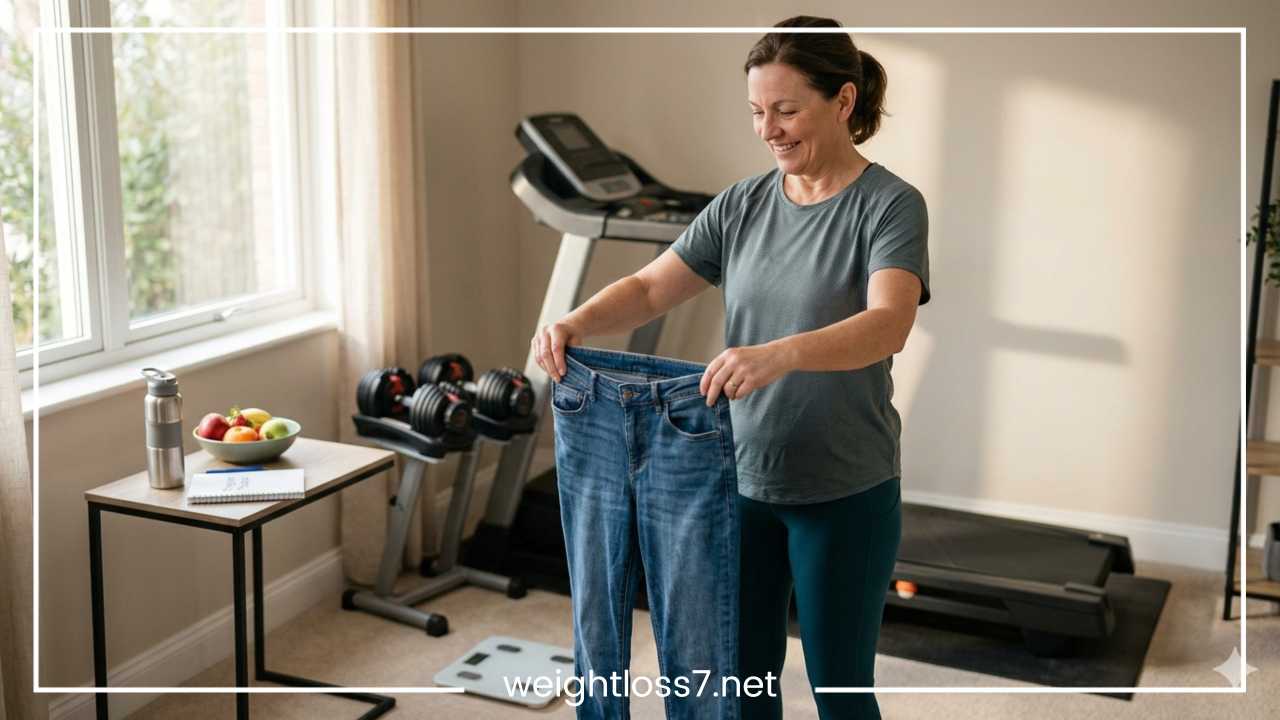
Clothing Fit: Are your trousers feeling looser?
-
Physical Measurements: Use a tape measure to track changes in your waist, hips, and arms.
-
Strength and Stamina: Can you walk further or lift more than you could in week one?
Making Adjustments
If you reach the middle of the month and find that the scale hasn’t budged, don’t panic. This is the time to audit your habits honestly. Are your portions slowly creeping up? Are you “compensating” for your workouts by eating more than you burned? Small adjustments, such as increasing your daily step count or being more precise with portion sizes, are usually enough to kickstart progress again. Remember, the goal is long-term change. If the weight comes off more slowly than expected, it is still moving in the right direction.
Common Myths and Misconceptions
The weight loss industry is rife with misinformation designed to sell products. One of the most common myths is the idea of “spot reduction”—the belief that you can lose fat in one specific area, like the belly or thighs, by doing exercises targeting those muscles. In reality, your body loses fat from all over, based on your genetic blueprint. Doing a thousand crunches will strengthen your abdominals, but those muscles won’t be visible until your overall body fat percentage decreases through a calorie deficit.
Another myth is the efficacy of “detoxes” or “cleanses.” Your liver and kidneys are already highly efficient detoxification systems. Most “detox” products simply act as diuretics or laxatives, leading to temporary water weight loss that returns as soon as you resume normal eating. These methods can also be dangerous as they often deprive the body of essential nutrients and can lead to electrolyte imbalances.
Finally, beware of any diet that requires extreme calorie restriction (e.g., eating fewer than 1,200 calories for women or 1,500 for men). While you will lose weight quickly, your body will eventually respond by slowing down your metabolism to conserve energy, a process known as adaptive thermogenesis. This makes it incredibly difficult to maintain the loss and often leads to the “yo-yo” effect where you gain back more weight than you lost.
Final Thoughts
Losing weight in a month is a realistic and achievable goal, provided your expectations are grounded in science and health. By focusing on a modest calorie deficit, prioritizing nutrient-dense whole foods, and incorporating regular movement, you can make significant strides in just thirty days.
The most important takeaway is that this month is not a sprint to a finish line; it is a foundation for a healthier lifestyle. The habits you build—drinking more water, choosing whole grains, moving your body daily, and managing stress—are far more valuable than the specific number on the scale. Be patient with yourself. There will be days when things don’t go perfectly, and that is okay. Weight loss is about the sum of your choices, not a single meal or a missed workout.
Approach this month with a sense of curiosity and self-care. Focus on how much better you feel when you nourish your body and keep it active. If you stay consistent and maintain a positive, realistic mindset, you will not only see results at the end of the month but will also be well on your way to long-term health and vitality.