How to Lose Weight Without Giving Up Food

How to Lose Weight Without Giving Up the Foods You Love
The very idea of weight loss is often synonymous with sacrifice. It conjures images of bland meals, strict rules, and the agonizing process of saying ‘no’ to every food you genuinely enjoy. For years, the prevailing wisdom has been that to shed pounds, you must restrict, eliminate, and essentially, go on a diet that makes you miserable. But what if that conventional wisdom is not only wrong but counterproductive?
This article challenges the myth that weight loss must involve extreme restriction. It’s time to shift the focus from what you can’t have to how you can mindfully enjoy all foods in a way that supports your body composition goals. You can lose weight without giving up the dishes, snacks, and treats you love. The secret lies not in dieting, but in adopting a flexible, sustainable, and inclusive approach to food. We will explore science-backed, practical strategies that work for most people, proving that balance, awareness, and enjoyment are the true foundations of long-term success.
Why Restrictive Dieting Often Fails
The narrative around weight loss is frequently dominated by the “all-or-nothing” mindset. This is the belief that a single slip-up, a single enjoyed pastry or meal, derails the entire effort. This binary thinking is the single greatest reason restrictive diets inevitably backfire. When a person feels they have failed the diet, they abandon the extreme rules entirely, often leading to overconsumption—the exact opposite of the intended goal.
The psychological effects of restriction are profound and highly detrimental. When certain foods are declared “off-limits,” they become psychologically enhanced, increasing their allure. This intense desire can manifest as obsessive food thoughts and lead to uncontrollable cravings. Once the restriction is broken, this often initiates binge cycles, where an individual eats far more than they would have in the first place, driven by a feeling of deprivation and a sense of having “messed up.” This pattern fuels a toxic relationship with food, replacing enjoyment with guilt and shame.
This cyclical pattern is the hallmark of yo-yo dieting, and its impact is felt both metabolically and mentally. Constant cycles of severe calorie restriction followed by overeating can negatively affect the body’s metabolic rate, making it progressively harder to lose weight in the future. Mentally, yo-yo dieting erodes self-trust, reinforces the feeling of failure, and can be a significant driver of anxiety and low self-esteem.
For long-term, sustainable success, it is crucial to reject the idea that food enjoyment is incompatible with weight management. When you allow yourself to integrate all foods, without fear or guilt, you diffuse their power. Enjoying food—the taste, the social connection, the cultural significance—is not a luxury; it is a fundamental part of a healthy, balanced, and sustainable life. The goal is not elimination; the goal is moderation through awareness.
Understanding Calorie Balance Without Obsession
At its core, weight loss boils down to a fundamental scientific principle: energy balance, or the simple concept of calories in vs. calories out. If the energy you consume (calories in) is consistently less than the energy your body expends (calories out), you will lose weight. While the metabolic processes involved are complex, this basic equation remains the bedrock of weight management.
However, where restrictive dieting goes wrong is turning this concept into a rigid, obsessive counting ritual. You don’t have to meticulously log every bite for the rest of your life. Instead, focus on understanding portion sizes without tracking obsessively. Your hands, common kitchen tools, and the packaging labels on items can all serve as intuitive guides. Learn what a typical, reasonable serving of a grain, a starch, or a sweet treat looks like. This awareness, rather than constant measurement, creates flexibility.
The most valuable tools for long-term control are your own body’s signals: hunger, fullness, and satisfaction. Hunger is the physical need for fuel; learn to recognize it before you are ravenous, as eating when intensely hungry often leads to rapid, over-consumption. Fullness is the signal that you’ve had enough; aim to stop eating when you are comfortably satisfied, not uncomfortably stuffed. Finally, satisfaction is the emotional component—eating foods you genuinely enjoy contributes to satisfaction, which reduces the urge to keep grazing or searching for something “better.”
A crucial realization is why you don’t have to eliminate any specific food group. All foods—starches, fats, sugars, and proteins—play roles in a balanced diet. Demonizing any one group makes your eating pattern fragile. If you learn how to balance a meal—ensuring it contains enough fiber, filling complex carbohydrates, and satisfying components—you can include virtually any food and maintain the necessary energy balance for weight loss. It’s the consistency of your choices, not the occasional inclusion of a favorite food, that determines your success.
Practical Portion Control Tips
Effective portion control is not about eating tiny, unsatisfying amounts; it’s about optimizing what you eat to match your body’s true energy needs.
The most powerful technique is mindful eating. This involves dramatically slowing down and being present during your meal. Put down your phone, turn off the television, and focus on the flavors, textures, and aromas of your food. Chew thoroughly. It takes your brain about 20 minutes to register the satiety signals your stomach is sending. Eating quickly bypasses this crucial communication window, often leading to overeating.
A simple yet effective environmental strategy is eating from smaller plates/bowls. A regular-sized portion looks substantial on a smaller dish but often looks meager on a large dinner plate. This visual trick can influence your perception of fullness and satisfaction, allowing you to consume fewer calories while feeling like you’ve had a substantial meal.
When you have a craving, the best strategy is often satisfying cravings with smaller portions instead of elimination. If you truly want a chocolatey treat, have a small piece, savor it, and move on. Trying to suppress the desire often leads to eventually giving in and consuming a much larger amount, or eating a host of less-desired foods in a futile attempt to replace the craving. By allowing yourself the treat in a controlled, planned portion, you maintain control and enjoyment.
Finally, master the art of recognizing fullness before you’re stuffed. This is the difference between feeling content (the ideal state) and feeling bloated or sluggish. Practice leaving one or two bites of food on your plate, even if it tastes good. This small, consistent habit retrains your brain to respect the feeling of satiety rather than pushing past it until discomfort sets in.
Smart Swaps and Food Upgrades
Sustainable weight management is built on a foundation of small, repeated improvements rather than drastic, temporary changes. This involves keeping favorite foods while improving their nutritional profile through clever swaps and cooking methods.
Think about cooking techniques: for instance, instead of deep-frying items for a crispy texture, try air-frying or baking with a mist of oil. You get the desired crunch with significantly less fat and fewer calories. If you’re making a baked item, consider swapping half the amount of refined grain flour with a whole grain alternative, or perhaps incorporating applesauce or mashed fruits for part of the oil or butter component.
A powerful tool for feeling full on fewer calories is adding volume with vegetables or fiber-rich ingredients. Fiber and water are virtually calorie-free fillers. When making a rice dish, for example, try mixing the cooked rice with an equal volume of finely chopped steamed cauliflower or a generous serving of lentils or beans. This immediately boosts the fiber content, makes the meal more substantial, and naturally reduces the calorie density of the dish without sacrificing the overall feel of the meal. Similarly, adding grated vegetables to baked goods or using pureed pumpkin or squash as a base for creamy sauces are excellent ways to increase volume and nutrition.
The key to long-term adherence is reducing sugar or fat gradually without sacrificing flavor. If a recipe calls for a cup of sugar, try three-quarters of a cup instead. Your palate will adjust over time, and you’ll find that previously “normal” levels of sweetness or richness become overwhelming. Use potent, naturally flavorful ingredients—spices, herbs, citrus zest, and fermented products (like vinegar or soy sauce)—to punch up the flavor so you don’t miss the reduction in fat or sugar.
These are all examples of subtle changes that don’t feel like “dieting.” They are simply superior, long-term ways of preparing and enjoying food. They allow you to eat satisfying, delicious meals that happen to support a calorie deficit. You’re not giving up the idea of a favorite meal; you’re just upgrading its composition.
The Role of Habits and Consistency
The pursuit of weight loss is often framed as a desperate search for a temporary fix, but the truth is that your results are determined by the things you do every single day. This is why daily habits matter more than occasional indulgences. A single high-calorie meal or an extra treat one day won’t cause weight gain, just as a single salad won’t cause weight loss. It is the cumulative effect of small, consistent choices—day after day, week after week—that ultimately dictates your body’s trajectory.
Success hinges on creating a sustainable routine that encompasses more than just food. This routine must integrate balanced meals, regular movement, and sufficient rest. Trying to change everything at once is overwhelming and rarely lasts. Instead, focus on building one or two key habits at a time.
For instance, focus on building habits like meal planning or regular grocery shopping. Planning even three or four meals for the week drastically reduces the chance of last-minute, high-calorie takeout or impulsive, unhealthier snacking. If your kitchen is stocked with the ingredients for a balanced meal, that meal is what you are most likely to eat. If you commit to a weekly walk on a particular evening, that becomes part of your identity, making it easier to maintain.
Crucially, you must address sleep and stress as hidden drivers of weight gain. When you are chronically sleep-deprived, two key hunger-regulating hormones—ghrelin (which stimulates appetite) and leptin (which signals fullness)—get thrown out of whack. This leads to increased hunger and stronger cravings for energy-dense, sugary, or fatty foods. Similarly, chronic stress elevates cortisol, a hormone that can promote fat storage, particularly around the midsection. Therefore, prioritizing seven to nine hours of quality sleep and implementing daily stress-management techniques (like meditation or deep breathing) is a non-negotiable part of a successful weight management strategy. No amount of perfect eating can fully compensate for poor sleep or chronic, unmanaged stress.
Moving More Without “Working Out”
When people think of burning calories, they often picture intense sessions at the gym. While structured exercise is valuable, the real workhorse of daily energy expenditure is something far simpler and more accessible: NEAT (Non-Exercise Activity Thermogenesis).
NEAT encompasses all the energy you spend on activities that are not sleeping, eating, or structured exercise. This includes everything from fidgeting and walking around the office to carrying groceries and simply standing up. The power of NEAT is that small movements add up over the course of the day, often significantly more than a single 60-minute gym session. The difference between someone who sits all day and someone who is consistently active can be hundreds of calories burned daily.
The goal is to weave simple movements into the fabric of your life. Make the conscious choice to take the stairs, not the escalator. Park further away from the store entrance. Schedule short, brisk walking breaks during your workday. If you have a job that allows it, try standing while working for part of the day. These are not “workouts;” they are just ways of life. By focusing on increasing your overall daily steps or reducing the time you spend sitting, you naturally increase your energy expenditure.
This method allows you to truly internalize the idea of making activity part of life without needing a gym or fitness plan. The most sustainable activity is the one you don’t think of as exercise, but rather as transportation or a break.
Furthermore, integrating movement daily provides benefits beyond simple calorie expenditure. Movement supports mood, helping to manage the stress that can drive unhealthy eating. It aids in appetite regulation, as being physically active can sometimes blunt excessive hunger. And it boosts metabolism, making your body more efficient at using the energy you consume.
Building a Positive Relationship With Food
The most lasting change in weight management comes from healing your relationship with food, transitioning it from a source of conflict and anxiety to one of nourishment and pleasure.
The first and most critical step is letting go of food guilt. Food is morally neutral. There are no “good” or “bad” foods, only foods that are eaten more or less frequently to meet certain goals. When you eat something that is calorie-dense—a dessert at a celebration, a traditional family dish, a favorite snack—do not attach moral failure to it. Acknowledge it, enjoy it fully, and then move on to your next planned, balanced meal without apology or compensatory restriction.
This approach makes it possible to truly master learning to enjoy treats without overdoing it. When you give yourself unconditional permission to have a treat, the desperate urgency to “eat it all now before I go back on the diet” disappears. Treats can be integrated as part of a balanced diet, savored in a small portion, and enjoyed without the accompanying guilt that usually leads to overconsumption.
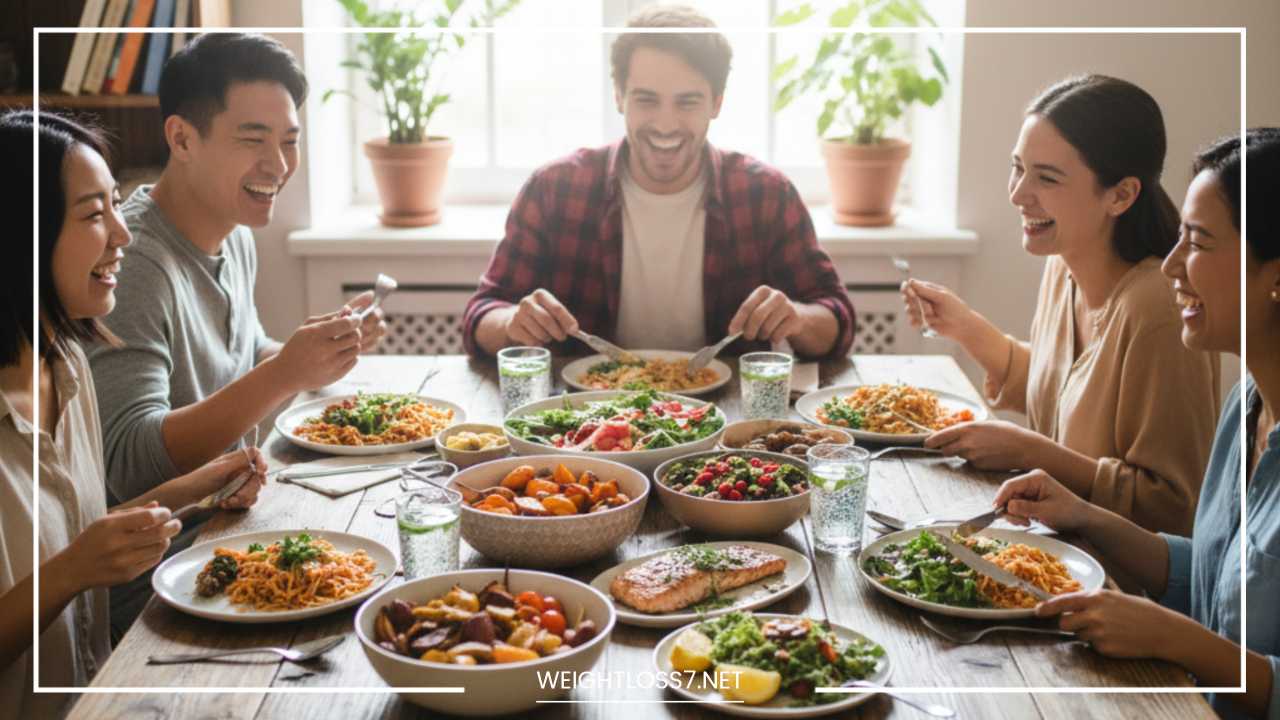
Ultimately, we must return to celebrating food as nourishment, culture, and connection. Food is fuel for your body, providing the energy and nutrients you need to thrive. But it is also an expression of culture, tradition, and a vital catalyst for social connection. When you appreciate these deeper roles of food, you move beyond the simplistic notion of calories and embrace a richer, more meaningful way of eating.
This requires reframing “good” vs. “bad” foods into a spectrum of “everyday foods” and “sometimes foods.” Everyday foods are those that provide high amounts of micronutrients, fiber, and protein for sustained energy and health. Sometimes foods are those that are primarily sources of pleasure and calories. Both types have a role. This reframing removes the judgment and allows you to make calm, informed choices based on what your body needs and what the situation calls for.
Final Thoughts
The journey to lasting weight management is not a sprint into restriction, but a marathon of mindful adjustments. We have established that sustainable weight loss doesn’t require giving up food. It requires a different perspective: one that values enjoyment, flexibility, and self-awareness over rigid rules and deprivation.
The key principles that will guide you are balance, awareness, and consistency.
- Balance means integrating all foods into your life, finding the sweet spot where nourishment and pleasure coexist.
- Awareness is the practice of tuning into your body’s signals—recognizing true hunger, respecting fullness, and noting the psychological effects of your choices.
- Consistency is the daily commitment to small, positive habits in eating, movement, sleep, and stress management.
You do not need to embark on a diet to transform your body. You need to create a lifestyle where you can eat the foods you love, feel great, and still achieve your body composition goals. This is an empowering message: You can enjoy food and reach your goals. By focusing on how you eat rather than what you eliminate, you set yourself up for success that lasts a lifetime.