How to Lose Weight With Just Diet

How to Lose Weight With Just Diet
Can You Lose Weight With Just Diet?
Yes, you can lose weight with just diet. While physical activity supports overall health and adds to daily energy expenditure, it is not strictly mandatory for dropping unwanted pounds. At its core, weight loss happens when you consistently consume fewer calories than your body uses over time, creating what nutritionists call a calorie deficit.
Many people assume that stepping onto a treadmill or lifting heavy weights is the only way to see the scale move. In reality, it is far easier to trim three hundred to five hundred calories from your daily meals and snacks than to burn those same calories through a workout. A single high-calorie pastry or a few sugary drinks can undo an hour of vigorous exercise, whereas smart adjustments to what and how much you eat directly shape your energy balance every day.
Diet carries enormous weight in weight management because food is the primary source of energy entering your body. However, lasting results do not come from starving yourself or following a temporary fad. Sustainable weight loss depends on steady consistency, satisfying foods, and realistic dietary changes that fit into your normal routine without leaving you constantly miserable or deprived.
Understand How Weight Loss Works
To lose weight through diet alone, it helps to understand the relationship between calorie intake and calorie expenditure. Calorie intake refers to the energy you get from the foods and drinks you consume. Calorie expenditure is the total energy your body burns each day, which includes your basal metabolic rate (the energy needed to keep your heart beating, lungs breathing, and cells functioning at rest), the energy used to digest food, and the energy spent through everyday movement.
A calorie deficit occurs when your calorie intake is lower than your calorie expenditure. When this gap exists over days and weeks, your body makes up the missing energy by tapping into its internal reserves, primarily stored body fat. Fat tissue acts as a dense energy bank, so drawing on it gradually reduces your overall fat mass.
Eating fewer calories than your body burns leads to weight loss because your body cannot create energy out of thin air. Still, not all weight lost on a scale is the same. Water weight shifts quickly based on sodium intake, carbohydrate storage, and hydration levels, causing day-to-day fluctuations that do not reflect true fat loss. Body fat loss is a slower, steadier process. Muscle mass, on the other hand, can be lost alongside fat if you slash calories too aggressively or eat too little protein.
Extreme calorie restriction is rarely a sustainable approach. Severely cutting calories often triggers intense hunger, fatigue, irritability, and muscle loss, while slowing your daily energy burn as your body adapts to scarcity. That harsh rebound often pushes people back to old eating habits, making a moderate, steady deficit far more effective over the long run.
Calculate Your Daily Calorie Needs
Maintenance calories represent the approximate amount of energy your body needs in a day to keep your current weight stable. Eating right around your maintenance level keeps your weight steady, eating above it promotes weight gain, and eating below it creates the deficit needed for weight loss.
Several personal factors shape how many calories you need each day:
-
Age: Muscle mass tends to decline gradually with age, which can lower resting energy needs over time.
-
Sex: Men generally have a higher proportion of lean muscle mass and larger body frames than women, often resulting in higher baseline calorie needs.
-
Height and body weight: Larger bodies require more energy simply to move around and maintain basic physiological functions.
-
Daily activity level: Even without formal workouts, walking around the house, commuting, standing at work, and fidgeting influence daily expenditure.
-
Metabolic differences: Individual genetics, hormone health, sleep quality, and body composition create natural variation from person to person.
You can estimate your daily calorie needs using an online calculator or a standard formula, then subtract roughly 300 to 500 calories to set a gentle target. A moderate calorie deficit is much better than crash dieting because it protects your energy levels, supports muscle retention, and feels manageable for months rather than days. As you lose weight, your body becomes smaller and requires slightly less energy to maintain, so you will need to recalculate and adjust your calorie target occasionally if progress plateaus.
Focus on Nutrient-Dense, Low-Calorie Foods
One of the smartest ways to maintain a calorie deficit without feeling hungry is to build meals around nutrient-dense, low-calorie foods. This approach relies on calorie density, which measures how many calories are packed into a given weight or volume of food. Foods with low calorie density—usually rich in water and dietary fiber—take up more space in your stomach for fewer calories, helping you feel physically full while keeping your daily intake in check.
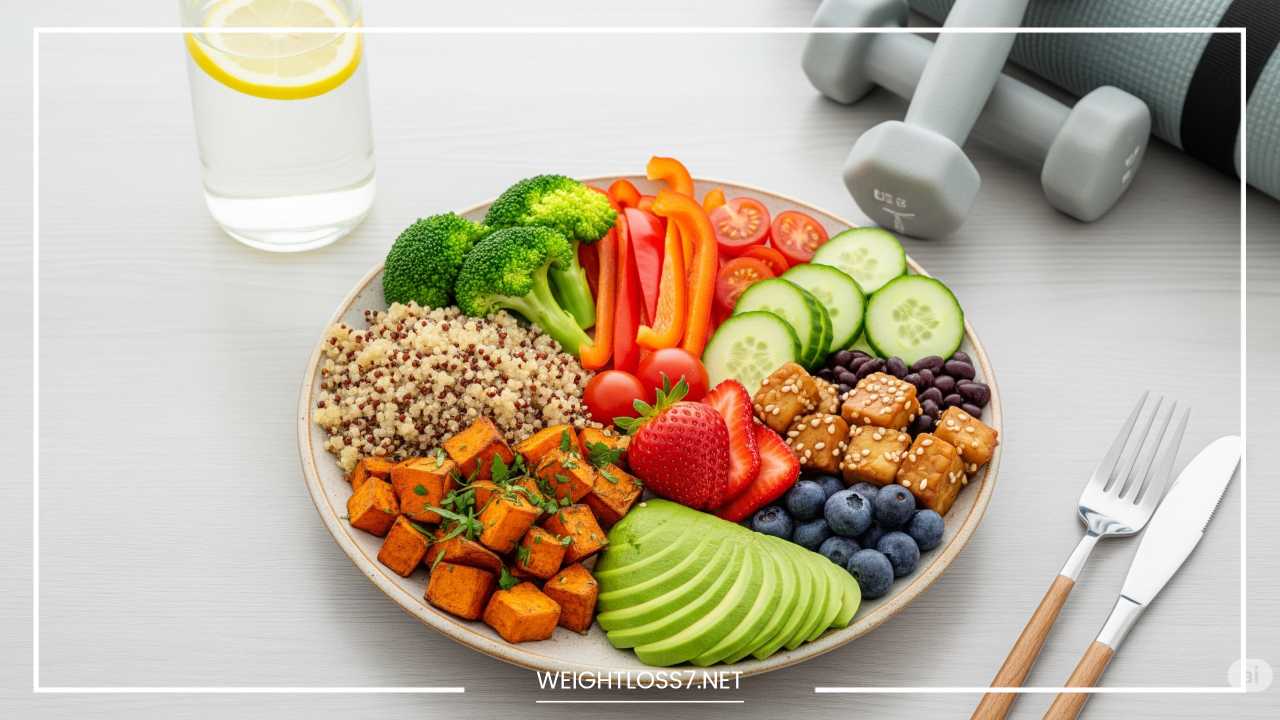
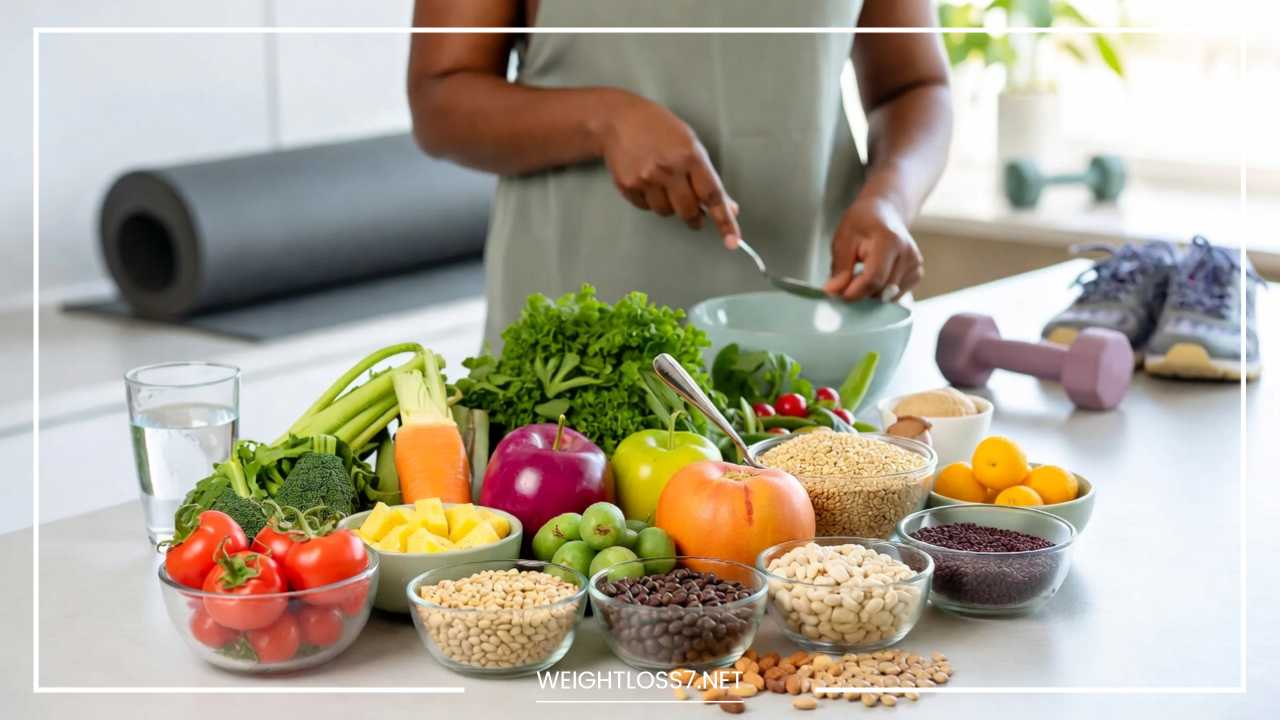
Stocking your kitchen with high-volume, nutrient-rich options makes dieting without exercise far more comfortable:
-
Vegetables: Spinach, broccoli, cucumber, carrots, cauliflower, bottle gourd, and cabbage offer substantial volume, fiber, and micronutrients for very few calories.
-
Fruits: Apples, berries, oranges, watermelon, and guava provide natural sweetness, hydration, and fiber that satisfy cravings better than candy.
-
Lean protein: Eggs, chicken breast, fish, tofu, lentils, and sprouted legumes deliver strong fullness and essential amino acids without heavy calorie loads.
-
Whole grains: Oats, brown rice, quinoa, millets, and whole-wheat roti supply steady energy and fiber compared to refined grains.
-
Healthy fats: Nuts, seeds, avocado, and olive or mustard oil add richness, flavor, and fat-soluble vitamins in measured amounts.
-
Low-fat dairy options: Low-fat curd, toned milk, and light paneer provide calcium and protein while keeping saturated fat and excess calories moderate.
When most of your plate comes from these foods, you can eat generous, satisfying portions and still stay comfortably within your calorie budget.
Increase Your Protein Intake to Stay Full
Protein plays a central role when you are trying to lose weight through diet alone. During a calorie deficit, your body looks for energy wherever it can find it. Getting adequate protein helps maintain muscle mass so that a greater share of your weight loss comes from body fat rather than lean tissue. Preserving muscle is valuable because lean tissue supports strength, physical function, and resting metabolic health.
Just as importantly, protein has a strong impact on satiety and appetite management. Meals rich in protein tend to keep you fuller for longer after eating and take slightly more energy for your body to digest and process than carbohydrates or fats. When hunger stays under control, it is much easier to stick to your calorie target without constant snacking.
Both vegetarian and non-vegetarian diets can supply plenty of protein:
-
Vegetarian sources: Dal, rajma, chole, moong sprouts, tofu, paneer, curd, Greek yogurt, milk, peanuts, and mixed seeds.
-
Non-vegetarian sources: Eggs, chicken, fish, and lean cuts of meat.
Aim to include a clear protein source in every main meal rather than saving it all for dinner. You might add scrambled eggs or paneer bhurji to breakfast, pair dal or grilled chicken with lunch, and include tofu, fish, or a bowl of thick curd at dinner. While protein powder can be a convenient backup on busy days, there is no need to rely exclusively on protein supplements when everyday whole foods can easily meet your needs.
Control Portion Sizes Without Starving Yourself
Even healthy foods can stall weight loss if portions keep creeping upward. Understanding the difference between portion sizes and serving sizes helps you stay in control. A serving size is a standardized reference measurement—such as one cup of cooked rice or two tablespoons of nuts—often used on nutrition labels. A portion size is simply the amount of food you choose to put on your plate or bowl at one sitting.
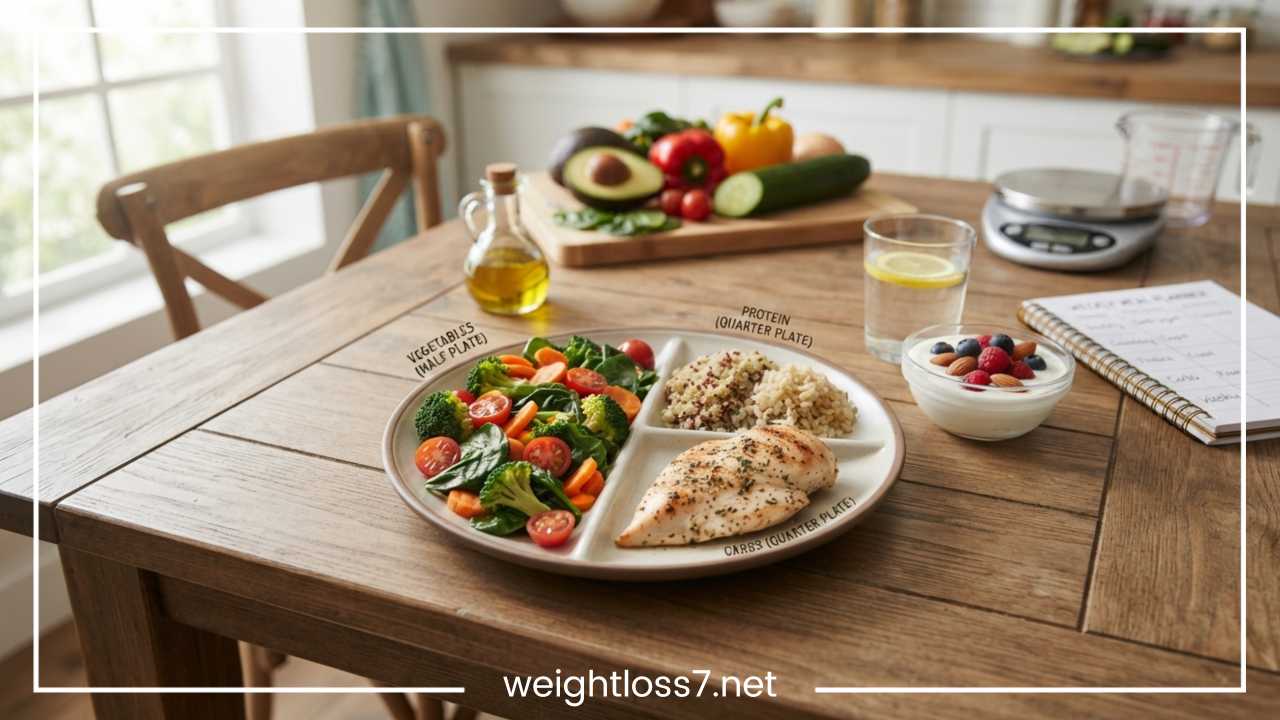
The plate method offers an easy, visual way to manage portions without weighing every ingredient:
-
Half the plate: Fill half your plate with non-starchy vegetables or salad, such as sautéed broccoli, bhindi, cucumber, tomatoes, or leafy greens.
-
One-quarter: Dedicate one-quarter of the plate to a protein source like dal, paneer, tofu, eggs, fish, or chicken.
-
One-quarter: Use the remaining quarter for complex carbohydrates such as roti, brown rice, quinoa, or millets.
Using smaller plates or bowls can also help by making a modest portion look more generous. Pair portion awareness with mindful eating: sit down away from screens, take smaller bites, chew thoroughly, and eat slowly. Giving your body time to register fullness makes it easier to notice when you are comfortably satisfied rather than stuffed, helping you skip unnecessary second servings without feeling starved.
Reduce Added Sugar and Highly Processed Foods
Cutting back on added sugar and highly processed foods is one of the fastest ways to trim hidden calories without shrinking your actual meals. Sugary drinks—including sodas, packaged fruit juices, sweetened iced teas, and energy drinks—are especially tricky because liquid sugar rarely triggers strong fullness signals. It is effortless to drink two hundred or three hundred extra calories in minutes and still feel ready for a full meal.
Sweets, cakes, cookies, pastries, and rich desserts pack concentrated sugar and fat into small servings, making it easy to overshoot your calorie deficit. Packaged snacks like chips, namkeen, crackers, and fried savory bites carry a similar risk because they are engineered to be hyper-palatable and easy to overeat straight from the bag.
Hidden sugars also show up in places you might not expect, such as ketchup, barbecue sauce, salad dressings, flavored yogurts, breakfast cereals, and sweetened coffee drinks. Swapping sugary beverages for plain water, sparkling water, or unsweetened tea or coffee removes empty calories right away. Rather than living by rigid, stressful food bans, focus on choosing minimally processed foods most of the time so your daily intake stays naturally balanced.
Choose Healthy Carbohydrates and Fats
Carbohydrates are not inherently responsible for weight gain. Weight gain happens when total calories exceed what your body burns over time, regardless of whether those extra calories come from carbs, fats, or proteins. Many people lose weight successfully while eating carbohydrates every single day.
The key distinction lies between refined carbohydrates and complex carbohydrates. Refined carbs—such as white bread, maida, pastries, and white sugar—have had much of their fiber and bran stripped away, making them digest quickly and offer less lasting fullness. Complex carbs—including oats, brown rice, millets, whole-wheat roti, beans, lentils, fruits, and vegetables—retain fiber and nutrients that support steadier digestion and longer-lasting satisfaction.
Dietary fats are equally essential. Your body needs fat to absorb vitamins A, D, E, and K, produce key hormones, and support cell membranes. Emphasize unsaturated fats—found in olive oil, mustard oil, nuts, seeds, and avocados—while keeping saturated fats and trans fats limited. Because fat provides nine calories per gram compared to roughly four calories per gram for protein and carbohydrates, managing portions of oils, ghee, butter, and nuts is crucial. Eliminating an entire macronutrient group is rarely necessary when thoughtful choices and sensible portions already work well.
Build a Simple Weight-Loss Meal Plan
A practical daily meal structure takes the guesswork out of eating for weight loss. Rather than chasing complicated recipes, aim for balanced meals that combine protein, fiber-rich carbs or vegetables, and a modest amount of healthy fat.
| Meal | Suggested foods |
| Breakfast | Oatmeal cooked with milk or water, topped with berries or chopped apple, served with boiled or scrambled eggs (or vegetable poha or moong dal chilla with curd) |
| Mid-morning snack | Medium apple, guava, or orange, or a small bowl of plain low-fat Greek yogurt or curd |
| Lunch | One to two rotis or a measured bowl of brown rice, a bowl of dal or rajma, plenty of cooked vegetables, and a fresh salad |
| Evening snack | Roasted chickpeas (chana), murmura mix with veggies, or a small handful of almonds and walnuts |
| Dinner | Grilled chicken, fish, or tofu with stir-fried or steamed vegetables and a small portion of whole grains or millets |
Vegetarian eaters can easily adapt this blueprint by using paneer, tofu, tempeh, sprouted legumes, lentils, and dairy where meat or eggs appear, while non-vegetarians can rotate eggs, fish, and poultry alongside plant proteins. If you prefer traditional Indian staples, a breakfast of vegetable upma or idli with sambar and a small portion of chutney can fit just as well when portions are measured thoughtfully.
For most healthy people, meal timing matters far less than total daily calorie intake and food quality. Whether you eat three main meals plus a snack or prefer three balanced meals without snacks, the best schedule is the one that keeps your hunger steady and fits your work and family life. Adjust portion sizes up or down based on your personal calorie target, and rotate foods across the week for dietary variety and broad micronutrient coverage.
Stay Hydrated and Be Mindful of Liquid Calories
Drinking enough water supports normal digestion, circulation, temperature regulation, and overall bodily function. Replacing sweetened sodas, bottled juices, and sugary teas with water can meaningfully lower your daily calorie intake without requiring any change to your solid meals.
It helps to stay alert to liquid calories in everyday drinks. Sweetened coffees, flavored lattes, thick milkshakes, packaged fruit juices, and alcoholic beverages can add hundreds of calories in a single sitting while offering very little fullness. Checking drink choices is one of the simplest ways to protect a calorie deficit.
Sometimes people mistake mild thirst or boredom for hunger, leading to unnecessary snacking. Drinking a glass of water and waiting ten minutes can help you tell whether you are truly hungry. Keep in mind, though, that water alone does not burn body fat; hydration supports your body and helps manage appetite, while the calorie deficit itself drives fat loss.
Improve Eating Habits for Sustainable Weight Loss
Lasting weight loss depends heavily on daily routines rather than willpower alone. Planning meals ahead of time—even deciding on lunch and dinner options the night before or doing a quick weekly grocery list—reduces last-minute takeout and impulsive choices when you are tired.
Try not to skip meals if doing so leaves you ravenous later in the day and triggers overeating at night. Eating at regular intervals works well for many people because steady spacing prevents extreme hunger swings. Keeping healthy snacks like fruit, roasted chana, carrots, or curd handy makes it easier to stay on track during busy afternoons.
Emotional and stress-related eating often happens when food is used to soothe anxiety, boredom, or exhaustion rather than answer physical hunger. Finding non-food ways to unwind—such as a short walk, deep breathing, listening to music, or calling a friend—helps break that loop. Practice mindful eating, allow occasional treats like a piece of mithai or a slice of cake without guilt so you do not feel trapped, and prioritize consistency rather than perfection. One imperfect meal never ruins weight loss unless you let it turn into giving up altogether.
Track Your Progress and Adjust Your Diet
Tracking gives you objective feedback so you do not have to guess whether your diet is working. If you weigh yourself, try to do so consistently—such as first thing in the morning after using the bathroom and before eating or drinking—while keeping in mind that daily weight fluctuations are completely normal. High-sodium meals, extra carbohydrates, stress, poor sleep, or menstrual cycle shifts can temporarily push the scale up by a pound or two even when you are losing fat.
Using weekly weight averages gives a much clearer picture than reacting to a single day’s number. Tracking food intake—whether through a food diary or a tracking app—can also be eye-opening for a few weeks if progress is slow, helping you spot extra oil, large portions, or frequent nibbling.
Do not rely solely on the scale. Waist measurements and changes in clothing fit often reveal real progress even during weeks when scale weight seems stubborn. If your weight stalls for three to four weeks despite honest tracking, consider trimming another 100 to 150 calories a day or tightening portion sizes rather than making drastic cuts based on short-term fluctuations.
Common Diet Mistakes That Can Prevent Weight Loss
Even motivated people can run into roadblocks when trying to lose weight through diet alone. Watch out for these frequent pitfalls:
-
Eating healthy foods in excessive portions: Nuts, olive oil, avocado, paneer, and whole grains are nutritious, yet large portions can easily erase a calorie deficit.
-
Drinking hidden calories: Sweetened tea or coffee, juices, sodas, and specialty drinks often slip past people who only track meals.
-
Following extremely restrictive diets: Cutting out dozens of foods or slashing calories to near-starvation levels usually backfires through intense hunger and rebound eating.
-
Eliminating carbohydrates completely: Cutting carbs entirely is rarely required and often leaves people feeling sluggish or craving sweets.
-
Depending on detox drinks or fat-burning foods: Teas, cleanses, and single “fat-burning” ingredients cannot override a calorie surplus.
-
Not consuming enough protein and fiber: Low-protein, low-fiber meals digest quickly and leave you hungry sooner.
-
Having unrealistic weight-loss expectations: Rapid drops on the scale often reflect water or muscle loss, whereas steady, gradual fat loss takes patience.
-
Giving up when progress slows down: Plateaus are a normal part of weight loss and call for calm adjustments rather than quitting.
Final Thoughts: Make Diet Your Foundation for Weight Loss
You truly can lose weight with just diet by focusing on a steady calorie deficit, choosing nutrient-dense foods, prioritizing protein and fiber, and practicing portion control without starving yourself. Small, repeatable changes practiced most days of the week matter far more than short bursts of extreme dieting. Finally, while exercise is not essential for creating weight loss, regular movement still brings valuable benefits for heart health, mood, insulin sensitivity, and long-term fitness—so let smart nutrition lead your weight loss while enjoying movement for everything else it gives your body.
Frequently Asked Questions About Losing Weight With Just Diet
Can I really lose weight without exercise by just changing my diet?
Yes, you can lose weight without exercise by maintaining a consistent calorie deficit—eating slightly fewer calories than your body burns each day. Because nutrition directly controls energy intake, adjusting portion sizes, prioritizing protein and fiber, and cutting back on added sugars often drives steady fat loss on its own, though light movement remains beneficial for heart health and fitness.
How many calories should I eat a day to lose weight without working out?
To lose weight without working out, first estimate your daily maintenance calories based on your age, sex, height, weight, and everyday movement, then subtract 300 to 500 calories per day. This moderate reduction supports gradual fat loss without causing severe hunger, fatigue, or muscle loss.
How fast can you lose weight with diet alone?
With a safe, moderate calorie deficit, most people lose about 0.5 to 1 pound (0.25 to 0.5 kilograms) per week. Faster drops during the first week or two are usually water weight rather than body fat, while steady weekly progress is much easier to maintain long term.
What is the best Indian diet plan to lose weight without exercise?
A balanced Indian diet for weight loss focuses on measured portions of familiar whole foods: vegetable poha, oats, idli with sambar, or moong dal chilla for breakfast; one to two rotis or a small bowl of brown rice with dal, sabzi, and salad for lunch; roasted chana or fruit for snacks; and paneer, tofu, eggs, fish, or grilled chicken with vegetables for dinner.
How to lose belly fat with diet only and no exercise?
Spot reduction is not possible, so you cannot target belly fat alone, but maintaining an overall calorie deficit reduces body fat across your entire body—including your midsection. Focusing on high-protein meals, fiber-rich vegetables, whole grains, and cutting out sugary drinks and fried snacks helps lower overall body fat and reduce abdominal bloating.
Why am I not losing weight even though I am dieting and eating healthy?
Eating nutritious foods does not guarantee weight loss if portions are still large enough to keep you out of a calorie deficit. Hidden calories from cooking oils, ghee, nuts, dressings, sweetened tea or coffee, and weekend treats often stall progress, so tracking portions for a couple of weeks can help pinpoint where extra calories are sneaking in.
Do I need to cut out rice and roti completely to lose weight without exercise?
No, you do not need to eliminate rice or roti to lose weight. Weight loss depends on total daily calories rather than cutting out carbohydrates completely; pairing one or two whole-wheat rotis or a measured portion of rice with plenty of vegetables and a solid protein source keeps meals satisfying while supporting steady weight loss.
What are the best foods to stay full while dieting without exercise?
Foods high in protein, fiber, and water content keep you full the longest for fewer calories. Top choices include eggs, chicken, fish, tofu, paneer, dal, sprouts, low-fat curd or Greek yogurt, oats, apples, berries, cucumber, spinach, broccoli, and cauliflower.
Is walking necessary if I want to lose weight through diet alone?
Walking is not strictly necessary to lose weight if your calorie intake is below your daily energy needs, though adding light daily walking can make weight loss easier by slightly increasing calorie burn, improving digestion, and supporting overall cardiovascular and mental health.
How do I break a weight loss plateau when losing weight with just diet?
As you lose weight, your smaller body burns slightly fewer calories each day, which can cause progress to stall. To break a plateau, double-check portion sizes of calorie-dense foods like oils and nuts, ensure you are getting enough protein and water, and trim another 100 to 150 calories from your daily intake rather than making extreme cuts.