How to Lose Weight Without Exercise or Diet


How to Lose Weight Without Exercise or Diet: Easy Weight Loss Tips
The journey toward a healthier weight is often depicted as a grueling battle fought in the gym and won through extreme caloric deprivation. For many, the very words “weight loss” conjure images of exhausting treadmill sessions and restrictive meal plans that forbid favorite foods. However, the science of human physiology and behavioral psychology suggests a different path. While exercise and nutrition are pillars of health, it is entirely possible to influence your body weight by focusing on the “how” and “when” of your lifestyle, rather than just the “what” of a strict diet.
Many people find themselves in a cycle of starting and stopping fitness routines because the demands of modern life—work, family, and social obligations—leave little room for hours at the gym. Others find that traditional dieting leads to a “yo-yo” effect, where weight is lost quickly but regained just as fast because the restrictions were never sustainable. This article explores evidence-based strategies to manage weight through mindful habits, metabolic optimization, and lifestyle adjustments. By understanding how the body processes energy and responds to its environment, you can achieve a sustainable weight without the traditional rigors of a “diet and exercise” program.
The reality is that our bodies are not designed for the modern environment of constant caloric availability and sedentary behavior. In the past, movement was a requirement for survival, and food was often scarce. Today, we must manually override our environment. This does not require a complete overhaul of your life in a single day. Instead, it requires a series of strategic “nudges” that align your biological systems with your weight management goals.
Understanding Weight Management
To manage weight effectively without a prescribed diet, one must first understand the basics of how the body regulates weight. At its core, weight management is often simplified into the formula of calories in versus calories out. While this is scientifically accurate in a vacuum, the human body is far more complex than a simple calculator. Our weight is influenced by a delicate balance of genetics, hormones, metabolism, and environmental triggers.
The Role of Metabolism
Metabolism is the process by which your body converts what you eat and drink into energy. Even when you are at rest, your body needs energy for vital functions such as breathing, circulating blood, adjusting hormone levels, and growing and repairing cells. The number of calories your body uses to carry out these basic functions is known as your basal metabolic rate (BMR).
Factors like age, muscle mass, and hormonal health dictate this rate. When we talk about losing weight without exercise, we are looking for ways to optimize this internal engine. For instance, maintaining a consistent body temperature and keeping your internal organs functioning requires a surprising amount of energy. If your metabolism is “sluggish” due to poor sleep or chronic dehydration, your body becomes more efficient at storing energy (as fat) rather than spending it.
Hormonal Influence and the Brain
Weight is not just about willpower; it is heavily regulated by hormones like insulin, ghrelin, and leptin. Ghrelin is often called the “hunger hormone” because it signals your brain that it is time to eat. It is produced in the stomach and fluctuates based on your usual eating schedule. Leptin, produced by fat cells, does the opposite—it tells your brain when you are full and have enough energy stored.
In a perfectly functioning system, these hormones keep us at a stable weight. However, our modern lifestyle often breaks this feedback loop. When we eat highly processed foods or fail to sleep, leptin sensitivity can decrease, meaning the brain never gets the “stop eating” signal. Addressing weight loss through lifestyle means bringing these hormones back into a state of equilibrium so that your body naturally wants to eat less.
The Power of Sustainable Habits
The reason many diets fail is that they are temporary measures. A diet is something you go “on” and eventually go “off.” Sustainable weight management relies on habit formation. Research shows that small, consistent changes in behavior are more effective for long-term success than radical, short-term shifts. By focusing on how we interact with food and our environment, we can create a “low-friction” path to weight loss where the body naturally trends toward its ideal weight without the feeling of constant struggle.
Mindful Eating and Portion Control
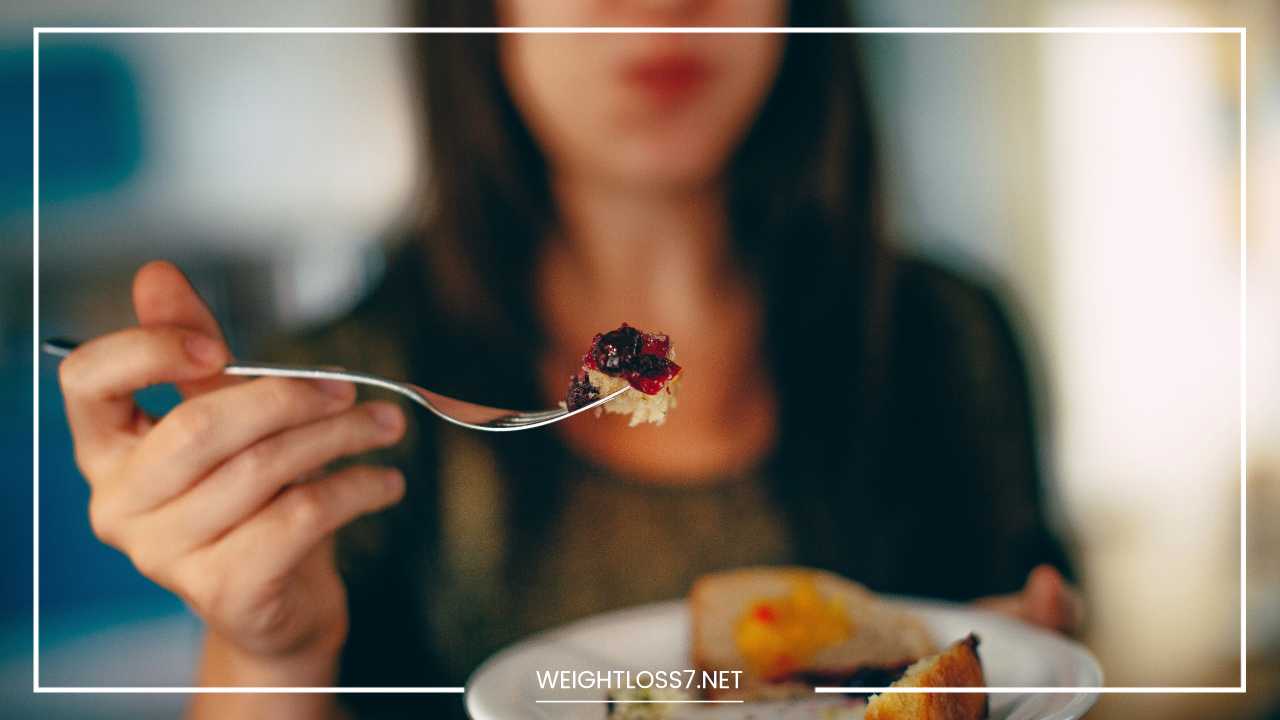
One of the most powerful tools for weight management is the practice of mindful eating. In our fast-paced society, eating has become a secondary activity. We eat while driving, while scrolling through our phones, or while watching television. This “distracted eating” disconnects us from our body’s internal cues, leading to overconsumption.
Tuning Into Hunger and Fullness
The human body has a highly sophisticated system for signaling when it needs food and when it has had enough. However, we often ignore these signals in favor of external cues, like the size of a package or the time on a clock. Mindful eating involves pausing to check in with yourself before you reach for food.
Ask yourself: “Am I physically hungry, or am I bored, stressed, or thirsty?” Physical hunger develops slowly, is felt in the stomach, and can be satisfied by many different types of food. Emotional hunger, on the other hand, comes on suddenly and often craves a specific comfort food. By learning to recognize true physical hunger, you can avoid thousands of unnecessary calories each week without ever feeling deprived.
The Art of Slowing Down
It takes approximately twenty minutes for the brain to receive the signal from the stomach that it is full. If you finish a large meal in ten minutes, you are likely to overeat because your brain hasn’t had time to catch up. To combat this, you can implement several techniques:
-
Chew thoroughly: Breaking food down more effectively aids digestion and forces a slower pace. Aim for 20 to 30 chews per bite.
-
Set the utensils down: Putting your fork or spoon down between bites creates a natural pause that allows you to assess your fullness.
-
Savor the flavor: Focus on the texture, aroma, and taste of the food. This increases psychological satisfaction, making you feel “done” with a meal sooner even if the portion was smaller.
Portion Control Without Counting
You don’t need a scale or a spreadsheet to manage portions. Simple visual cues can be incredibly effective. For example, using smaller plates and bowls can trick the brain into thinking you are eating more than you actually are. This is known as the Delboeuf illusion—the same amount of food looks much more substantial on a small plate than on a large one.
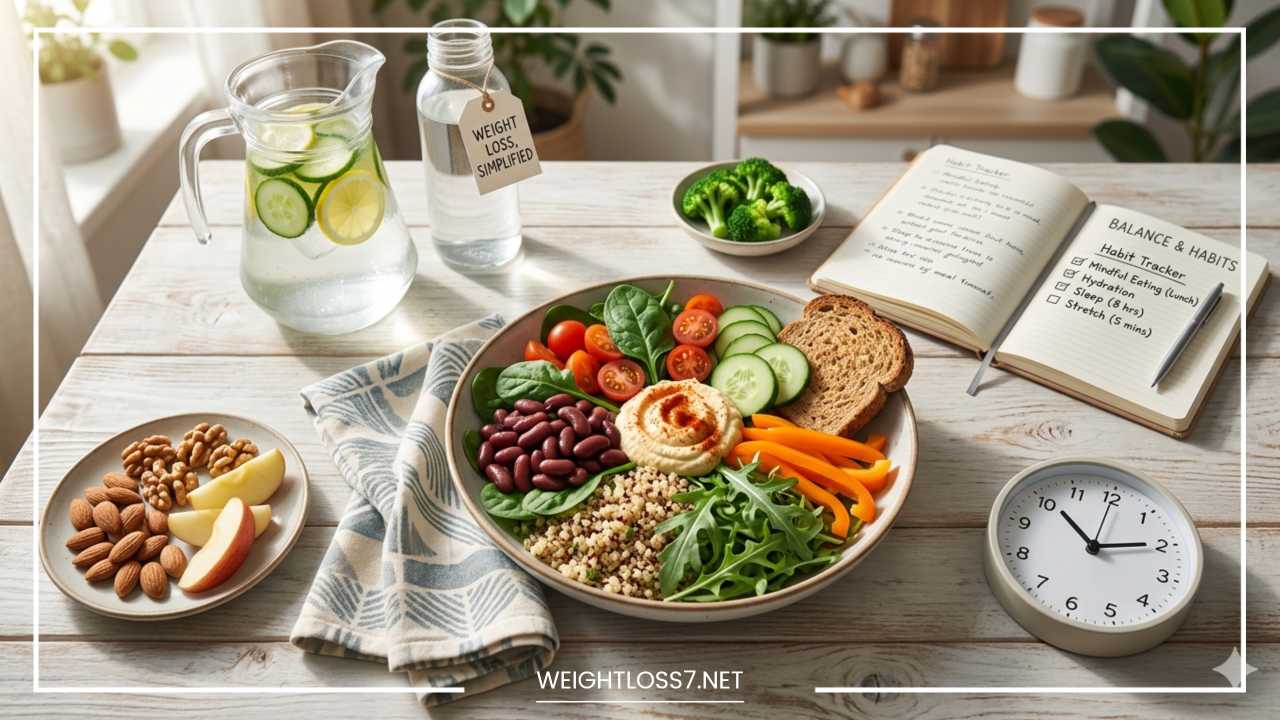
Another strategy is the “half-plate rule.” Fill half of your plate with high-fiber options like vegetables. Fill the other half with your proteins and grains. Fiber adds bulk to your diet, which physically stretches the stomach and triggers the vagus nerve to tell the brain you are full, all while providing fewer calories than denser foods.
Hydration and Its Role in Weight Management
Water is essential for every metabolic process in the body, yet it is often overlooked as a weight loss tool. Staying properly hydrated can have a direct impact on how much you eat and how efficiently your body burns energy.
Water as an Appetite Suppressant
The brain often confuses thirst signals with hunger signals. The hypothalamus, which regulates both hunger and thirst, can sometimes get its wires crossed. Many people reach for a snack when what their body actually needs is a glass of water. A simple but effective habit is to drink a full glass of water about 30 minutes before every meal. Studies have shown that this practice can lead to a significant reduction in the amount of food consumed during the meal because the water creates a sense of physical volume in the stomach.
Metabolism and Thermogenesis
Drinking water may also slightly boost your metabolism. Some research suggests that drinking cold water encourages “water-induced thermogenesis,” where the body spends energy (calories) to warm the water to body temperature. While the caloric burn per glass is modest, when combined with other habits over a year, it contributes to a steady downward trend in weight. Furthermore, a well-hydrated body is better at lipolysis—the process of breaking down fat for energy.
Eliminating Liquid Calories
One of the easiest ways to lose weight without “dieting” is to change what you drink. Liquid calories—found in sodas, sweetened coffees, energy drinks, and fruit juices—are particularly problematic because the brain does not register them the same way it registers solid food. You can drink 500 calories of soda and still feel just as hungry as you did before.
Consider the impact of a daily sweetened latte or a soda at lunch. Over a year, this single habit can account for ten or more pounds of weight gain. By replacing these drinks with water, herbal teas, or sparkling water, you can eliminate a massive source of “hidden” energy that contributes to weight gain without reducing the amount of actual food you eat.
Improving Sleep and Stress Management
If you are doing everything right with your food but still can’t lose weight, the culprit might be your lifestyle outside the kitchen. Sleep and stress are two of the most significant, yet most ignored, factors in weight regulation.
The Sleep-Weight Connection
Sleep deprivation is a metabolic nightmare. When you don’t get enough rest (usually defined as 7 to 9 hours for adults), your body undergoes hormonal shifts. Levels of ghrelin rise, while levels of leptin fall. This creates a biological drive to eat more, particularly high-energy, sugary foods that provide a quick energy boost to compensate for fatigue.
Furthermore, lack of sleep affects the prefrontal cortex of the brain, which is responsible for executive function and impulse control. This is why it is much harder to say no to a late-night snack after a poor night’s sleep. Your brain essentially loses its ability to weigh long-term goals (weight loss) against short-term rewards (sugar). Prioritizing sleep is not a luxury; it is a fundamental requirement for a healthy weight.
Stress and Cortisol
Chronic stress keeps the body in a “fight or flight” mode, leading to elevated levels of cortisol. Cortisol is a hormone that encourages the body to store fat, particularly in the abdominal area, as a survival mechanism. It also triggers cravings for “comfort foods” that are high in fat and sugar. This is a relic of our evolutionary past when stress usually meant physical danger or impending famine.
Managing stress doesn’t necessarily mean a week at a spa. It can be as simple as:
-
Deep breathing exercises: Taking five minutes a day to focus on slow, rhythmic breathing can lower cortisol levels almost instantly.
-
Short walks: A brief stroll in nature or even around the block can reset the nervous system and lower the urge to “stress-eat.”
-
Consistent Schedule: Our bodies love predictability. Going to bed and eating at roughly the same time every day can lower the body’s baseline stress level.
Smart Snacking and Meal Timing
How you structure your eating throughout the day can be just as important as what you eat. Constant grazing keeps insulin levels elevated, which signals the body to store fat rather than burn it.
The End of Mindless Snacking
Many of us snack out of habit rather than hunger. We snack because we are at the movies, because we are bored at our desks, or because we are watching a show. This mindless consumption can easily add 300 to 500 calories to your day. To manage weight without a diet, try to limit eating to specific meal times. If you do need a snack, choose one that combines fiber and healthy fats—like a handful of nuts or a piece of fruit—to keep you satiated until your next meal.
Listening to the Clock vs. the Body
Society tells us to eat breakfast, lunch, and dinner at specific times. However, if you aren’t hungry at 8:00 AM, there is no biological requirement to force a meal. Learning to eat according to your internal hunger cues rather than the clock can naturally lead to “intermittent” periods where your body has a chance to burn stored energy. This isn’t about skipping meals to starve yourself; it’s about waiting until your body actually requests fuel.
Spacing Your Meals and Overnight Fasting
Giving your digestive system a break is beneficial for gut health and insulin sensitivity. Try to avoid eating at least 2 to 3 hours before bed. This allows your body to focus on repair and recovery during sleep, rather than active digestion. An overnight fast of 12 hours (for example, from 7 PM to 7 AM) is a natural way to help the body access fat stores without the intensity of more restrictive fasting protocols.
Lifestyle Habits That Boost Metabolism
While we are avoiding formal “exercise” in this guide, that does not mean we should be sedentary. There is a vast difference between “working out” (going to the gym) and “being active” (moving your body throughout the day).
Non-Exercise Activity Thermogenesis (NEAT)
NEAT refers to the energy expended for everything we do that is not sleeping, eating, or sports-like exercise. It includes walking to the mailbox, standing while talking on the phone, cleaning the house, and even fidgeting. For many people, NEAT accounts for a larger portion of daily calorie burn than a structured 30-minute workout.
To increase your NEAT:
-
Take the long way: Park further from the entrance or use the stairs instead of the elevator. These small bursts of movement keep the metabolism humming.
-
Stand up: If you have a desk job, try to stand for 10 minutes every hour. Standing burns more calories than sitting and keeps your postural muscles engaged.
-
Active leisure: Instead of meeting a friend for coffee (where you sit), meet them for a walk in the park.
The Danger of Sitting
Prolonged sitting has been linked to a slower metabolism and increased fat storage. When you sit for extended periods, the circulation of an enzyme called lipoprotein lipase (LPL) drops. LPL is responsible for breaking down fats in the blood; when its activity drops, those fats are more likely to be stored as adipose tissue. Simply making an effort not to sit for more than an hour at a time can keep these enzymes active.
Behavioral Changes and Habit Formation
Losing weight without a diet requires a change in environment and mindset. If you make healthy choices the “path of least resistance,” you are much more likely to succeed. This is often called “choice architecture.”
Mindful Shopping and Environment
The journey to a healthier weight starts at the grocery store. If you don’t buy highly processed, high-sugar snacks, you won’t eat them when you are tired at 10:00 PM. Humans are biologically programmed to eat what is visible and available. You can use this to your advantage:
-
Clear the counters: Keep treats inside cupboards and keep a bowl of fruit on the counter.
-
Shop the perimeter: Most grocery stores keep fresh, whole foods on the outside aisles and processed goods in the center.
-
Never shop hungry: Hunger increases your brain’s reward response to high-calorie foods, making you more likely to buy things you don’t need.
Cooking at Home
When you eat out, you lose control over the ingredients. Restaurants often use excessive amounts of salt, sugar, and oils to make food taste better, which adds hidden calories. By preparing more meals at home, you naturally control the portions and the quality of the ingredients. You don’t need to be a chef; even simple meals like a hearty bean soup, a large salad, or roasted vegetables with a grain can be more beneficial than takeout.
The 80/20 Rule and Consistency
Consistency is more important than perfection. The 80/20 rule suggests that if you make healthy, mindful choices 80% of the time, the other 20% won’t derail your progress. This mindset prevents the “all or nothing” thinking that causes many people to give up after one “bad” meal. If you have a heavy dinner one night, simply return to your mindful habits the next morning. Perfectionism is often the enemy of progress in weight management.
Using Technology and Tools
In the modern age, we have access to tools that can help us build awareness without the stress of calorie counting or rigorous training logs.
Tracking for Awareness
Apps that track water intake or sleep quality can provide valuable insights into your habits. Sometimes, we think we are sleeping enough or drinking enough water, but the data shows otherwise. Use these tools not as a “judge,” but as a way to gather information about your lifestyle. Awareness is the first step toward change. If you realize you only drink two glasses of water a day, you can set a goal to increase that number without changing anything else.
Wearable Devices and Movement
A simple pedometer or smartwatch can track your daily steps. While we aren’t focusing on exercise, seeing a step count can motivate you to increase your NEAT. Setting a goal to hit a certain number of steps through daily activities—like walking the dog or taking the stairs—can be a fun and non-intimidating way to stay active. It turns movement into a game rather than a chore.
The Psychological Aspect of Weight Loss
The most overlooked component of weight management is the mental and emotional relationship we have with our bodies and food. For many, weight loss is seen as a punishment for “bad” behavior. This negative framing makes it difficult to maintain long-term changes.
Self-Compassion vs. Criticism
Research in psychology suggests that individuals who practice self-compassion are more likely to succeed in their health goals than those who are highly self-critical. When you criticize yourself for overeating, it often leads to “shame-eating,” where you eat more to soothe the negative emotions. Instead, acknowledge the mistake, understand that you are human, and refocus on your next mindful choice.
Redefining Success
Success shouldn’t just be measured by the scale. The scale can fluctuate due to water retention, hormones, and even the weather. Instead, measure success by “non-scale victories”:
-
Having more energy throughout the day.
-
Sleeping better through the night.
-
Feeling more comfortable in your clothes.
-
Noticing that you are less dependent on sugary snacks for an energy boost.
Integrating Fiber for Natural Satiety
While we aren’t following a “diet,” understanding the role of fiber can significantly simplify weight loss. Fiber is a type of carbohydrate that the body cannot digest. Because it passes through the system relatively intact, it slows down the absorption of sugar and keeps you feeling full for much longer.
The Bulk Factor
Fiber adds volume to your meals. If you add a large serving of leafy greens or beans to your meal, you are adding physical mass that fills the stomach. This triggers the stretch receptors in the stomach wall, which send signals to the brain that you have consumed a large amount of food. This allows you to feel satisfied while consuming fewer total calories.
Gut Health and Weight
Emerging research into the gut microbiome suggests that the bacteria living in our digestive tract play a huge role in how we store fat and regulate hunger. Fiber is the primary food source for beneficial gut bacteria. By “feeding” these bacteria, you can improve your metabolic health and potentially reduce cravings for processed sugars.
The Role of Temperature and Environment
Interestingly, your physical environment can also play a role in how your body manages energy.
Cool Temperatures
Some studies suggest that keeping your home or office a bit cooler can stimulate “brown fat.” Unlike regular white fat, which stores energy, brown fat burns energy to generate heat. While the effect is small, living in a slightly cooler environment (or taking cool showers) can provide a minor metabolic boost over time.
Lighting and Eating
The environment in which you eat matters. Dim lighting and soft music have been shown to make people eat more slowly, which, as discussed earlier, leads to better portion control. Conversely, bright lights and loud, fast-paced music in restaurants are often designed to make you eat faster and order more.
Final Thoughts
Losing weight does not have to be a miserable process of deprivation and exhaustion. By shifting the focus from “diet and exercise” to “habits and lifestyle,” you can create a sustainable environment where your body naturally reaches a healthier state.
Success comes from the accumulation of small choices: choosing water over soda, sleeping an extra hour, taking the stairs, and eating slowly enough to hear your body say “I’m full.” These changes may seem small individually, but collectively, they have a profound impact on your metabolism, your hormones, and your overall well-being.
The goal is not to reach a “perfect” number on the scale overnight, but to build a lifestyle that supports your health for years to come. Be patient with yourself, focus on the “wins” you achieve each day, and remember that gradual, consistent progress is the most effective path to long-term success. You have the power to transform your health through the simple, everyday actions you take. Weight management is not a sprint; it is the natural result of living a balanced, mindful life.