The Quickest Way to Lose Weight Without Exercise

Quickest Way to Lose Weight Without Exercise: Proven Strategies That Work
The Reality of Weight Loss Without the Gym
The modern world is built for convenience, but that convenience often comes at a cost to our physical health. For many, the traditional advice of “hit the gym for an hour every day” feels like an impossible mountain to climb. Between demanding careers, family obligations, and the fundamental need for rest, finding time for a dedicated fitness regimen is a luxury not everyone possesses. This leads to a common question: Is it actually possible to lose weight without exercise?
The short answer is a resounding yes. While physical activity offers undeniable benefits for cardiovascular health, bone density, and mood, the scale is primarily moved by what happens in the kitchen, not the gym. Weight loss is fundamentally an internal process of energy management. By understanding how to manipulate your daily habits, nutritional choices, and lifestyle patterns, you can achieve significant results without ever lifting a weight or stepping on a treadmill.
However, “quickest” does not mean “reckless.” True success lies in shifting the body’s biology through strategic changes that are sustainable. This guide explores the mechanics of weight loss through the lens of nutrition and habit, providing a comprehensive roadmap for those looking to transform their bodies through lifestyle alone. We will move beyond the surface-level advice and dive into the biological, psychological, and practical pillars of shedding weight effectively.
How Weight Loss Actually Works: The Biological Blueprint
To lose weight without increasing your physical output, you must master the principle of energy balance. Every function of your body—from the beating of your heart to the cellular repair that happens while you sleep—requires energy. This energy is measured in calories.
The Energy Equation
Weight loss occurs when your body experiences a caloric deficit. This means you are consuming fewer calories than your body requires to maintain its current mass. When this deficit is created, the body looks inward for fuel, breaking down stored adipose tissue (fat) to bridge the energy gap.
The Role of Metabolism
Your Basal Metabolic Rate (BMR) is the number of calories your body burns at rest just to keep you alive. Surprisingly, this accounts for about 60% to 75% of your total daily energy expenditure. Digesting food (the thermic effect of food) and non-exercise movement account for the rest. Because your BMR is such a large piece of the pie, you can lose weight effectively by simply ensuring your intake stays below your total daily needs.
The Hormonal Factor
Weight loss isn’t just about math; it’s about chemistry. Hormones like insulin, ghrelin, and leptin dictate how your body stores fat and when it signals hunger. When we eat highly processed sugars, insulin spikes, signaling the body to store energy as fat. By focusing on steady blood sugar levels through whole foods, we keep insulin low, making it easier for the body to access stored fat for fuel.
The Biggest Factor: Calorie Control Through Eating Habits
If you aren’t burning extra calories through exercise, your primary lever for weight loss is intake management. However, this isn’t just about eating less; it’s about eating smarter and changing how you interact with food.
The Impact of Diet vs. Exercise
It is far easier to avoid consuming 500 calories than it is to burn 500 calories. For context, a single large blueberry muffin can contain 500 calories, which would take the average person over an hour of vigorous running to burn off. By focusing on calorie control, you are addressing the root of the weight issue rather than trying to outrun a poor diet.
Recognizing Fullness Signals
Most of us eat until our plates are empty, not until our stomachs are satisfied. It takes approximately 20 minutes for the brain to receive signals from the digestive tract that it is full. When we eat quickly, we often bypass this signal and overconsume.
-
The 80% Rule: Try eating until you are 80% full. This leaves room for the “fullness lag” to catch up.
-
Mindful Chewing: Focus on the texture and flavor of each bite. This slows down the process and improves digestion.
Avoiding Mindless Snacking
Modern life is full of “passive eating.” We eat while scrolling through phones, watching television, or working at a desk. These distractions mute our internal hunger cues.
-
The “Kitchen Only” Rule: Make a pact to only eat while sitting at a table without electronics.
-
Emotional vs. Physical Hunger: Before reaching for a snack, ask if you are truly hungry or just bored, stressed, or tired. If a glass of water doesn’t satisfy the craving, it might be physical hunger; if it does, it was likely just a habit.
Smart Eating Strategies for Faster Results
To lose weight quickly without exercise, the quality of your food is just as important as the quantity. You want to choose foods that have a low caloric density but high nutritional density.
Prioritizing Fiber-Rich Foods
Fiber is a weight-loss miracle. It adds bulk to your meals without adding calories, slowing down digestion and keeping you fuller for longer.
-
Vegetables: Leafy greens, broccoli, cauliflower, and peppers should make up the bulk of your plate. They are high in volume but incredibly low in calories.
-
Legumes: Lentils, chickpeas, and beans are powerhouses of both fiber and protein. They provide a “heavy” feeling in the stomach that wards off hunger for hours.
-
Whole Grains: Swap white bread and pasta for oats, quinoa, and brown rice to avoid blood sugar spikes that lead to hunger.
The Importance of Protein
Protein is the most satiating macronutrient. It requires more energy for your body to digest (the thermic effect) compared to fats or carbohydrates.
-
Sustained Energy: Including protein in every meal prevents the “sugar crash” that leads to mid-afternoon snacking.
-
Sources: Focus on tofu, tempeh, beans, peas, and nuts. These provide the necessary building blocks for your body while keeping calorie counts manageable.
Strategic Hydration
Thirst is often mistaken for hunger. The hypothalamus, the part of the brain that regulates both, can sometimes get its signals crossed.
-
The Pre-Meal Water Trick: Drinking 16 ounces of water 30 minutes before a meal has been shown to significantly reduce the number of calories consumed during that meal.
-
Hydration Density: Foods with high water content, like cucumbers, melons, and citrus fruits, help you feel full on fewer calories.
Portion Control Without Feeling Restricted
You don’t need to weigh every gram of food to lose weight, but you do need a visual system to prevent “portion creep.”
The Plate Method
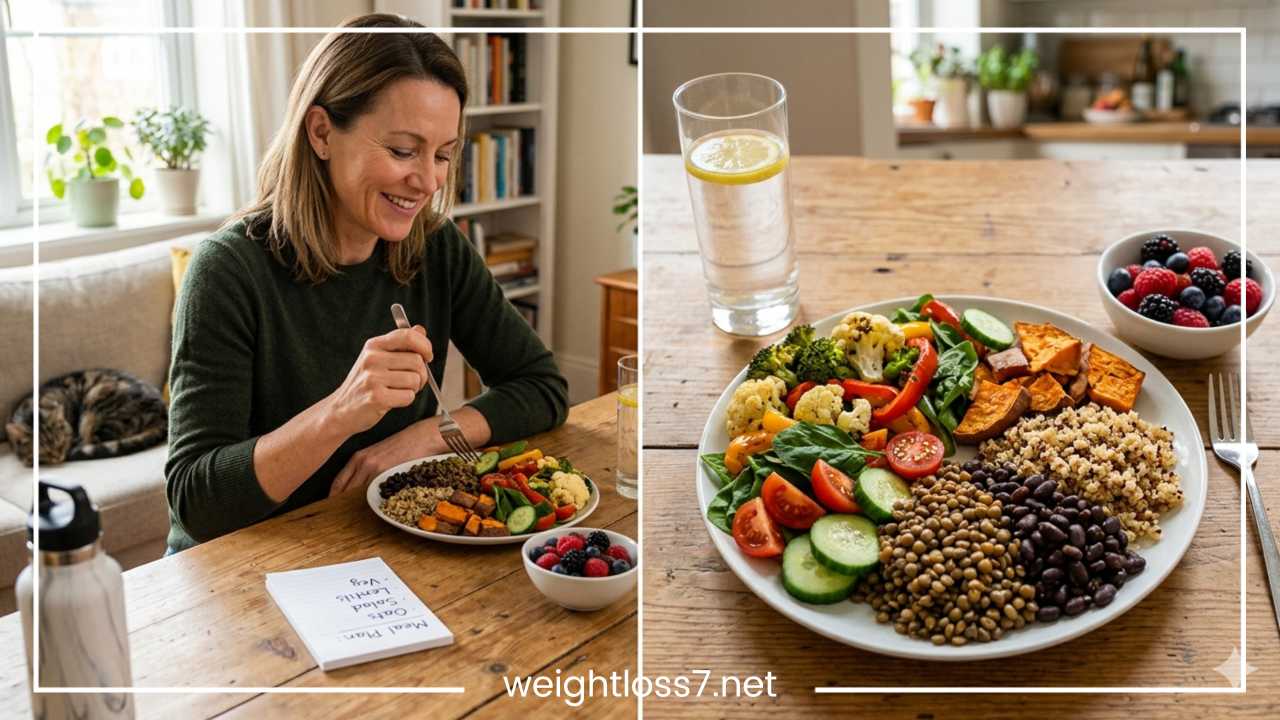
A simple way to structure your meals for weight loss is to divide your plate visually:
-
Half the plate: Non-starchy vegetables (spinach, kale, zucchini, etc.).
-
One-quarter of the plate: Protein sources (tofu, lentils, beans).
-
One-quarter of the plate: Complex carbohydrates (sweet potato, brown rice, or fruit).
The Psychology of Dishware
The “Delboeuf Illusion” suggests that our brains perceive portion sizes based on the size of the container.
-
Smaller Plates: Using an 8-inch plate instead of a 12-inch plate makes a normal portion look like a feast, tricking the brain into feeling more satisfied.
-
Tall, Thin Glasses: We tend to pour less liquid into tall, narrow glasses than short, wide ones, which is helpful for managing intake of juices or caloric beverages.
Avoiding Seconds
Serve your food in the kitchen and leave the remaining pots and pans on the stove. If the food is sitting in the middle of the dining table, you are far more likely to reach for a second helping out of habit rather than hunger. The friction of having to get up and walk back to the kitchen is often enough to make you realize you are already full.
The Role of Daily Habits Beyond Exercise
Weight loss is a holistic process. Factors that have nothing to do with food or the gym can heavily influence how your body stores and burns fat.
Sleep and Hunger Hormones
Sleep deprivation is a silent enemy of weight loss. When you are tired, two key hormones go out of balance:
-
Ghrelin: The “hunger hormone” increases, making you crave high-calorie, sugary foods.
-
Leptin: The “satiety hormone” decreases, meaning you don’t feel full even after eating a large meal.
Aiming for 7–9 hours of quality sleep is perhaps the most underrated weight-loss strategy.
Stress and Cortisol
Chronic stress triggers the release of cortisol. High levels of cortisol are linked to increased abdominal fat storage and heightened cravings for “comfort foods.”
-
Stress Management: Finding non-food ways to de-stress—such as deep breathing, reading, or a warm bath—can chemically assist your weight loss efforts by keeping cortisol in check.
Circadian Rhythm and Meal Timing
Our bodies are governed by internal clocks. Research suggests that the body processes food more efficiently during daylight hours.
-
Late-Night Eating: Eating late at night, especially close to bedtime, can interfere with sleep quality and lead to higher fat storage. Try to finish your last meal at least 2–3 hours before sleep.
Common Mistakes That Slow Down Weight Loss
When trying to lose weight quickly, many people fall into traps that actually hinder their progress or lead to “yo-yo” dieting.
Skipping Meals
It seems logical: “If I don’t eat lunch, I’ll save calories.” However, skipping meals usually leads to extreme hunger later in the day, resulting in a “binge” at dinner. It is better to have consistent, smaller meals that keep blood sugar stable.
Drinking Your Calories
Liquid calories are the most “invisible” calories. Sodas, sweetened lattes, and even large amounts of fruit juice can add hundreds of calories to your day without making you feel full. Stick to water, black coffee, or herbal teas.
Over-Reliance on “Diet” Products
Many “low-fat” or “diet” snacks replace fat with sugar or artificial sweeteners that can actually increase cravings. Real, whole foods are always superior to processed “diet” versions.
Unrealistic Expectations
If you expect to lose 10 pounds in a week, you will likely get discouraged when the scale doesn’t move that fast. Sustainable weight loss is a marathon, not a sprint.
Simple Lifestyle Tweaks That Boost Results
While we are avoiding formal exercise, the body still benefits from NEAT (Non-Exercise Activity Thermogenesis). These are the calories burned through every movement that isn’t intentional exercise.
-
Standing vs. Sitting: If you work at a desk, try a standing desk or stand up during phone calls. You burn slightly more calories standing than sitting, which adds up over an eight-hour day.
-
Movement Breaks: Set a timer to move for two minutes every hour. Stretch, do a quick lap of the house, or simply tidy up a room.
-
Fidgeting: Believe it or not, small movements like tapping your foot or stretching while you work can burn significant calories over the course of a day.
-
The Power of Walking: While not “exercise” in the gym sense, choosing the stairs or parking further away from the store entrance keeps your metabolism active.
The Science of Metabolism: Boosting the Burn at Rest
To lose weight efficiently without exercise, you want your metabolism to be as efficient as possible.
The Thermic Effect of Food (TEF)
Different foods require different amounts of energy to digest.
-
Protein: Has a high TEF (20–30% of calories burned during digestion).
-
Carbohydrates: Have a moderate TEF (5–10%).
-
Fats: Have a low TEF (0–3%).
By eating a diet rich in complex proteins (like legumes and soy) and fiber-heavy carbohydrates, you are essentially burning more calories just by eating.
Temperature Regulation
The body spends energy to maintain its core temperature.
-
Cold Water: Drinking cold water can slightly increase your metabolic rate as your body works to warm it up.
-
Cooler Environments: Keeping your home slightly cooler can encourage the body to burn “brown fat” to generate heat.
Managing Cravings and Social Situations
The hardest part of weight loss isn’t the hunger—it’s the environment.
Navigating Social Dining
You don’t have to stay home to lose weight.
-
Look at the Menu Ahead of Time: Decide what you will eat before you arrive so you aren’t swayed by peer pressure or the smell of fried foods.
-
The “One Treat” Rule: If you are at a party, allow yourself one small portion of a favorite item and fill the rest of your plate with the healthiest available options.
The Psychology of Cravings
Cravings are often intense but short-lived.
-
The 15-Minute Rule: When a craving hits, tell yourself you can have it in 15 minutes. Often, by the time the timer goes off, the intensity of the craving has passed.
-
Distraction: Engaging in a quick task, like washing the dishes or calling a friend, can break the mental loop of a craving.
Planning for Long-Term Success
Losing weight is the first step; keeping it off is the second.
Meal Prep for Busy Lives
The main reason people eat poorly is convenience.
-
Batch Cooking: Spend a few hours on Sunday prepping large portions of grains, beans, and chopped vegetables. This ensures that when you are tired on a Tuesday evening, a healthy meal is as easy to grab as a takeout menu.
-
Healthy Staples: Keep your pantry stocked with “emergency” healthy foods like canned lentils, brown rice, and frozen vegetables.
Tracking Progress Beyond the Scale
The scale is a blunt instrument. It doesn’t distinguish between fat, muscle, and water weight.
-
How Clothes Fit: This is often a better indicator of fat loss than the scale.
-
Energy Levels: Notice if you feel more alert or less sluggish throughout the day.
-
Measurement: Use a measuring tape to track changes in your waistline.
How Fast Can You Expect Results?
In the first week of a new nutritional plan, you may see a significant drop on the scale—sometimes 3 to 5 pounds. Much of this is water weight. When you reduce processed foods and refined carbohydrates, your body stores less glycogen, which holds onto water.
After the initial drop, a safe and sustainable rate of weight loss is 1 to 2 pounds per week. While this might not sound “fast” to someone wanting an overnight transformation, it is the pace at which your body can actually burn fat without losing muscle mass or crashing your metabolism. Over three months, this adds up to 12–24 pounds, which is a dramatic physical change.
Final Thoughts: Your Sustainable Transformation
Losing weight without exercise is entirely achievable by mastering the environment you create and the choices you make at the table. By focusing on high-fiber foods, managing portion sizes, prioritizing sleep, and remaining mindful of “hidden” calories, you can reclaim your health on your own terms.
The “quickest” way to lose weight is the way that you can maintain. Extreme restriction leads to burnout, but smart, incremental shifts in your daily habits create a momentum that carries you to your goal. Start today by making one small change—perhaps drinking a glass of water before your next meal—and build from there. Your journey to a lighter, more energetic version of yourself doesn’t require a gym membership; it only requires your commitment to a more mindful way of living.
Consistency is the secret ingredient. You don’t have to be perfect; you just have to be better than you were yesterday. By taking control of your nutrition and lifestyle, you are not just losing weight—you are building a foundation for a healthier, more vibrant life.
Frequently Asked Questions (FAQ)
Is it possible to lose weight without exercise in a week?
Yes, it is possible to see a change on the scale within a week by focusing on caloric density and water retention. Most people who lose weight quickly in the first seven days are shedding excess water weight caused by high sodium and refined carbohydrate intake. By switching to whole, fiber-rich foods and increasing water consumption, you can reduce bloating and see a lower number on the scale relatively quickly.
How can I lose belly fat without going to the gym?
Losing belly fat without exercise requires a focus on insulin management and cortisol reduction. Since the body stores fat in the midsection partly due to stress and high-sugar diets, prioritizing high-fiber meals and getting 7–9 hours of sleep is essential. Reducing liquid calories and late-night snacking are two of the most effective ways to target fat loss throughout the body, including the abdominal area.
What are the best foods for weight loss without exercise?
The best foods for sedentary weight loss are those that provide high satiety with low calories. This includes:
-
Legumes: Lentils, chickpeas, and beans are excellent protein and fiber sources.
-
Cruciferous Vegetables: Broccoli, cauliflower, and cabbage are high in volume and filling.
-
Whole Grains: Oats and quinoa provide steady energy without blood sugar spikes.
-
Healthy Fats: Small portions of avocado, nuts, and seeds keep you satisfied between meals.
How many calories should I eat to lose weight if I don’t exercise?
To determine your ideal intake, you first need to calculate your Basal Metabolic Rate (BMR) and then subtract a modest amount (usually 200–500 calories). For a general audience, most people see results by focusing on “portion awareness” rather than strict counting. Aim to fill half your plate with vegetables at every meal to naturally lower your caloric intake without feeling hungry.
Can drinking water help you lose weight without working out?
Absolutely. Drinking water is a key strategy for metabolic efficiency. It helps the kidneys filter toxins and ensures that the liver can focus entirely on metabolizing stored fat. Furthermore, drinking water before meals acts as a natural appetite suppressant, helping you feel full faster and reducing the total number of calories consumed during the day.
Why am I not losing weight even though I eat healthy and don’t exercise?
If progress has stalled, it may be due to hidden calories or metabolic adaptation. Common culprits include “healthy” snacks like large portions of nuts or dried fruits, which are calorie-dense. Additionally, chronic stress or lack of sleep can keep cortisol levels high, which signals the body to hold onto fat stores. Ensure you are getting enough protein and fiber to keep your metabolism active.
Does sleeping more help you lose weight faster?
Yes, sleep is a critical pillar of hormonal weight loss. When you are sleep-deprived, your body produces more ghrelin (the hunger hormone) and less leptin (the fullness hormone). By prioritizing rest, you naturally reduce cravings for high-sugar comfort foods, making it significantly easier to stick to your nutritional goals without the need for willpower alone.
Is skipping breakfast good for losing weight without exercise?
Skipping breakfast, often associated with intermittent fasting, works for some people by shortening the “eating window,” which can lead to an overall reduction in daily calories. However, for others, it can lead to overeating at lunch. The “quickest” method is the one that prevents you from feeling deprived. If you enjoy breakfast, opt for high-fiber choices like oatmeal or a savory lentil dish to stay full until the afternoon.