What Is a Healthy Diet to Lose Weight?

What Is a Healthy Diet to Lose Weight? | Simple, Sustainable Eating Guide
Weight loss is often portrayed as a battle of will—a grueling sprint toward a finish line where one can finally stop “dieting” and return to “normal” life. However, this perspective is precisely why so many people struggle to maintain their results. Real, healthy weight loss is not about extreme restriction or temporary fixes; it is about reshaping your relationship with food and movement in a way that feels natural, rewarding, and sustainable for the rest of your life.
The importance of long-term habits cannot be overstated. When we opt for quick fixes—such as drastically cutting calories or eliminating entire groups of nutrients—the body often reacts by slowing down the metabolism and increasing hunger hormones like ghrelin. This creates a physiological “famine” response that leads to a cycle of weight loss followed by rapid weight regain, often referred to as yo-yo dieting. This cycle is not only frustrating but can also be taxing on your cardiovascular and metabolic health.
Common myths suggest that a healthy diet must be flavorless, expensive, or socially isolating. Many believe that weight loss requires a specific “magic” food or the total avoidance of everything they enjoy. In reality, a healthy diet is built on balance, variety, and the understanding that no single food is responsible for weight gain or loss. It is the cumulative effect of our daily choices that dictates our health trajectory.
In this guide, you will learn the fundamental principles of nutrition that support a leaner body, how to structure your meals for maximum satisfaction, and why lifestyle factors like sleep and stress are just as important as what is on your plate. Our goal is to move away from the “all or nothing” mentality and provide a roadmap for overall well-being where weight loss is a natural byproduct of a healthier, more vibrant life.
What Does “Healthy Diet” Really Mean?
A healthy diet for weight loss is often misunderstood as a list of forbidden items. In truth, a healthy diet is a pattern of eating that provides all the necessary nutrients your body requires to function optimally while maintaining a stable, healthy weight. It is defined by nourishment rather than restriction. When we shift our focus toward what we can add to our plates—more color, more fiber, more hydration—the focus on what we are “missing” naturally fades away.
Focusing on nourishment means prioritizing food quality. Every calorie we consume carries information; it tells our body how to function, how to store energy, and how to repair tissues. Choosing foods packed with vitamins, minerals, and phytonutrients ensures that even while consuming fewer calories, your body is not “starving” for essential building blocks. However, food quality is only one half of the equation; portion size and energy balance remain the other half. Even the most nutrient-dense foods contain energy, and for weight loss to occur, the body must be in a state where it uses slightly more energy than it takes in.
The relationship between quality and quantity is the sweet spot of weight management. For example, eating a large volume of fiber-rich foods allows you to feel full on fewer calories, making it easier to maintain that energy balance without feeling deprived. It is about learning to choose foods that offer high satiety (the feeling of fullness) for a lower caloric cost.
Consistency is the final, most crucial element. A “perfect” diet that lasts for three days is far less effective than a “good enough” diet that lasts for three years. Perfection is an impossible standard that leads to burnout and a sense of failure. Consistency, on the other hand, allows for the occasional celebration, the busy day when meals aren’t ideal, or the indulgence of a favorite treat. As long as the general trend of your eating habits remains positive, you will see progress.
How Weight Loss Works: The Basics Explained Simply
At its core, weight loss is governed by the principle of energy balance. Every day, your body requires a certain amount of energy to keep your heart beating, your lungs breathing, and your muscles moving. This energy is measured in calories. When you consume fewer calories than your body needs to perform these functions and your daily activities, your body taps into its stored energy—mostly in the form of body fat—to make up the difference.
However, this does not mean you should simply eat as little as possible. Your metabolism—the internal engine that burns energy—is highly adaptive. If you suddenly stop eating enough, your body may perceive a threat to its survival and slow down your metabolic rate to preserve energy. This is why slow, steady weight loss—usually defined as losing half a pound to two pounds per week—is much healthier and more likely to be permanent. It allows your metabolism to stay active and helps preserve lean muscle mass, which is more metabolically active than fat.
Beyond just calories, your eating habits influence your hunger and energy levels through hormones. For instance, consuming meals that cause sharp spikes and drops in blood sugar can leave you feeling tired and ravenously hungry shortly after eating. When blood sugar drops rapidly, the brain triggers a craving for quick energy, usually in the form of sugar or refined carbs. By choosing foods that provide a steady release of energy, you can manage your appetite more effectively. When you aren’t fighting constant, hormone-driven hunger, staying consistent with your weight loss goals becomes an act of self-care rather than a test of willpower.
Core Principles of a Healthy Diet for Weight Loss
To build a diet that works, you need a foundation based on several core principles. These principles ensure that your body is supported, your brain is fueled, and your hunger is managed.
Balanced Meals
Every meal should ideally contain a balance of three primary macronutrients: carbohydrates, protein, and fats.
-
Carbohydrates are your body’s preferred energy source, especially for brain function and physical activity.
-
Protein is essential for maintaining muscle, repairing tissue, and keeping you full.
- Healthy Fats are necessary for hormone production, brain health, and the absorption of certain vitamins (A, D, E, and K).When these three are combined, they slow down digestion, providing a steady stream of energy rather than a quick spike.
Whole, Minimally Processed Foods
The closer a food is to its natural state, the more beneficial it generally is for weight loss. Whole foods—like grains in their original form, fresh produce, and raw nuts—tend to be more “thermogenic.” This means the body burns more energy just trying to break them down during digestion. They also lack the added sugars, excessive salt, and shelf-stabilizing fats often found in highly processed items, which can disrupt our natural hunger signals.
Fiber-Rich Foods for Fullness
Fiber is a weight-loss secret weapon. It adds bulk to your meals without adding calories. Because fiber cannot be fully digested, it slows the movement of food through your digestive tract, which helps you feel satisfied for longer periods. It also helps stabilize blood sugar levels, preventing the energy crashes that lead to snacking.
Adequate Hydration
Thirst is frequently mistaken for hunger. The brain’s signals for “I need water” and “I need food” are quite similar, and many people eat when they are actually just dehydrated. Staying well-hydrated ensures that your metabolism functions efficiently and helps your kidneys process waste products. Water is also essential for the digestion of fiber; without enough fluid, a high-fiber diet can cause bloating and discomfort.
Regular Meal Timing
While some people find success with various timing strategies, the most important factor for the general population is regularity. Eating at relatively consistent times helps regulate hunger hormones and prevents the “starving” feeling that often leads to poor choices or overeating during the next meal. Whether you prefer three square meals or smaller, more frequent snacks, find a rhythm that prevents you from reaching a level of hunger where your logic is overruled by your cravings.
Foods That Support Healthy Weight Loss
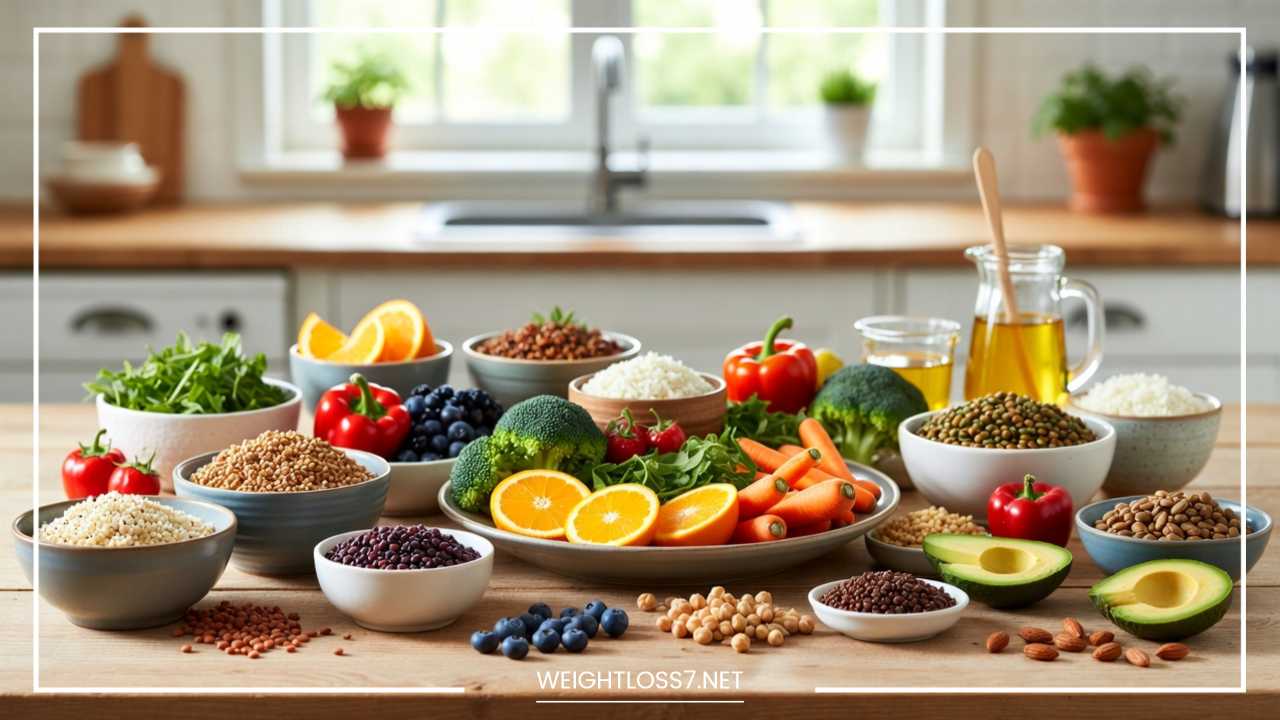
Focusing on what to include in your diet is more empowering than focusing on what to exclude. By filling your plate with these nutrient-dense groups, you naturally crowd out less nutritious options without feeling a sense of loss.
1. Whole Grains and Slow-Digesting Carbohydrates
Contrary to popular belief, carbohydrates are not the enemy of weight loss. The key is choosing “slow” carbs over “fast” carbs. Whole grains like oats, quinoa, brown rice, buckwheat, and barley contain the bran and germ, which provide fiber and essential B vitamins. These grains take longer for the body to break down, providing sustained energy for your brain and muscles throughout the day. While portion awareness is still important—usually a portion the size of your cupped hand—these foods are vital for preventing the fatigue and irritability often associated with dieting.
2. Protein-Rich Foods
Protein is the most satiating nutrient. It takes longer to digest than carbohydrates and triggers the release of fullness hormones. It also plays a critical role in preserving lean muscle mass. When you lose weight, the goal is to lose fat, not the muscle that helps you move and keeps your metabolism high. Including high-quality protein sources—such as various legumes (lentils, chickpeas, beans), soy-based foods, seeds, and specific dairy or dairy-alternative options—at every meal ensures your body has the building blocks it needs.
3. Healthy Fats
Fats were once feared because they are calorie-dense (9 calories per gram compared to 4 for carbs and protein). However, we now know that healthy fats are essential for long-term satiety. They help signal to the brain that you are full and satisfied. Sources like avocados, walnuts, chia seeds, flaxseeds, and high-quality liquid oils should be included in moderation. A small amount of healthy fat can make a simple meal feel much more indulgent and satisfying, which prevents the psychological feeling of deprivation that often leads to “falling off the wagon.”
4. Fruits and Vegetables
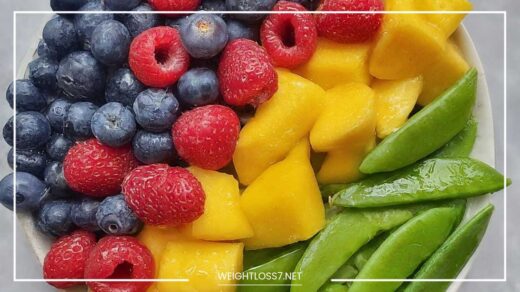
Fruits and vegetables should make up the largest portion of your plate by volume. They are low in calorie density, meaning you can eat a large amount for very few calories. This “volume eating” is a fantastic strategy for weight loss because it physically fills the stomach, sending signals to the brain that you have eaten a large meal. Additionally, the wide array of micronutrients found in colorful produce supports your immune system and energy levels, ensuring you feel vibrant while your body composition changes.
Foods and Habits That Can Slow Weight Loss
While no food needs to be banned entirely, certain patterns and food types can make weight loss significantly more difficult by interfering with your energy balance and hunger cues.
Highly processed foods are often designed to be “hyper-palatable.” Food scientists create a specific combination of salt, sugar, and fat that bypasses our body’s natural “I’m full” signals. These foods are usually low in fiber and protein, leading to a cycle of rapid eating, a quick energy crash, and then hunger again shortly after.
Excess added sugars, particularly in liquid form like sodas or sweetened coffees, provide “empty calories.” They add to your daily energy intake without contributing to fullness, making it very easy to overshoot your calorie needs. Similarly, refined carbohydrates—like white bread, sugary cereals, and many snack crackers—behave much like sugar in the body. They cause rapid spikes in insulin, a hormone that, when elevated, makes it harder for the body to access stored fat for energy.
Habits also play a major role. Large portion sizes, even of healthy foods, can halt progress if the total energy intake exceeds what the body needs. Mindless snacking, often done while watching television or working, can add hundreds of calories to your day that you don’t even remember eating. Furthermore, emotional or stress-related eating uses food as a coping mechanism for feelings rather than a source of fuel. Recognizing these patterns is the first step toward changing them; it’s about learning to respond to stress with movement, rest, or connection rather than a snack.
Portion Control Without Obsession
Many people find the idea of weighing food or counting every calorie to be exhausting and unsustainable. For some, it can even lead to an unhealthy obsession. Fortunately, you can manage your portions using simpler, more intuitive methods.
Visual cues are highly effective. You don’t need a scale when you have your hands. A general guide for a balanced meal is:
-
Protein: About the size and thickness of your palm.
-
Vegetables: At least two fist-sized portions.
-
Carbohydrates: About one cupped-hand portion.
-
Fats: About the size of your thumb.
Another vital skill is learning to listen to your internal hunger and fullness signals. In our fast-paced world, we often eat quickly, on the go, or while distracted. It takes approximately 20 minutes for the chemical signals from your stomach to reach your brain and register fullness. By eating slowly and mindfully—tasting the textures, smelling the aromas, and putting your fork down between mouthfuls—you give your body the time it needs. The goal is to reach a state of “satisfied” (where you are no longer hungry) rather than “full” (where you feel physically heavy or uncomfortable).
Meal Planning for Sustainable Weight Loss
Success in weight loss often comes down to preparation. When you have a plan, you are much less likely to make impulsive choices based on convenience or extreme hunger.
Meal planning doesn’t have to mean spending your entire weekend cooking and portioning meals into identical plastic containers. It can be as simple as:
-
Deciding on 3–4 core meals for the week.
-
Ensuring you have the ingredients on hand.
-
Prepping components (like washing greens or cooking a batch of grains) to save time later.
A flexible meal structure—having a go-to balanced breakfast, lunch, and dinner—reduces “decision fatigue.” We make hundreds of food-related decisions every day; the more we can automate the healthy ones, the more willpower we save for other areas of life.
When grocery shopping, stick to a list. Avoid shopping when you are hungry, as this is when cravings tend to dictate your purchases. Look for variety; keeping your meals enjoyable is key to sustainability. If you eat the same bland meal every day, you will eventually tire of it and look for excitement in less healthy options. Experiment with herbs, spices, vinegars, and different cooking methods like roasting or air-frying to keep your palate engaged.
The Role of Lifestyle in Weight Loss Success
Nutrition is the cornerstone of weight loss, but it does not exist in a vacuum. Your lifestyle choices can either accelerate your progress or act as a constant anchor holding you back.
Physical Activity
While you cannot “out-exercise” a poor diet, daily movement is essential for long-term health and weight maintenance. This doesn’t necessarily mean high-intensity gym sessions. Walking, gardening, dancing, or even standing more during the day contribute to your total energy expenditure. Finding an activity you genuinely enjoy makes it easier to stay consistent. Movement also improves insulin sensitivity, making it easier for your body to manage the carbohydrates you eat.
Sleep and Appetite
Sleep is perhaps the most underrated tool for weight loss. Chronic lack of sleep disrupts the hormones that regulate appetite. Ghrelin (the hunger hormone) increases, while leptin (the fullness hormone) decreases. When you are sleep-deprived, your brain’s reward centers also become more active, making high-calorie, sugary foods much more tempting. Prioritizing 7–9 hours of quality sleep can make sticking to your diet feel significantly easier.
Stress Management
Chronic stress raises levels of cortisol, a hormone that is linked to increased abdominal fat and higher cravings for “comfort foods” that are high in fat and sugar. Incorporating stress-management techniques—such as deep breathing, meditation, or spending time in nature—can prevent stress-induced overeating and improve your metabolic health.
Common Weight Loss Mistakes to Avoid
In the pursuit of weight loss, it is easy to fall into traps that feel like they should work but actually hinder your progress.
Skipping meals is a classic mistake. While it seems like a way to save calories, it usually leads to excessive hunger later in the day, resulting in overeating or bingeing at night. Similarly, extreme calorie restriction is a recipe for failure. It is not sustainable, and it often leads to nutrient deficiencies, hair loss, and a slowed metabolism.
Relying on short-term “diets” or “cleanses” is another pitfall. These methods rarely teach you how to eat in the real world. Once the “cleansing” period ends, the weight usually returns because the underlying habits—how you shop, cook, and deal with cravings—never changed.
Expecting rapid results can be discouraging. Real, lasting change takes time. Comparing your progress to others—especially the curated images on social media—is unhelpful because every body responds differently. Focus on “non-scale victories,” such as having more energy to play with your children, sleeping better, or feeling more confident in your clothes.
How to Make a Healthy Diet Sustainable Long-Term
The secret to keeping the weight off is making your “diet” your new normal. This requires a shift from a temporary mindset to a permanent lifestyle.
Build your habits gradually. Instead of trying to overhaul your entire life on a Monday morning, start by making one or two small changes. Perhaps you start by drinking more water or adding a vegetable to every lunch. Once those feel automatic, add another small goal.
Allowing for flexibility is also vital. The “80/20 rule”—where you eat nutritiously 80% of the time and allow for flexibility the other 20%—helps prevent the feelings of restriction that lead to binging. If you have a larger meal at a wedding or a piece of cake at a birthday party, enjoy it fully and without guilt. No single meal will ruin your progress. The ability to return to your healthy habits immediately after an indulgence is what defines long-term success.
Adapt the diet to your life, not your life to the diet. If you hate a certain “superfood,” don’t eat it. There are thousands of nutritious options; find the ones you actually like. This personalizes the experience and makes it something you can maintain even when life gets stressful or busy.
Final Thoughts: Creating Your Own Healthy Diet for Weight Loss
There is no single “perfect” diet that works for everyone on the planet. The best diet for you is the one that you can stick to, that makes you feel energized, and that provides your body with the nutrients it needs to thrive. Weight loss is a personal journey that requires patience, self-compassion, and a willingness to learn about your body’s unique signals.
By focusing on whole foods, balanced portions, and a supportive lifestyle, you aren’t just losing weight—you are gaining a higher quality of life. Place your well-being first, and the physical changes will follow. Remember that every meal is an opportunity to nourish yourself and take a step closer to the healthiest, most vibrant version of you.