Weight Options: Choose the Best Dumbbells & Plates for Your Gym

Weight Options: Choose the Best Dumbbells & Plates for Your Gym
Building a gym is an investment in your long-term health, discipline, and physical capability. Whether you are transforming a corner of your garage into a personal sanctuary or outfitting a high-traffic commercial facility, the most critical decision you will make revolves around your weight options. Specifically, the choice between dumbbells and weight plates—and the various iterations of each—will dictate the versatility of your workouts, the safety of your environment, and the longevity of your progress.
Selecting the right weights is about more than just picking the heaviest object you can lift. It involves understanding the mechanics of resistance training, the durability of different materials, and how specific equipment supports your unique fitness goals. From metabolic conditioning to maximal strength gains, the tools you choose are the foundation upon which your physical transformation is built.
In this comprehensive guide, we will explore the nuances of dumbbells and weight plates, breaking down the technical specifications, material advantages, and strategic selection processes to help you build a safe, effective, and versatile gym setup that grows with you.
The Role of Weight Selection in Strength Training
Before diving into the hardware, it is essential to understand why weight selection is the cornerstone of fitness. Strength training is built on the principle of progressive overload—the gradual increase of stress placed upon the body during exercise. To achieve this, you need tools that are both accurate and scalable.
Proper weight selection impacts three critical areas:
-
Workout Effectiveness: Using the right increment ensures you are working within the “sweet spot” of intensity—heavy enough to stimulate muscle growth but light enough to maintain proper movement patterns.
-
Safety and Injury Prevention: Poorly balanced weights or equipment that doesn’t fit your grip can lead to joint strain or acute injuries.
-
Long-Term Progress: A gym with limited weight options leads to plateaus. Having a variety of increments allows you to bypass these sticking points.
Understanding Free Weights: Dumbbells vs. Weight Plates
To the uninitiated, all weights might seem the same. However, the distinction between dumbbells and weight plates is fundamental to how you move and how your body adapts to stress.
1. What Are Dumbbells?
Dumbbells are short-handle weights designed for use with one hand. They typically consist of two equal weights attached to a central grip. Unlike barbells, which require both hands to stabilize a single long bar, dumbbells allow for unilateral (one-sided) training.
The primary benefit of dumbbells is balanced muscle development. Because each arm must work independently, dumbbells prevent the stronger side of your body from compensating for the weaker side, a common issue with barbell training. Furthermore, they offer unparalleled flexibility in movement patterns, allowing for more natural joint tracking during presses, rows, and curls. For those with limited space, a small set of dumbbells can facilitate hundreds of different exercises, making them highly space-efficient.
2. What Are Weight Plates?
Weight plates are flat, heavy discs, usually made of metal or rubber, designed to be loaded onto barbells, dumbbells, or plate-loaded machines. They are the engine of progressive overload.
The greatest strength of weight plates is their scalability. By adding small increments to a barbell, you can precisely control the resistance, making them ideal for compound movements like squats, deadlifts, and bench presses. These movements recruit multiple muscle groups simultaneously, leading to greater systemic strength. Weight plates also allow for much higher total loads than dumbbells, which is essential for advanced lifters looking to push their physical limits.
3. Dumbbells vs. Plates: Which Do You Need?
The answer usually depends on your training goals and available space. If your primary focus is on functional movement, hypertrophy (muscle growth), and convenience, dumbbells are often the best starting point. If your goal is maximal strength or powerlifting, a barbell and a comprehensive set of weight plates are non-negotiable. For most well-rounded gyms, a combination of both is ideal. Dumbbells provide the variety and corrective benefits, while plates provide the heavy-duty resistance needed for foundational movements.
Types of Dumbbells: Pros, Cons, and Best Uses
When you begin shopping for dumbbells, you will encounter three primary categories. Each has a specific role in a gym ecosystem.
1. Fixed-Weight Dumbbells
These are the standard dumbbells found in commercial gyms. The weight is permanently attached to the handle.
-
Materials: Usually found in rubber-coated, urethane, or raw cast iron.
-
Advantages: They are incredibly durable and require zero setup time. You can jump from a set of 20-pound presses to 10-pound flies in seconds. They are also generally safer, as there are no moving parts or collars that could fail.
-
Drawbacks: They require a lot of space. A full set from 5 to 50 pounds takes up a significant amount of wall real estate. They also represent a higher upfront cost because you are buying dozens of individual pieces of equipment.
2. Adjustable Dumbbells
Adjustable dumbbells allow you to change the weight of a single handle using a selection mechanism or by manually adding small plates.
-
Plate-Loaded: These use small 1-inch plates and star-lock collars. They are cheap but slow to change.
-
Selectorized: These use a dial or pin system (like PowerBlock or Bowflex). They change weight in seconds.
-
Advantages: They are the ultimate space-savers. One pair of adjustable dumbbells can replace an entire rack of fixed weights. This makes them the gold standard for home gym enthusiasts.
-
Limitations: The adjustment mechanism can be a weak point in terms of durability. If dropped, some selectorized models can break. There is also a slight “lag” in your workout as you pause to change weights between sets.
3. Specialty Dumbbells
-
Hex Dumbbells: These have six-sided heads. The flat edges prevent them from rolling across the floor, making them perfect for floor-based exercises like renegade rows or push-ups on handles.
-
Round Dumbbells: Often found in high-end clubs, these are aesthetically pleasing and usually made of urethane. However, they will roll if the floor is not perfectly level.
-
Studio Dumbbells: These are small, colorful, neoprene-coated weights intended for high-repetition aerobic classes. They are excellent for endurance, rehabilitation, and warming up small muscle groups like the rotator cuff.
Types of Weight Plates Explained
Not all discs are created equal. The type of plate you choose affects everything from the noise levels in your home to the lifespan of your flooring.
1. Standard Plates vs. Olympic Plates
The most important technical distinction is the center hole size. Standard plates have a 1-inch hole and fit standard bars, which are usually lighter and less durable. Olympic plates have a 2-inch hole and fit Olympic barbells. Almost all serious lifting is done with Olympic plates. They are the industry standard, and the bars they fit are much more stable and capable of holding heavier loads.
2. Cast Iron Plates
These are the old-school iron plates. They are thin, allowing you to fit more weight on the bar, and they are generally the most affordable option. However, they are loud, they can rust if kept in humid garages, and they can crack a concrete floor if dropped without padding. They are best for those on a budget who have thick floor matting.
3. Rubber-Coated Plates
These are cast iron plates encased in a layer of rubber or urethane. They are significantly quieter than raw iron and provide a layer of protection for your floors. They are the ideal middle ground for home gyms located in spare bedrooms or basements where noise dampening is a priority.
4. Bumper Plates
Bumper plates are made of high-density solid rubber. They are all the same diameter, regardless of weight, which ensures that the barbell is always at the correct height from the floor. Their primary purpose is to be dropped safely. If you are doing Olympic lifts (cleans, snatches) or cross-training workouts where you might need to bail on a lift, bumper plates are a safety requirement.
5. Fractional and Micro Plates
These are tiny plates, ranging from 0.25 pounds to 1 pound. While they seem insignificant, they are vital for micro-loading. When you can no longer add 5 or 10 pounds to your lift every week, adding a single pound ensures you are still progressing without hitting a wall. This is a psychological and physical “cheat code” for consistent gains.
Choosing the Right Weight Range
One of the biggest mistakes buyers make is purchasing weights that are either too heavy to use safely or so light that they offer no challenge within a month.
1. Beginner Weight Recommendations
If you are just starting, focus on a range that allows you to master form. For upper body movements, a range of 5 to 25 pounds is usually sufficient for beginners. For lower body movements, you will likely need 15 to 40 pounds fairly quickly. The goal is to choose a weight that allows you to complete 10 to 12 repetitions with perfect technique. If your form breaks down on the eighth rep, the weight is too heavy.
2. Intermediate and Advanced Weight Needs
As you progress, your needs will shift toward heavier increments and more variety. Intermediate lifters often find they need dumbbells up to 50 or 60 pounds and a barbell set totaling at least 200 to 300 pounds. Advanced lifters will continue to add plates as their strength peaks, often focusing on specialty plates for specific goals, such as calibrated powerlifting plates which have a very thin profile for maximum loading.
3. Weight Increments and Progression
Look for sets that offer small jumps. Jumping from a 20-pound dumbbell to a 30-pound dumbbell is a 50% increase in load—this is too much for most people to handle safely in a single progression. Aim for 5-pound increments in dumbbells and have 2.5-pound plates available for your barbell to keep the jumps manageable and the progress steady.
Materials, Coatings, and Build Quality
The longevity of your gym depends on the materials you choose. Gym equipment is subjected to friction, sweat, and impact, so quality matters.
-
Urethane: This is the premium choice. It is more durable than rubber, doesn’t smell, and resists sunlight and moisture. It is the most expensive but will last a lifetime without peeling or cracking.
-
Rubber: More affordable than urethane, but can have a rubbery odor when new. Over time, cheap rubber may degrade or “bloom” (develop a white powdery coating).
-
Knurling: This refers to the cross-hatch pattern etched into the metal handles. A good knurl provides a secure grip even when your hands are sweaty. Avoid handles that are perfectly smooth or excessively sharp like a cheese grater.
-
Weather Resistance: If your gym is in a garage or an outdoor shed, look for powder-coated or galvanized finishes to prevent rust. Raw steel will begin to oxidize almost immediately in humid environments.
Safety Considerations When Selecting Weights
Safety should always be the priority. When selecting plates, ensure you have high-quality collars (the clips that hold the plates on the bar). A plate sliding off one side of a barbell can cause the bar to flip violently, potentially leading to catastrophic injury.
Additionally, consider your flooring. If you are using heavy weights, you should invest in rubber horse stall mats or specialized gym flooring. This doesn’t just protect the house; it provides a stable, non-slip surface for your feet. Weight labeling is also a safety factor—ensure the numbers are highly visible so you don’t accidentally load uneven weights on a bar, which can cause an imbalance during a lift.
Regularly inspect your equipment. Check for loose bolts on adjustable dumbbells and look for cracks in the welds of your weight racks. A small crack in a rack today can become a structural failure tomorrow.
Dumbbells and Plates for Weight Loss Training
Resistance training is one of the most effective tools for weight management. While many people associate weight loss exclusively with cardiovascular exercise like running, lifting weights offers unique metabolic advantages that apply to everyone, regardless of age or starting point.
1. Increased Calorie Expenditure
Lifting weights burns calories during the session, but the real benefit lies in the afterburn effect, known as Excess Post-exercise Oxygen Consumption (EPOC). Your body requires energy to repair muscle fibers and restore oxygen levels for hours after you finish your workout. This means you are burning more energy while sitting on the couch recovering than you would have if you hadn’t lifted.
2. Muscle Preservation and Metabolism
When you lose weight through activity, you want to lose body fat, not muscle. Resistance training signals to your body that it needs to keep its muscle tissue because it is being used. Because muscle is metabolically active—meaning it burns more calories at rest than fat tissue—maintaining or building muscle helps keep your metabolism high even as you reduce your overall weight.
3. Full-Body Efficiency
Using dumbbells and plates allows for compound movements that engage the entire body. Exercises like the dumbbell thruster (a squat combined with an overhead press) or the barbell deadlift utilize almost every major muscle group. These high-effort movements maximize energy output in a short amount of time.
Focusing on consistency and progressive overload is the key. You do not need to lift the heaviest weights in the gym to lose weight; you simply need to move weights that challenge your current ability level and move them often. Emphasizing overall healthy movement habits, such as daily walking combined with three days of weight training, creates a sustainable path to health.
Space and Storage Considerations
An unorganized gym is a dangerous and unmotivating gym. Weights left on the floor are tripping hazards and can damage both the equipment and the floor.
1. Home Gym Storage Solutions
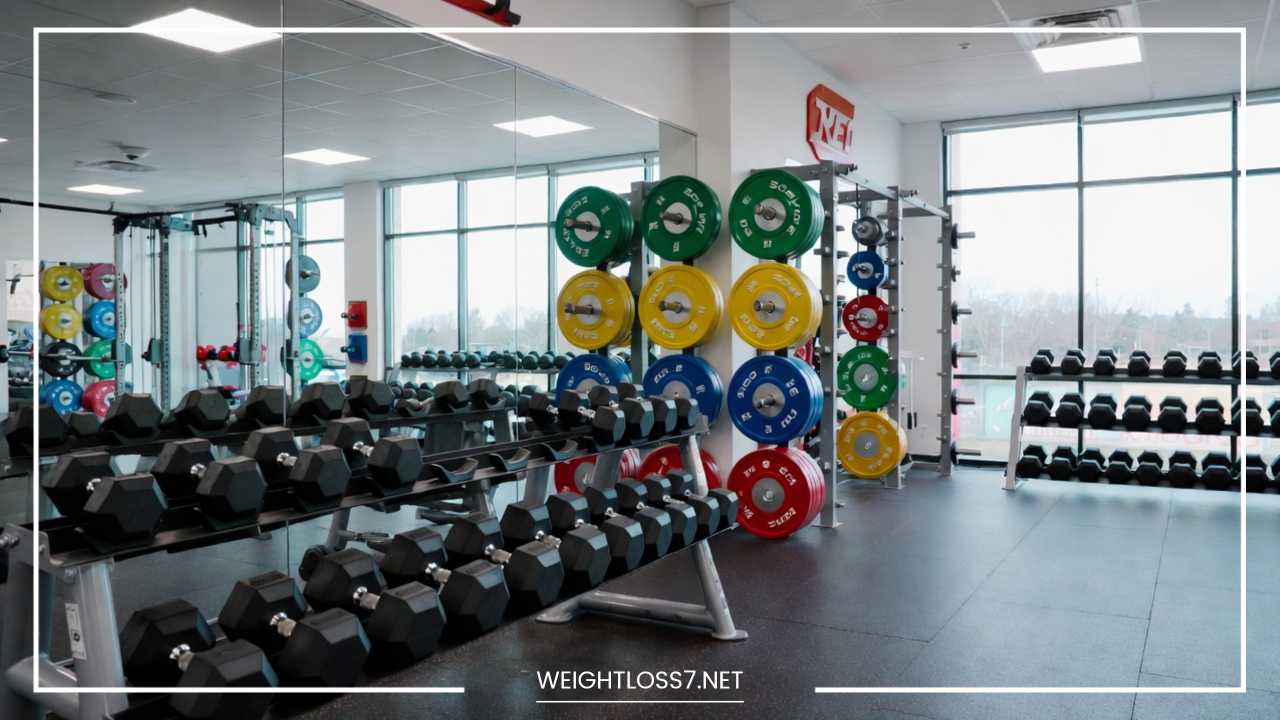
For home users, vertical dumbbell racks (often called A-frame racks) are excellent for saving floor space. If you use plates, a weight tree is the most efficient way to keep them organized by size. If you are extremely limited on space, wall-mounted racks for barbells and plates can keep the floor entirely clear, which is especially helpful in multi-purpose rooms like a garage that still needs to fit a car.
2. Commercial Gym Storage Needs
In a commercial setting, accessibility and traffic flow are the priorities. Racks should be placed so that multiple people can access weights without bumping into each other. Durable, heavy-duty racks are required here, as they will face constant use and occasional rough handling.
3. Keeping Your Gym Organized
Proper storage reduces wear and tear. When plates are stacked haphazardly, the edges can chip or the centers can become bent. Organized storage also enhances the user experience—there is nothing more frustrating than searching for a matching 25-pound dumbbell when you are in the middle of a timed circuit.
Budgeting: Getting the Best Value for Your Money
It is tempting to buy the cheapest weights available, but this often leads to higher costs later when equipment breaks or needs to be upgraded.
-
Prioritize Essentials: If budget is tight, start with a versatile pair of adjustable dumbbells or a basic barbell and a few sets of plates (two 45s, two 25s, four 10s, and two 5s). This starter kit allows for a massive variety of exercises.
-
Invest in Quality for Heavy Items: For items you plan to keep for decades, like a high-quality barbell or urethane dumbbells, it is worth paying more upfront.
-
Buying in Sets: Buying a weight set (e.g., a 300-pound Olympic set) is almost always cheaper than buying the plates and bar individually. Many retailers offer “bundle” discounts for home gym starters.
-
The Used Market: Because iron is iron, you can often find great deals on used cast iron plates. Just be sure to check for cracks or severe rust before purchasing.
Common Mistakes to Avoid When Buying Weights
-
Buying Too Heavy or Too Light: Many people overestimate their starting strength and buy weights they can’t lift, or underestimate themselves and buy weights they outgrow in a week. Try to find a range that covers both your current level and your “goal” level.
-
Ignoring Compatibility: Ensure your plates match your bar. Buying 1-inch standard plates for a 2-inch Olympic bar is a common and frustrating error that halts your training before it begins.
-
Overlooking Storage Needs: People often buy 500 pounds of weights and then realize they have nowhere to put them. Always factor the cost and space of a rack into your initial purchase.
-
Choosing Price Over Quality: A dumbbell with a loose head is a safety hazard. If the price seems too good to be true, the build quality likely reflects that.
How to Build a Balanced Weight Collection
A truly balanced collection allows you to perform push, pull, squat, and hinge movements effectively.
-
Suggested Dumbbell Range: For a complete setup, aim for a light pair (5–12 lbs), a medium pair (15–30 lbs), and a heavy pair (35–50+ lbs). This allows for everything from shoulder raises to heavy lunges.
-
Plate Combinations: A standard balanced set includes a pair of 45, 25, 10, 5, and 2.5-pound plates. This combination allows you to hit almost any specific weight increment on the bar. For example, if you want to lift 105 pounds, you use the bar (45 lbs) plus a 25 and a 5 on each side.
-
Scaling Your Collection: As you get stronger, don’t feel the need to buy everything at once. Add one pair of plates or one heavier set of dumbbells every few months. This keeps the financial burden low and provides a “reward” for your hard work.
Maintenance and Care Tips
Weights are durable, but they aren’t indestructible. Proper care can make your equipment last for generations.
-
Cleaning and Upkeep: Sweat contains salt, which is highly corrosive to metal. Wipe down your dumbbells and plates with a damp cloth and mild soap once a week. If you use chalk, make sure to brush it out of the knurling on the handles, as chalk traps moisture and promotes rust.
-
Preventing Rust: In humid environments, use a dehumidifier in your gym space. If rust spots appear, use a stiff wire brush to scrub them off and apply a light coat of silicone-based lubricant or 3-in-1 oil.
-
Inspecting Handles and Collars: Periodically check that the sleeves on your barbell spin freely. If they are gritty, they may need internal lubrication. Ensure the locking mechanisms on your dumbbells are tight and functional.
Final Thoughts: Making the Right Choice for Your Gym
Choosing the best weight options for your gym is a personal journey that balances your fitness aspirations, your available space, and your financial reality. There is no one-size-fits-all “perfect” setup; there is only the setup that gets you excited to train and keeps you coming back day after day.
Dumbbells offer freedom, balance, and variety. Weight plates offer raw power, scalability, and the ability to perform foundational compound lifts that build systemic strength. By understanding the materials, the weight ranges, and the safety requirements discussed in this guide, you are now equipped to make an informed decision that will serve you for years to come.
Focus on quality, plan for progression, and remember that the best equipment is the equipment that is used consistently. Whether you start with a single pair of hex dumbbells or a full rack of bumper plates, the most important step is simply getting started. Building a gym is building a better version of yourself—one plate and one rep at a time.