Nutrition for Weight Loss

Nutrition for Weight Loss: A Plant-Based Approach to Healthy Living
The Role of Nutrition in Weight Loss
When embarking on a weight loss journey, many often focus heavily on exercise, believing that burning more calories is the ultimate solution. While physical activity is undoubtedly important for overall health and can certainly aid in weight management, the truth is that nutrition plays a far more significant role in achieving sustainable weight loss. You’ve likely heard the saying, “You can’t out-exercise a bad diet,” and it holds true. What you put into your body directly impacts your metabolism, energy levels, and even your mood, all of which are crucial factors in weight management.
A common misconception is that simply “eating less” is always better. This can lead to severe calorie restriction, which often backfires, slowing metabolism and making adherence incredibly difficult. Instead, the focus should be on eating smarter, prioritizing nutrient-dense foods that fuel your body without excess calories. This is where plant-based or plant-focused diets can be incredibly powerful for weight loss. Rich in fiber, vitamins, and minerals, and often naturally lower in unhealthy fats and added sugars, a well-planned plant-based approach can support satiety, boost metabolism, and promote overall well-being. This article will delve into how to leverage the power of plant-based nutrition for effective and sustainable weight loss.
Understanding Calories and Energy Balance
At the heart of weight loss lies the concept of energy balance, often simplified as “calories in versus calories out.” A calorie is simply a unit of energy. Your body needs a certain amount of energy (calories) to perform its basic functions, like breathing, circulating blood, and maintaining body temperature – this is your basal metabolic rate (BMR). On top of that, you expend calories through physical activity.
Weight loss occurs when you consistently consume fewer calories than your body expends. This creates a calorie deficit, prompting your body to tap into stored energy (body fat) for fuel. Conversely, a calorie surplus, where you consume more calories than you burn, leads to weight gain. It sounds straightforward, but the quality of those calories makes a huge difference.
Consider the distinction between nutrient-dense and calorie-dense foods. A handful of potato chips might be calorie-dense but offers minimal nutritional value. In contrast, a large salad with leafy greens, colorful vegetables, and legumes is nutrient-dense, providing essential vitamins, minerals, and fiber for fewer calories. The latter promotes satiety and provides sustained energy, while the former can leave you feeling hungry shortly after, leading to overeating. It’s crucial not to severely restrict calories to the point of deprivation. This can trigger survival mechanisms in your body, slowing metabolism and making it harder to lose weight in the long run. The goal is a moderate, sustainable deficit achieved through smart food choices.
Macronutrients Explained (Plant-Based Focus)
Macronutrients – carbohydrates, protein, and fats – are the components of food that your body needs in large amounts for energy, growth, and other bodily functions. Understanding how to incorporate them effectively from plant-based sources is key for weight loss.
Carbohydrates
Carbohydrates are your body’s primary source of energy. They’re often demonized in weight loss discussions, but the type of carbohydrate you choose is critical. Complex carbohydrates are your allies. Found in whole grains, legumes, and most vegetables, they are digested slowly, providing a steady release of glucose into your bloodstream. This prevents sharp blood sugar spikes and crashes, which can lead to cravings and overeating. Examples include oats, brown rice, quinoa, whole-grain bread, lentils, and all types of beans.
Fiber, a type of carbohydrate, is particularly important for weight loss. It adds bulk to your food, promoting feelings of fullness and aiding digestion. Since fiber isn’t absorbed for calories, it helps you feel satiated without contributing to your energy intake, making it invaluable for calorie control.
Simple carbohydrates, on the other hand, are found in refined grains (white bread, pastries) and sugary drinks. They are quickly digested, causing rapid blood sugar fluctuations and offering little in terms of sustained energy or nutrition. These are the carbohydrates to limit for weight loss.
Protein (Without Meat or Eggs)
Protein is essential for building and repairing tissues, producing enzymes and hormones, and, crucially for weight loss, promoting satiety. It also has a higher thermic effect of food (TEF) compared to carbohydrates and fats, meaning your body burns more calories digesting protein. Fortunately, the plant kingdom offers an abundance of excellent protein sources.
Key plant-based protein sources include beans (black beans, kidney beans, pinto beans), lentils (red, green, brown), chickpeas, tofu, tempeh, seitan, edamame, quinoa, and a variety of nuts and seeds like almonds, walnuts, chia seeds, flax seeds, and pumpkin seeds. Combining different plant proteins throughout the day (e.g., rice and beans) ensures you get a complete amino acid profile, though this isn’t necessary at every meal.
For weight loss, a good general guideline is to aim for around 1.2 to 1.6 grams of protein per kilogram of body weight per day, especially if you’re active. Spreading your protein intake throughout the day can help optimize muscle preservation and satiety.
Fats
Fats are crucial for hormone production, nutrient absorption, and long-term satiety. However, they are calorie-dense, so portion control is vital. The focus should be on healthy fats, primarily monounsaturated and polyunsaturated fats.
Excellent plant-based sources of healthy fats include avocados, nuts (almonds, walnuts, pecans), seeds (chia, flax, hemp, pumpkin), and healthy oils like olive oil and avocado oil. These fats contribute to feelings of fullness and can help regulate appetite. They also provide essential fatty acids that your body cannot produce on its own. Trans fats and excessive saturated fats, often found in highly processed foods, should be limited as they contribute to inflammation and heart health issues. A moderate intake of healthy fats is key for a well-rounded and satisfying plant-based diet for weight loss.
Micronutrients That Support Weight Loss
While macronutrients provide energy, micronutrients – vitamins and minerals – are the silent powerhouses that enable countless metabolic processes, many of which indirectly or directly support weight loss. A deficiency in even one key micronutrient can hinder your progress.
Here are some key vitamins and minerals and their roles, with a focus on plant-based sources:
- Iron: Essential for oxygen transport in the blood and energy production. Plant-based sources include lentils, spinach, tofu, fortified cereals, and pumpkin seeds. To enhance absorption, consume iron-rich foods with vitamin C (e.g., bell peppers, oranges).
- Vitamin B12: Crucial for nerve function and red blood cell formation. B12 is not naturally found in plant foods and must be obtained from fortified foods (plant milks, nutritional yeast, certain cereals) or a supplement, which is highly recommended for anyone following a plant-based diet.
- Magnesium: Involved in over 300 enzymatic reactions, including energy metabolism and muscle function. Found in dark leafy greens, legumes, nuts, seeds, and whole grains.
- Vitamin D: Important for bone health, immune function, and may play a role in metabolism and mood. While primarily obtained from sun exposure, some plant-based foods like fortified plant milks and certain mushrooms (when exposed to UV light) contain Vitamin D. Supplementation is often recommended, especially in regions with limited sunlight.
- Iodine: Essential for thyroid hormone production, which regulates metabolism. Good sources include seaweed (nori, dulse, kelp – in moderation), iodized salt, and some fortified plant milks.
- Potassium: Important for fluid balance, nerve signals, and muscle contractions. Rich plant-based sources include potatoes, bananas, spinach, lentils, and avocados.
Ensuring adequate intake of these micronutrients from a diverse range of plant-based foods is vital. When shifting to a plant-based diet, paying attention to foods fortified with B12 and Vitamin D, and considering supplements where dietary intake might be insufficient, ensures your body has all the tools it needs to function optimally and support your weight loss journey.
Meal Planning and Portion Control
Successful weight loss isn’t just about what you eat, but also how much and when. Meal planning and portion control are fundamental strategies that bring structure and awareness to your eating habits, making calorie management easier and more sustainable.
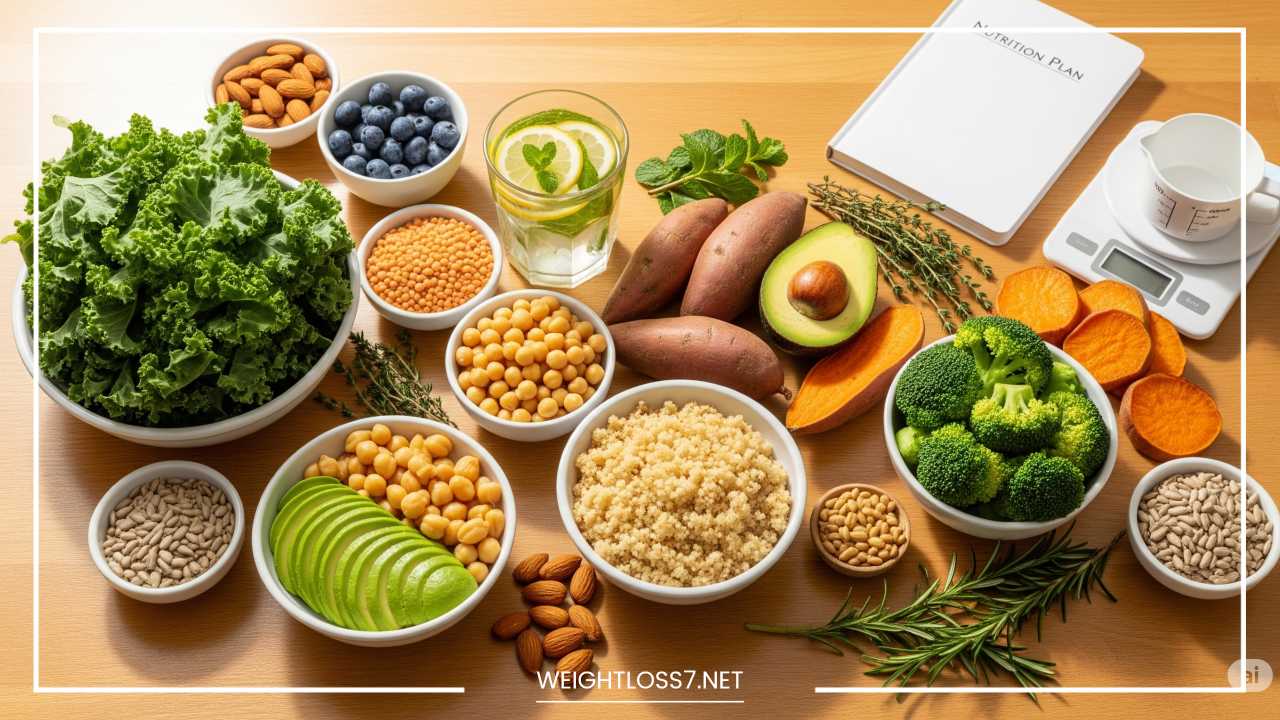
The importance of balanced meals cannot be overstated. Each meal should ideally include a combination of plant-based protein, high-fiber carbohydrates (complex carbs), and healthy fats. This trio works synergistically to promote satiety, stabilize blood sugar, and provide sustained energy. For example, a meal might consist of lentils and brown rice (protein and complex carbs) with a generous serving of steamed broccoli (fiber) and a drizzle of olive oil or some avocado (healthy fat).
A practical tool for visual portion control is the “plate method.” Aim to fill half of your plate with non-starchy vegetables (like leafy greens, broccoli, bell peppers, zucchini). These are packed with fiber and micronutrients, but low in calories. One-quarter of your plate should be dedicated to whole grains or starchy vegetables (quinoa, oats, brown rice, sweet potato, corn). The remaining quarter should be your plant-based protein source (beans, lentils, tofu, tempeh). This method ensures you get a good balance of nutrients while naturally controlling calorie intake.
Beyond visual cues, mindful eating is a powerful practice. This involves paying attention to your body’s hunger and fullness cues, eating slowly, savoring your food, and avoiding distractions like screens. This helps you recognize when you’re truly satisfied, rather than just eating until the plate is empty. For some, tools like calorie tracking apps can be helpful initially to gain an understanding of the calorie and macronutrient content of various foods. However, for long-term sustainability, developing an intuition for portion sizes and listening to your body’s signals (intuitive eating) is often more effective.
Healthy Plant-Based Foods for Weight Loss
Building a weight loss-friendly plant-based diet revolves around prioritizing nutrient-dense foods that offer high satiety for fewer calories. Here are some champions of plant-based eating for weight loss:
- High-Fiber, Low-Calorie Staples: These form the bulk of your plate and are your best friends for feeling full without excessive calories. Think leafy greens (spinach, kale, collard greens), cruciferous vegetables (broccoli, cauliflower, Brussels sprouts), zucchini, mushrooms, cucumbers, bell peppers, and asparagus. They are rich in vitamins, minerals, and water content.
- Whole Grains: These provide sustained energy and a wealth of fiber. Opt for quinoa (a complete protein!), oats (especially steel-cut or rolled), brown rice, bulgur, farro, and whole-wheat pasta/bread in moderation. They digest slowly, keeping you full and blood sugar stable.
- Legumes: A cornerstone of plant-based protein and fiber. Include a variety of lentils (red, green, brown), black beans, chickpeas, kidney beans, cannellini beans, and split peas. They are incredibly versatile and can be added to soups, stews, salads, or made into dips like hummus.
- Fruits: Nature’s candy, packed with vitamins, antioxidants, and fiber. Prioritize berries (strawberries, blueberries, raspberries – lower in sugar), apples, citrus fruits (oranges, grapefruits), and pears. While fruits contain natural sugars, their fiber content helps mitigate blood sugar spikes. Enjoy them whole rather than juiced for maximum benefit.
- Nuts and Seeds: While calorie-dense, they are packed with healthy fats, protein, and fiber, making them excellent for satiety and nutrient delivery. Enjoy in moderation. Examples include almonds, walnuts, chia seeds, flax seeds, pumpkin seeds, and sunflower seeds. A small handful can curb hunger and provide essential nutrients.
Incorporating a wide variety of these foods ensures you get a broad spectrum of nutrients, keep your meals interesting, and support your weight loss goals naturally.
Foods to Limit or Avoid
While focusing on what to eat is paramount, understanding which plant-based foods can hinder your weight loss efforts is equally important. Not all plant-based foods are created equal, and many processed options can derail your progress.
Highly processed plant-based foods are often culprits. Just because something is labeled “vegan” or “plant-based” doesn’t automatically make it healthy or weight loss-friendly. This category includes many vegan chips, sugary granola bars, highly processed meat and cheese alternatives, and vegan junk food like pastries and cookies. These items are typically high in refined sugars, unhealthy fats, and sodium, and low in fiber and essential nutrients, contributing to calorie overconsumption without providing satiety.
Excessive oils, sugar-sweetened beverages, and fruit juices should also be limited. While healthy oils (like olive oil) have their place, they are very calorie-dense, and it’s easy to overdo them. Use them sparingly for flavor. Sugar-sweetened beverages (sodas, sweetened teas, energy drinks) provide “empty calories” – calories without nutritional value or satiety. They contribute to weight gain and blood sugar spikes. Similarly, fruit juices, even 100% juice, lack the fiber of whole fruit, leading to a concentrated dose of sugar without the benefits of satiety that fiber provides. It’s always better to eat the fruit whole.
Finally, refined grains and added sugars are major contributors to excess calorie intake and should be minimized. Refined grains (white bread, white pasta, white rice) have had their fiber and nutrient-rich bran and germ removed, leading to rapid digestion and blood sugar spikes. Added sugars, found in countless packaged foods, provide only empty calories and can trigger cravings. Reading food labels to identify hidden sugars is crucial. Focusing on whole, unprocessed plant foods will naturally help you avoid most of these pitfalls.
Lifestyle Factors That Support Nutritional Efforts
Weight loss is rarely just about diet; it’s a holistic endeavor deeply intertwined with lifestyle. While nutrition forms the bedrock, several other factors significantly influence your ability to lose weight and maintain it.
The importance of sleep cannot be overstated. When you’re sleep-deprived, your body produces more ghrelin (the hunger hormone) and less leptin (the satiety hormone), leading to increased cravings, especially for high-calorie, high-sugar foods. Aim for 7-9 hours of quality sleep per night to regulate these hormones and support metabolic health.
Stress management is another critical component. Chronic stress elevates cortisol levels, which can promote fat storage, particularly around the abdomen. Finding healthy coping mechanisms for stress, such as meditation, yoga, spending time in nature, or engaging in hobbies, can profoundly impact your weight loss journey.
Hydration is often overlooked but vital. Drinking enough water can help you feel full, boost metabolism, and aid in digestion. Sometimes, what we perceive as hunger is actually thirst. Aim for at least 8 glasses of water a day, more if you’re active.
Perhaps most importantly, consistency over perfection is the mantra for sustainable weight loss. There will be days when you don’t eat perfectly or miss a workout. Don’t let a minor slip-up derail your entire effort. Get back on track with your next meal or the next day. This flexible mindset fosters a healthier relationship with food and prevents the all-or-nothing thinking that often leads to burnout.
While this article focuses on nutrition, it’s worth briefly mentioning the benefit of pairing nutrition with physical activity. Regular exercise, even moderate walking, complements your dietary efforts by burning calories, building muscle (which boosts metabolism), reducing stress, and improving overall health. Finally, social support from friends, family, or a community can provide encouragement and accountability, making the journey less isolating and more enjoyable. Ultimately, the goal is to build sustainable habits that you can maintain long-term, leading to lasting results.
Sample Day of Plant-Based Eating for Weight Loss
Here’s a sample day of plant-based eating designed for satiety, nutrient density, and weight loss, keeping calorie and macro considerations in mind. This provides a framework, but remember to adjust portion sizes based on your individual needs and activity level.
Breakfast (approx. 300-350 calories):
- Overnight Oats with Berries and Chia Seeds: ½ cup rolled oats, 1 cup unsweetened plant milk (almond/soy), 1 tablespoon chia seeds, ½ cup mixed berries, 1 teaspoon maple syrup or a few drops of stevia (optional).
- Why it works: High in fiber for fullness, healthy fats from chia, complex carbs for sustained energy.
Lunch (approx. 400-450 calories):
- Hearty Lentil and Vegetable Soup/Stew: 1.5 cups of a thick lentil soup loaded with vegetables like carrots, celery, spinach, and diced tomatoes, seasoned with herbs. Served with 1 slice of whole-grain bread.
- Why it works: Excellent source of plant protein and fiber from lentils, high volume from vegetables, low calorie density.
Snack (approx. 150-200 calories):
- Apple Slices with Almond Butter: 1 medium apple with 1-2 tablespoons of natural almond butter.
- Why it works: Fiber from the apple, healthy fats and protein from almond butter for sustained energy and satiety.
Dinner (approx. 500-550 calories):
- Tofu Stir-fry with Brown Rice: 4 oz baked or pan-fried extra-firm tofu (pressed), stir-fried with a generous mix of non-starchy vegetables (broccoli, bell peppers, snap peas, mushrooms) and a light sauce (low-sodium tamari/soy sauce, ginger, garlic). Served with 1 cup cooked brown rice.
- Why it works: Lean plant protein from tofu, complex carbs from brown rice, abundant fiber and micronutrients from vegetables.
Total estimated calories for the day: 1350-1550 calories.
Flexible Ideas for Substitutions:
- Breakfast: Swap oats for a smoothie made with plant protein powder, spinach, banana, and plant milk.
- Lunch: Instead of lentil soup, have a large salad with chickpeas, quinoa, and a light vinaigrette.
- Snack: A small handful of walnuts, or a banana.
- Dinner: Replace tofu with black bean burgers (homemade, whole-food based) on a lettuce wrap, or a chickpea curry with whole-wheat roti.
This sample day demonstrates how diverse, satisfying, and nutritionally complete plant-based meals can be while supporting weight loss goals.
Final Thoughts and Tips
Achieving sustainable weight loss is not about deprivation; it’s about empowerment through informed food choices and a supportive lifestyle. As we’ve explored, nutrition, particularly a well-planned plant-based approach, is the cornerstone of this journey. By understanding calories and energy balance, embracing the power of plant-based macronutrients, and ensuring adequate micronutrient intake, you lay a strong foundation for success.
The key takeaways are to prioritize whole, unprocessed plant foods – vibrant fruits, vegetables, hearty legumes, and nourishing whole grains. Master the art of meal planning and portion control using tools like the plate method. Critically, remember that consistency, not perfection, is the goal. Integrate supportive lifestyle factors like adequate sleep, stress management, and hydration, and view physical activity as a powerful complement to your dietary efforts.
Ultimately, your weight loss journey is deeply personal. What works for one individual may need slight adjustments for another. Focus on long-term, sustainable changes that you can genuinely enjoy and maintain, rather than quick fixes. This approach fosters a healthy relationship with food and your body, leading to lasting results and enhanced well-being. If you find yourself struggling or need personalized guidance, don’t hesitate to consult with a registered dietitian who can provide tailored advice and support. Your path to a healthier, lighter you is within reach.