Weight Loss Without Changing Diet


Weight Loss Without Changing Diet: Simple Lifestyle Tips That Work
Is Weight Loss Possible Without Changing What You Eat?
The contemporary conversation surrounding weight management is heavily dominated by restrictive paradigms. Everywhere we turn, we are met with messages advocating for the complete elimination of specific food groups, the strict counting of every single calorie, or the adoption of highly regimented, complex meal plans. For many, this constant focus on food restriction leads to a cycle of short-term success followed by long-term frustration. The problem with unsustainable diet plans is not a lack of willpower; rather, it is that they cut against the grain of human psychology, social traditions, and the daily realities of busy modern lives. When a plan requires absolute perfection and constant deprivation, it is only a matter of time before real-world challenges cause it to completely fall apart.
What if the primary variable in the weight loss equation is not exclusively the composition of your dinner plate, but rather the structural framework of your lifestyle? The fundamental, liberating truth of sustainable weight loss is that how you eat, how you move, how you sleep, and how you manage your mental environment matters just as much as what you eat. It is entirely possible to cultivate a subtle calorie deficit and achieve sustainable weight loss without undergoing a complete dietary overhaul or abandoning your favorite meals. Small lifestyle shifts can support weight loss without completely changing your meals.
This approach is designed specifically for general audiences who find themselves exhausted by standard dieting. Whether you are a busy office worker sitting at a desk for eight hours a day, a parent balancing the chaotic demands of a family schedule, or simply someone who is deeply tired of “starting over” every Monday morning, shifting your focus away from food rules and toward structural habits offers a reliable path forward. By understanding the behavioral, environmental, and physiological mechanisms that govern energy balance, you can unlock simple weight loss habits that deliver long-term results while leaving your baseline menu completely intact.
Portion Awareness Matters More Than People Think
When looking at ways to lose weight naturally, the conversation often pivots directly to food restriction. However, a highly effective and far less psychologically taxing strategy is to focus entirely on volume rather than selection. Over the past several decades, commercial portion sizes have increased dramatically, subtly distorting our collective understanding of what constitutes a normal serving. We routinely consume larger volumes of food than our bodies require, not out of true physiological hunger, but simply because the food is present on our plates. This unconscious increase in volume quietly translates into an energy surplus over time.
By implementing practical portion control tips, you can continue eating the exact same meals you enjoy today while naturally lowering your overall energy intake. The psychological benefit of this strategy is profound: you don’t need to eliminate favorite foods. When your mind knows that no food is explicitly forbidden, the scarcity mindset that so often triggers overeating and intense cravings is completely neutralized. You are not depriving yourself of flavor or experience; you are simply adjusting the scale of consumption to better align with your body’s true physical requirements.
Practical Strategies for Visual Control
-
Transition to Smaller Dinnerware: Human psychology is deeply visual. Serving a meal on a large plate leaves substantial empty space, signaling to the brain that the portion is inadequate. By utilizing smaller plates and bowls, the same quantity of food visually fills the container, tricking the brain into perceiving a highly substantial and satisfying meal.
-
Adopt Kitchen-Style Serving: The traditional practice of serving food family-style—placing large serving platters directly on the dining table—invites mindless second helpings. Instead, serve your food directly from the kitchen counters. Creating a small physical barrier between your plate and the remaining food requires a conscious choice to get up and get more, which disrupts impulsive eating patterns.
-
Distinguish Hunger from Habit: A significant portion of daily food intake is driven by habit, boredom, or emotional cues rather than true physiological necessity. Before reaching for a secondary portion or an off-schedule snack, pause and assess your physical sensations. If your stomach is not actively empty, the desire to eat is likely behavioral rather than nutritional.
Slow Eating Can Naturally Reduce Calories
The pace of modern life has transformed eating into an administrative task to be completed as quickly as possible. We eat on the go, standing up, or while rushing between obligations. This rapid consumption is a primary driver of accidental overeating. From a physiological standpoint, the brain takes a significant amount of time to register fullness. When we consume a meal with extreme speed, we can easily ingest twice the volume of energy our body actually requires before the hormonal signals of satiety have a chance to reach the brain.
Slowing down your eating pace is a cornerstone of mindful eating. When you extend the duration of a meal, you allow your body’s natural biochemistry to function optimally. The digestive tract secretes specific hormones that signal the satiety centers of the brain, allowing you to feel genuinely content before you have overconsumed. This simple shift can naturally reduce calories without requiring any modifications to the ingredients on your plate.
Techniques to Moderate Your Eating Pace
To successfully slow your eating pace, you must introduce deliberate behavioral speed bumps into your meals. A highly effective method is to consciously put your utensils down on the table between every single bite. Do not pick them back up until you have completely chewed and swallowed your current mouthful. This simple pause breaks the mechanical, continuous chain of fast eating.
Additionally, focus on the physical mechanics of chewing. Taking the time to thoroughly break down your food not only aids digestion but also naturally extends the time it takes to complete a meal. Incorporating sips of water throughout the meal can also provide natural pauses, helping to clear the palate and pace the experience. By transforming your meal from a rushed task into an intentional activity, you naturally align your intake with your body’s genuine physiological limits.
Improve Daily Movement Without Working Out
When people think about weight loss, they often picture intense, exhausting gym sessions that leave them sore and depleted. While structured exercise is excellent for cardiovascular health, it represents only a small fraction of the total energy your body expends each day. The vast majority of your active daily calorie burn comes from an entirely different category: Non-Exercise Activity Thermogenesis, commonly referred to as NEAT.
NEAT encompasses all the energy expended through everything we do that is not sleeping, eating, or sports-like exercise. It includes walking to your car, climbing stairs, cleaning the house, fidgeting, and even maintaining your posture while standing. By intentionally maximizing your NEAT, you can significantly increase your daily energy expenditure and lose weight without exercise in the traditional sense. This is an incredibly sustainable path for individuals who find the gym environment intimidating or difficult to fit into a crowded schedule.
Seamless Ways to Maximize NEAT
-
Post-Meal Walking Routines: Commit to a brief, ten-minute stroll immediately following your primary meals. This habit not only enhances digestion and stabilizes blood sugar levels but also accumulates thousands of additional steps over the course of a week without requiring dedicated gym clothes or travel time.
-
Redesign Your Daily Commute and Errands: Intentionally bypass the closest available parking spaces at the grocery store, office, or shopping center. By parking farther away, you transform a mundane chore into a valuable opportunity for physical movement. Similarly, make a binding rule to utilize the stairs instead of elevators or escalators whenever you are navigating fewer than four flights.
-
Active Multi-Tasking: Look for opportunities to introduce movement into stationary tasks. If you spend significant time speaking on the phone for work or personal calls, make it a habit to pace around your room or office while talking. Change your setup to a standing desk if possible, or build in short, two-minute stretching breaks for every hour spent sitting down.
Sleep and Weight Gain Are Closely Connected
The relationship between sleep and weight loss is profound, yet it remains one of the most frequently ignored variables in health management. Many individuals struggle to shed weight despite maintaining moderate portions and staying active, simply because their bodies are under constant physiological duress from chronic sleep deprivation. Sleep is not a passive period of inactivity; it is a critical restorative window during which your body regulates key metabolic and hormonal systems.
When you are consistently sleep-deprived, your body undergoes a cascade of hormonal imbalances that directly undermine your weight management efforts. Specifically, a lack of sleep causes a sharp increase in the hormone ghrelin, which stimulates appetite, and a simultaneous decrease in leptin, the hormone responsible for signaling fullness. Consequently, a sleep-deprived brain is biochemically driven to seek out quick energy sources, which manifests as intense, urgent cravings for dense, highly palatable snacks.
Furthermore, fatigue erodes your executive functioning and decision-making capabilities. When you are exhausted, your capacity to maintain portion awareness, manage stress, or choose movement over sedentary comfort is heavily compromised. Sleep-deprived people naturally snack more throughout the evening hours, simply because they are awake longer and their internal biochemistry is screaming for energy to keep the system functioning.
Steps to Optimize Your Sleep Environment
To harness the power of restorative sleep for weight management, you must prioritize sleep hygiene. Begin by establishing a highly consistent bedtime and waking schedule, even on weekends. This consistency anchors your circadian rhythm, optimizing hormonal production and making it easier to fall asleep naturally.
Additionally, create a strict digital curfew by reducing screen time for at least forty-five minutes before attempting to sleep. The blue light emitted by smartphones, tablets, and televisions actively suppresses the production of melatonin, the hormone that signals to your body that it is time to rest. Keep your bedroom environment cool, dark, and entirely quiet to prevent micro-awakenings that disrupt deep sleep cycles. Prioritizing rest is not an indulgence; it is a foundational pillar of biological balance.
Stress Can Quietly Lead to Weight Gain
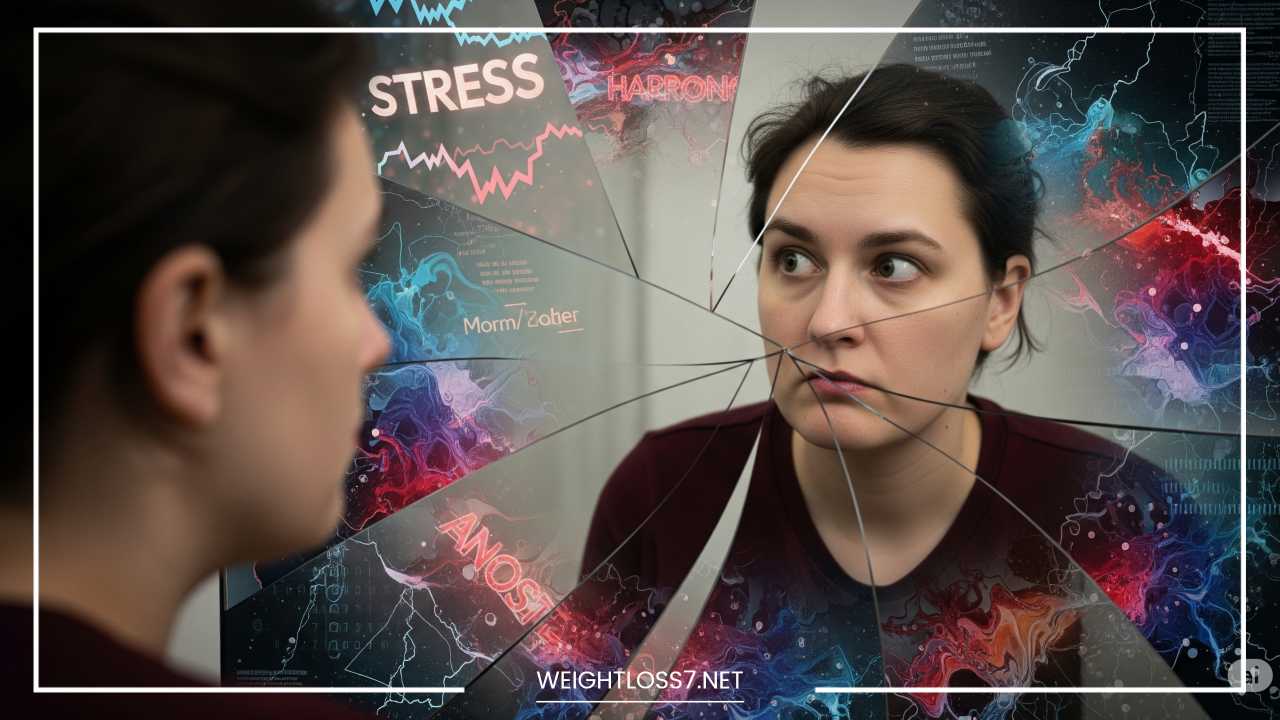
In our fast-paced society, chronic stress has become an accepted norm. However, psychological pressure has direct, tangible physical consequences on the human body, particularly regarding fat storage and energy management. When we experience prolonged stress, whether from professional demands, financial worries, or personal anxieties, our adrenal glands continuously secrete the hormone cortisol.
Cortisol plays an evolutionary role in survival, preparing the body to fight or flee from danger. In a modern context, however, where the stressor is a full email inbox rather than a physical predator, elevated cortisol levels cause the body to fiercely hold onto stored energy. This hormonal state encourages the accumulation of visceral fat, particularly around the abdominal region. Furthermore, stress disrupts our cognitive relationship with food, frequently driving individuals toward emotional eating and mindless snacking as a temporary mechanism for comfort and self-soothing during work or anxiety.
Managing your mental and emotional environment is just as vital to weight regulation as physical movement. A body under constant internal threat will always resist letting go of its energy reserves. To counter this silent contributor to weight gain, it is essential to cultivate robust stress management strategies that do not rely on food.
Incorporating simple breathing exercises, such as taking five deep, slow breaths before starting your workday, can instantly lower your heart rate and signal safety to your nervous system. Journaling, engaging in tactile hobbies, spending time in nature, or connecting with friends are all highly effective ways to process emotional tension. Keep your approach supportive, gentle, and integrated into your daily life. By proactively managing your stress, you lower your baseline cortisol levels, making your body naturally more willing to release excess weight.
Liquid Calories Are Often Overlooked
One of the simplest ways to lose weight naturally without changing what you eat for breakfast, lunch, or dinner is to take a close look at what you drink. Liquid calories represent a massive portion of modern energy intake, yet they are largely invisible to our internal satiety mechanisms. When we consume solid food, the physical act of chewing and the volume of the food in the stomach send powerful signals to the brain that we have eaten. Liquids, on the other hand, pass through the digestive system rapidly, providing almost no sense of fullness despite often carrying significant energy.
Consider the wide array of beverages that populate a typical day: sugary sodas, sweetened iced teas, fruit juices, commercial energy drinks, and elaborate blended coffee beverages loaded with syrups and creams. It is incredibly common for an individual to inadvertently consume hundreds of calories a day entirely through beverages without ever realizing it. These drinks do not replace solid food; they are simply layered on top of our existing meals, quietly driving an energy surplus.
Strategic Beverage Awareness
The goal here is not to implement a rigid ban on all flavored beverages, which frequently triggers a feeling of restriction and subsequent cravings. Instead, the focus should be on simple awareness and strategic substitution. Simply becoming aware of how much energy you consume through drinks can drastically change your habits.
Whenever possible, prioritize drinking a full glass of water before your meals; this natural habit ensures you are fully hydrated and prevents you from misinterpreting thirst as hunger. When seeking flavored options, look toward unsweetened alternatives such as herbal teas, sparkling water with a squeeze of fresh citrus, or black coffee. By gradually shifting your beverage choices toward options that do not carry an invisible caloric load, you can effortlessly create a meaningful energy deficit while continuing to enjoy the exact same satisfying meals on your plate.
Your Environment Shapes Your Eating Habits
We like to believe that our daily actions are the result of conscious, deliberate choices. In reality, human behavior is highly responsive to environmental cues. We are visual creatures; our immediate surroundings exert a powerful, silent influence over our habits. If an environment is structured to make overeating effortless and mindless, even the strongest willpower will eventually falter. Visibility affects eating, and our physical surroundings often dictate our patterns far more than our conscious goals.
By understanding this dynamic, you can intentionally redesign your home and workplace to support your health goals naturally. This strategy involves altering visual and physical accessibility so that helpful habits become the path of least resistance, while less helpful habits require deliberate effort and thought.
Environmental Modifications for Effortless Balance
-
Optimize Visual Cues: Make sure water containers, fresh fruit, or other supportive elements are prominently displayed on your kitchen counters and office desk. Keeping water visible prompts regular hydration, which naturally regulates appetite.
-
Create Strategic Friction for Treats: You do not need to banish treats or favorite snacks from your home entirely. Instead, move them out of your direct line of sight. Keeping snacks within easy reach ensures they will be consumed mindlessly. Store them on high shelves, in the back of the pantry, or in opaque containers. Adding a small amount of physical friction—requiring a step-stool or a conscious search—disrupts the automatic loop of grabbing a snack simply because it is there.
-
Establish Dedicated Eating Zones: Establish a firm rule that food is only consumed at a proper dining table. Avoid eating while watching television, working at your computer, or lounging in bed. When you eat while distracted by a screen, your brain fails to fully process the sensory experience of the food, which breaks down late-night eating cues and often leads to rapid consumption and an increased desire to eat again shortly afterward.
Consistency Beats Extreme Dieting
The fitness industry often glorifies extreme transformations and radical, overnight overhauls. We are bombarded with marketing for intense programs that demand perfect adherence to incredibly difficult routines. While these extreme methods can produce rapid short-term results, they almost universally fail over time because they are completely incompatible with the normal flow of human life. When a routine is too rigid, any minor disruption—a busy week at work, a family emergency, or a social celebration—can cause the entire plan to collapse, leading to a sense of failure and a total abandonment of health goals.
The true secret to sustainable weight loss lies in the profound compounding power of consistency. Small, seemingly insignificant lifestyle habits executed daily are vastly more effective than an extreme diet that can only be maintained for a few weeks. Think of your habits as small investments: a single ten-minute walk, a slightly slower meal, or an extra hour of rest might seem trivial on any given day, but when repeated hundreds of times over the course of a year, their cumulative impact is transformative. Tiny improvements compound over time to create entirely new physical baselines.
Shifting your mindset from perfection to consistency allows you to build real resilience. If you experience a hectic day where you are highly sedentary or rush through your meals, you haven’t ruined your progress. There is no need to wait until next Monday to reset. You simply resume your small habits at the very next opportunity. Long-term habits matter more than temporary restriction, and the individual who moves steadily forward with small, manageable adjustments will always outpace the person trapped in a continuous cycle of crashing and restarting.
The Role of Hydration
A deeply integrated aspect of managing weight without changing your menu is understanding the complex relationship between hydration and metabolic health. The human brain is incredibly sophisticated, yet its signaling pathways for hunger and thirst are located directly adjacent to one another in the hypothalamus. Because of this structural proximity, it is incredibly easy to confuse mild dehydration with physiological hunger.
When you are mildly dehydrated, your body experiences a drop in energy, which the brain can interpret as a need for fuel. This often triggers a sudden craving for food, particularly when your body actually just requires fluids. By maintaining a steady baseline of hydration throughout the day, you ensure that your body’s appetite signaling remains accurate, preventing the consumption of accidental calories driven by unfulfilled thirst.
To put this into practice, try drinking a large glass of water immediately upon waking to rehydrate your system after hours of sleep. Keep a reusable water container with you throughout your workday, ensuring it remains within your immediate field of vision. If you feel an unexpected craving arise between your regular meal times, commit to drinking a glass of water first and waiting fifteen minutes. Often, you will find that the sensation completely dissipates, confirming that your body was simply asking for hydration.
Eating Without Distractions
In our hyper-connected environment, the practice of sitting down to a meal without a screen has become exceedingly rare. We routinely check our phones, scroll through social media feeds, respond to work correspondence, or stream videos while we eat. This ambient multi-tasking turns eating into a secondary background activity, which deeply disrupts our relationship with food.
When you eat while distracted, your brain is occupied with processing the visual and auditory information coming from your screen. Because your attention is divided, your mind fails to properly record the sensory inputs of the meal—the tastes, textures, aromas, and visual volume. As a result, the psychological experience of eating is diminished. You can easily finish an entire plate of food without genuinely registering that you have eaten, leaving you feeling psychologically unfulfilled and searching for snacks shortly thereafter.
To combat this, practice eating at least one meal a day in complete digital silence. Turn off the television, place your phone in another room, and close your laptop. Focus your full attention on the food in front of you. Observe the colors, appreciate the flavors, and actively note your physical sensations as you transition from hungry to satisfied. This simple commitment to undistracted eating restores the psychological connection to your food, allowing your natural fullness signals to work effectively.
Why Daily Routine Matters
Human biology thrives on predictability. Our internal clock, or circadian rhythm, regulates a vast array of physiological processes, including digestion, hormone production, metabolic rate, and sleep-wake cycles. When our daily schedules are chaotic and unpredictable, our internal systems are thrown into a state of constant flux, which can quietly hinder weight management efforts.
Establishing a consistent daily routine creates a sense of biological stability. When you eat your meals at roughly the same times each day, your body anticipates the incoming energy and optimizes its digestive enzymes and metabolic processes accordingly. This regular rhythm helps to stabilize blood sugar levels and prevents the dramatic energy crashes that so often lead to impulsive snack choices.
Furthermore, a predictable daily routine helps to lock in your positive behavioral habits. When your post-meal walk, your winding-down period before sleep, and your hydration habits are tied to specific times or existing anchors in your day, they transition from conscious tasks requiring willpower into automatic, effortless routines. By aligning your daily habits with a stable structural framework, you create a supportive environment where your body can function at its physiological best.
Common Mistakes People Make When Trying to Lose Weight
Even with the best intentions, many individuals inadvertently stall their own progress by falling into common behavioral traps. By recognizing these patterns early, you can navigate your journey with far greater ease and clarity.
The Perils of Skipping Meals
A frequent error is the deliberate choice to skip major meals in a misguided attempt to save calories. This strategy almost always backfires. Skipping breakfast or lunch typically leads to intense, ravenous hunger by late afternoon or evening. At that point, your biological drive to eat is so overwhelming that portion awareness completely disappears, resulting in heavy overeating during the evening hours that completely negates any energy saved earlier in the day.
The Distracted Eating Trap
Eating while scrolling through a smartphone, replying to emails, or watching a show completely detaches your mind from the physical act of nourishment. When your attention is directed elsewhere, you miss the subtle internal shifts from hunger to satisfaction, making it incredibly easy to consume large quantities of food without even realizing it.
Overestimating Active Calorie Burn
It is incredibly common to overestimate the number of calories burned during everyday physical activities or brief movements, leading to a false sense of security that can prompt mindless snacking later on. Additionally, expecting immediate, dramatic changes on the scale can cause unneeded frustration. Sustainable weight management is a gradual, non-linear process; judging your long-term success solely by daily fluctuations can obscure the genuine progress your body is making over time.
Final Thoughts: Small Changes Create Real Results
Achieving a healthy weight does not require you to sign over your lifestyle to restrictive food rules, give up your favorite family meals, or live in a state of perpetual deprivation. By pivoting your focus away from what is on your plate and directing it toward the structural habits that define your daily life, you can unlock a sustainable and deeply liberating approach to health.
Every small choice you make—whether it is choosing smaller dinnerware, slowing down your eating pace to enjoy your food, accumulating extra steps throughout the day, protecting your sleep, or managing your daily stress—is a meaningful step toward balance. These subtle shifts work in harmony with your body’s natural physiology rather than fighting against it. They require no special ingredients, no complex calculations, and no elimination of the things that bring you joy.
As you move forward, always prioritize sustainability over perfection. Celebrate the small victories, remain patient with your progress, and trust in the power of daily consistency. Weight loss doesn’t always require a complete diet overhaul; by focusing on routines, awareness, movement, sleep, and consistency, you can build a lifestyle that supports your well-being naturally. Ultimately, the most effective weight loss approach is often the one you can actually maintain.
Frequently Asked Questions
Can you lose weight by drinking water before meals?
Yes, incorporating a full glass of water immediately before your primary meals is an excellent, evidence-based habit that supports natural weight loss. This strategy works on two distinct levels. First, human biology often misinterprets mild dehydration as physical hunger, causing you to snack when your body is actually just craving fluids. By hydrating first, you eliminate this confusion. Second, the volume of water occupies physical space in your stomach, which stretches the stomach lining and sends early signals of structural fullness to your brain. This simple visual and physical cue helps you feel fully satisfied while consuming your normal baseline meals in naturally smaller portions.
How can I boost my metabolism without working out at the gym?
You can significantly increase your daily energy expenditure without ever setting foot in a gym by consciously maximizing your Non-Exercise Activity Thermogenesis, or NEAT. NEAT encompasses all the movement your body performs outside of deliberate sports or workouts, such as household chores, walking while talking on the phone, pacing, and taking the stairs. Cumulatively, NEAT accounts for a far greater percentage of your total daily metabolic output than a short, isolated exercise session. To boost this output, build small movement speed bumps into your daily routine: park farther away from store entrances, commit to a ten-minute walk immediately after dinner, and stand up to stretch for two minutes during every hour of stationary desk work.
Why does a lack of sleep cause belly fat accumulation?
Chronic sleep deprivation directly undermines weight management by causing a severe hormonal imbalance in your body. When you are sleep-deprived, your body experiences a sharp increase in the hormone ghrelin, which triggers intense cravings for dense, highly palatable comfort foods. Concurrently, levels of leptin—the hormone that signals satiety to your brain—drop significantly. Furthermore, a lack of rest places your body under constant physical duress, causing your adrenal glands to continuously oversecrete the stress hormone cortisol. Elevated cortisol signals the body to intensely hold onto its energy stores, specifically encouraging the accumulation of deep visceral fat around the abdominal region.
How do screen distractions cause mindless overeating at dinner?
When you eat while distracted by a smartphone, laptop, or television screen, your brain’s attention is entirely divided. Because your mind is busy processing the visual and digital information from the screen, it fails to fully record the sensory inputs of your food, such as its texture, aroma, and visual volume. This disconnect effectively blunts your body’s natural satiety mechanisms. You end up eating past the point of true physical satisfaction because your brain did not actively register the experience of nourishment. Establishing a strict rule to eat exclusively at a designated dining table without digital screens preserves this psychological connection and naturally prevents late-night overeating cues.
Is it true that skipping breakfast causes weight gain later in the day?
Yes, for the vast majority of people, regularly skipping major meals like breakfast backfires and stalls long-term progress. When you deliberately skip a meal to save calories, you trigger an intense, primal biological hunger response by the late afternoon or evening. By the time you finally sit down to eat, your internal hunger signals are so completely overwhelming that your ability to maintain portion awareness, practice slow chewing, or make mindful behavioral choices disappears. This typically results in rapid, heavy overeating during the evening hours, which easily negates any energy you saved earlier in the day.
How can I stop emotional eating when I feel stressed at work?
The key to stopping stress-induced snacking is to lower your baseline cortisol levels by creating alternative coping mechanisms that do not rely on food. When professional anxiety spikes, your body naturally seeks a quick hit of comfort, often leading to mindless emotional eating. To break this habit loop, introduce small behavioral barriers. Practice taking five deep, controlled diaphragmatic breaths before opening your morning emails to calm your nervous system. Additionally, move snack containers entirely out of your immediate field of vision at your desk. Adding physical friction—such as storing treats in a breakroom cabinet rather than your desk drawer—gives your logical mind a moment to pause and choose a supportive walking or breathing break instead of an impulsive snack.